It’s time for me to reveal the final results of a handspinning experiment that started right around three years ago, at the beginning of 2022. At that time, I started spinning for socks, intentionally and often. I played with colour, twist, and ply structure. Then, from June 2022 through February of 2023, I knit those socks into eleven pairs. You can read all about it in this Socks for Science post.
Starting in February 2023, I started wearing these socks as evenly and consistently as possible. I’m sure I missed some wears in there, but I am confident that I was fairly consistent over all. Given my wearing and washing schedule, I would estimate that each pair got 2-4 wears and 1-2 washes per month. Each time one of them developed a hole, I snapped a picture.
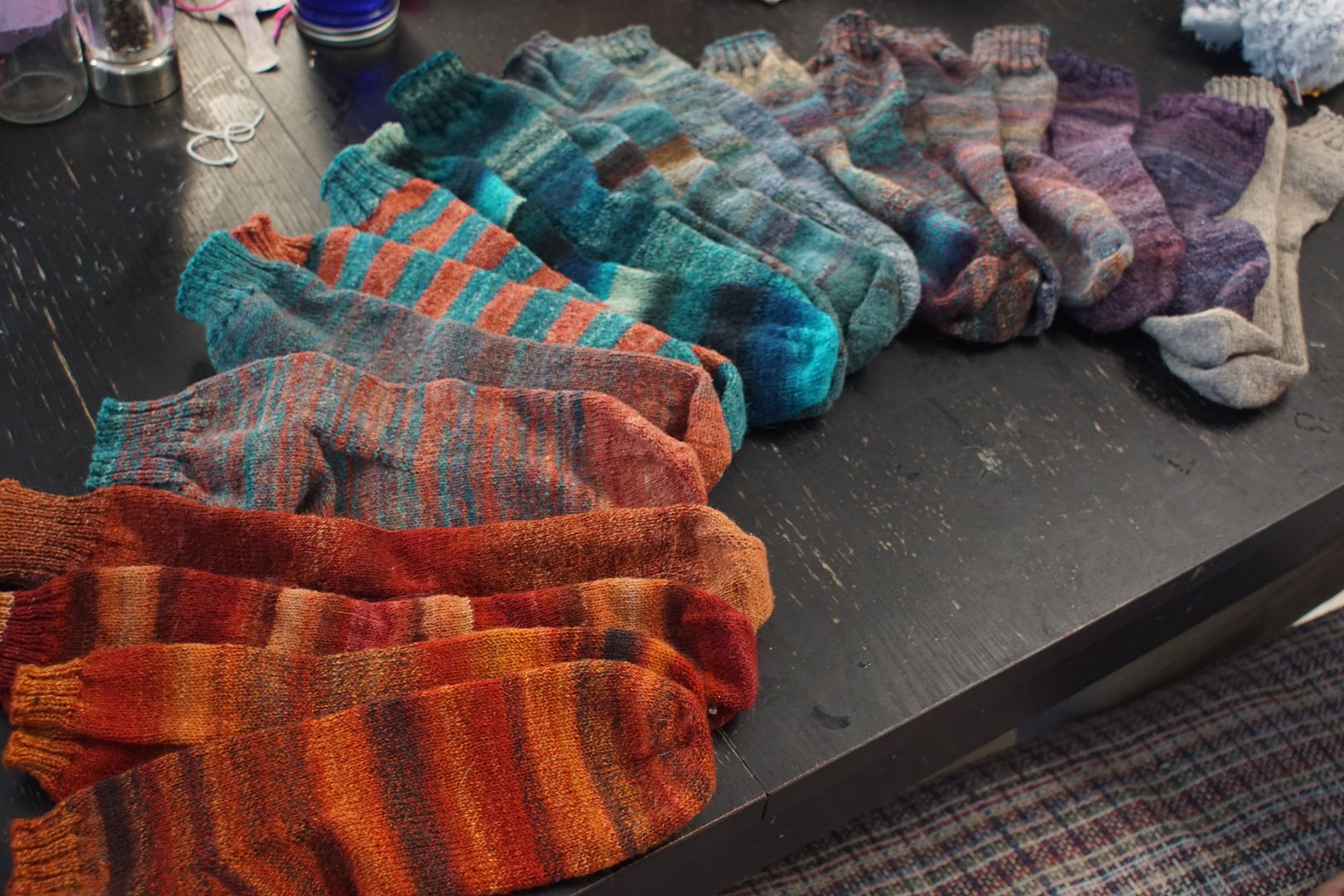
At this point, all but one pair have worn holes, and I’m prepared to share how they did. Links are included below to the project blog posts for each pair (except the Qiviut pair, which only have a post about the yarn). I will share them with you in the order that they wore out.
The pattern I used for all of these socks was a toe-up sock pattern by Kate Davies called Elizabeth Carter. It combines a sock gusset with a deep short-row heel. This heel is not really at a deep enough angle for my heel, and is not reinforced. As such, it’s unsurprising that the heels were almost always where my socks developed holes, unless otherwise noted below.
Victim 1: Qiviut socks (yarn) (2 Oct 2023)
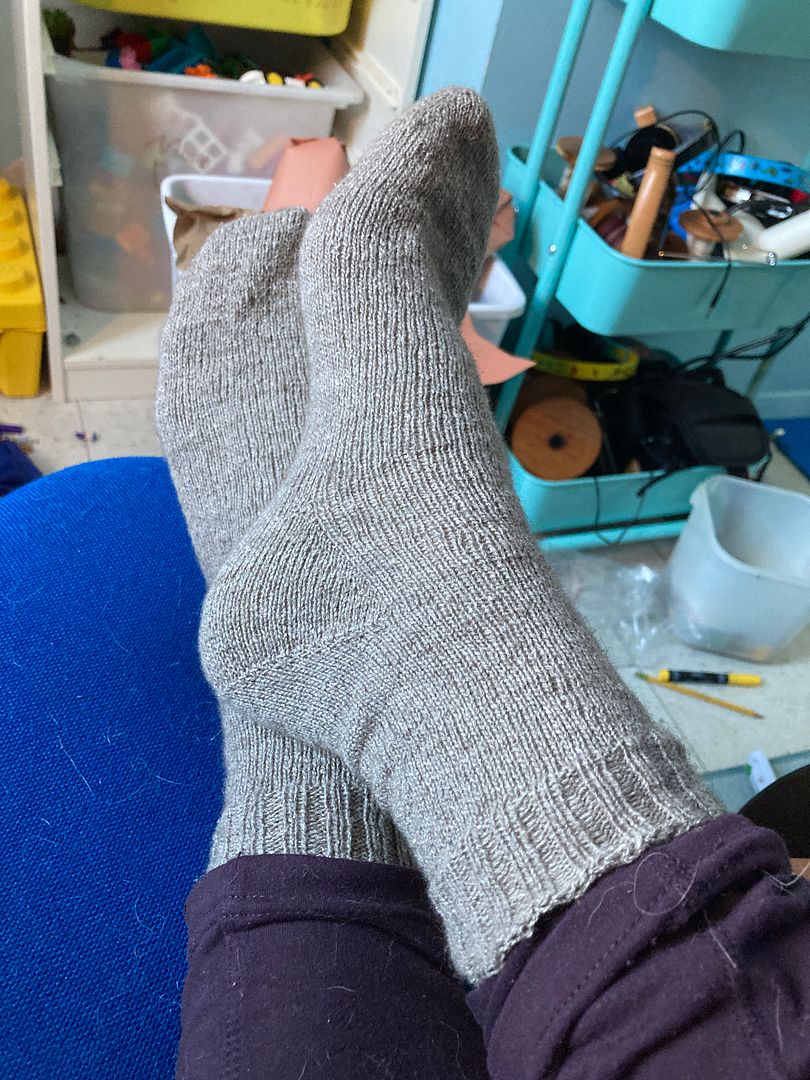
Surprising nobody, the qiviut blend socks wore out first. This blend of qiviut, merino, silk, and nylon was specially developed for socks. I spun the singles extraordinarily fine and made a cabled sock yarn. In fact, I overdid it on how fine I spun the singles. I knit the socks on 2mm needles, increased my stitch number accordingly, and still felt that the fabric was not particularly dense.
I didn’t wear them over the summer, of course, but I would estimate that they got around 15 wears before developing a small hole in the heel. That included wearing them at the cabin, where I occasionally forgot to wear slippers over them – big oops.
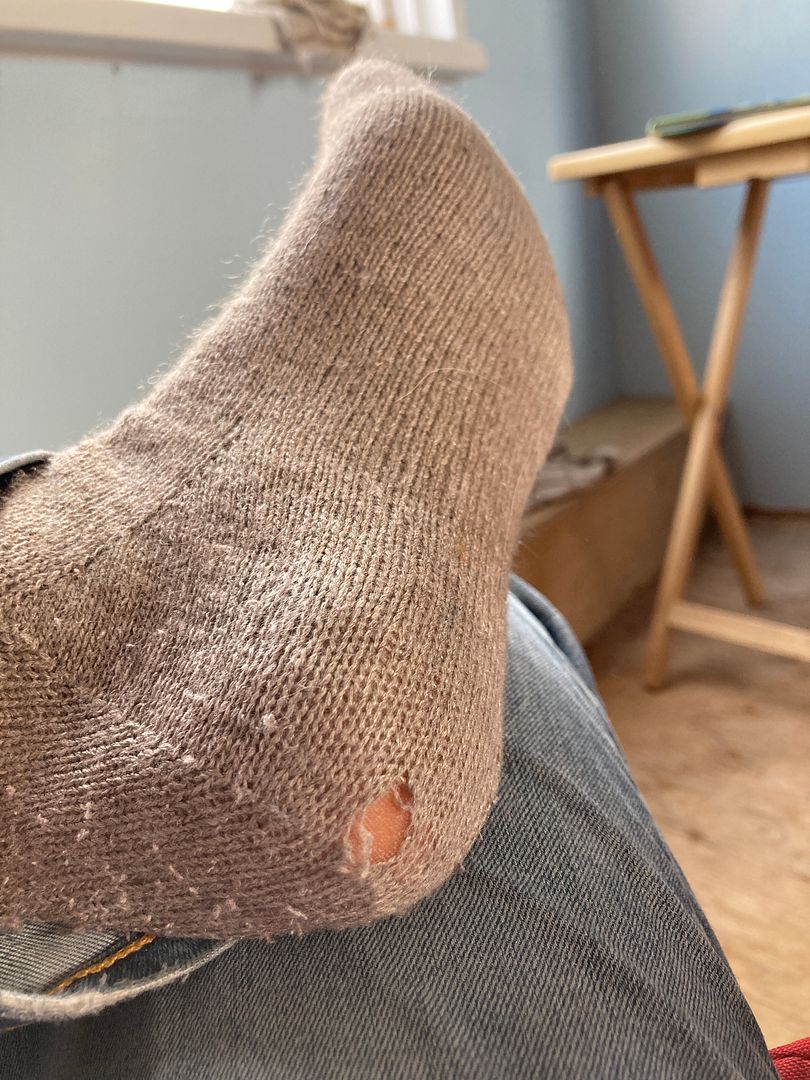
As you can see, the qiviut pilled up and wore away first, probably also the merino, leaving a glossy surface of just nylon and silk. This is pretty much what I expected.
Victims 2 & 3: Hill Radnor Chain ply (4 November 2023)
Five pairs of these eleven socks were made from Hill Radnor top that was part of of Katrina’s last Breed and Colour study. There were two colourways that I combined in a number of ways, but I also spun two pairs from individual colourways. From each, I spun for one sock as a traditional 3-ply and for one as a chain ply.
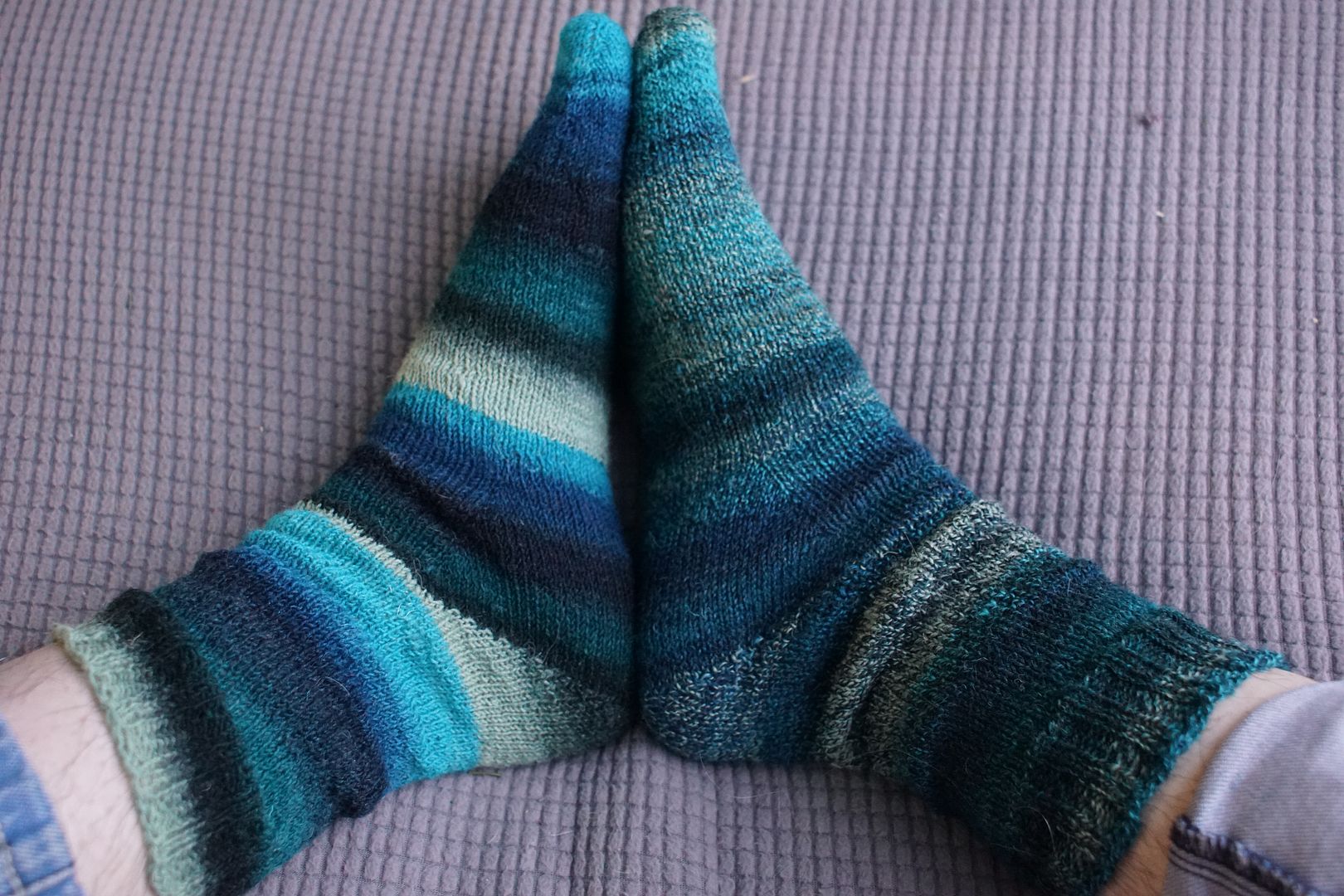
Beyond the obvious colour comparison, this provided data on whether chain plied yarn lasts longer than traditional 3-ply yarn. Theoretically, the small bends in singles at every chain point would be more vulnerable to wear. I have my doubts about this theory, but it is certainly worth noting that in both pairs of socks, the chain plied sock developed a hole first. This happened in both pairs at almost the exact same time, though not in the same way. The red sock hole was in the heel, and the blue was in the ball of the foot; On the blue I suspect it may have caught on something as there isn’t a lot of wear in the stitches around the hole.
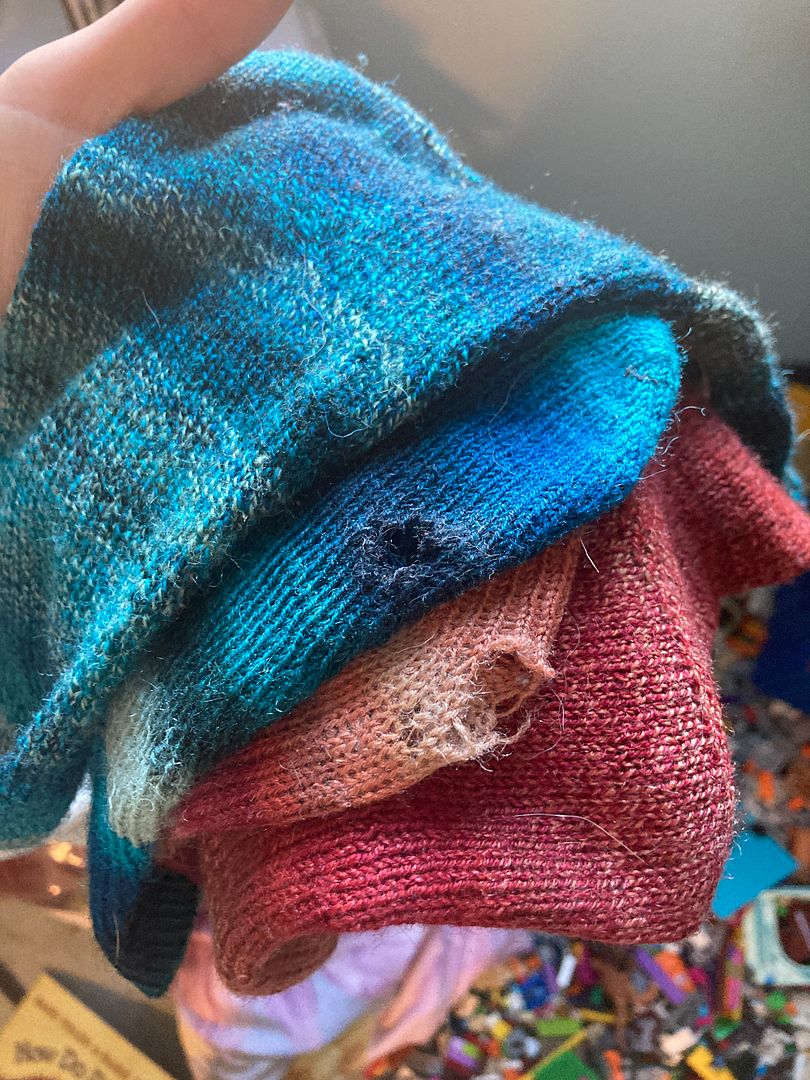
This was about one month after the qiviut socks.
Victim 4: Hill Radnor Cabled (24 December 2023)
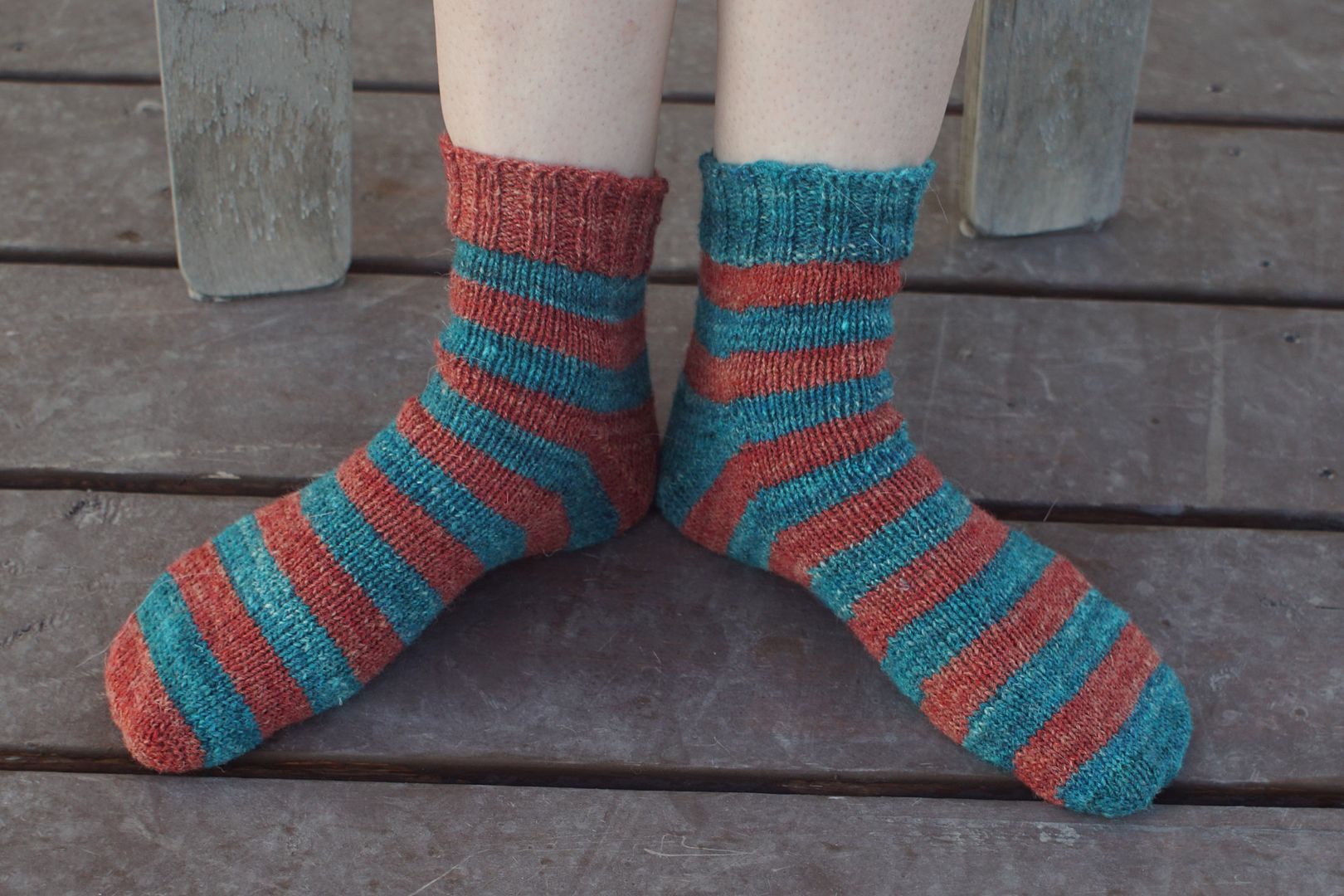
From part of the carded batts of Hill Radnor, I made solid-coloured cabled yarn. This was very thick yarn that I knit on larger needles with fewer stitches, still quite tight. I was very surprised when these were the next to go, with a large hole worn in the heel. Sorry for the blurry photo here.
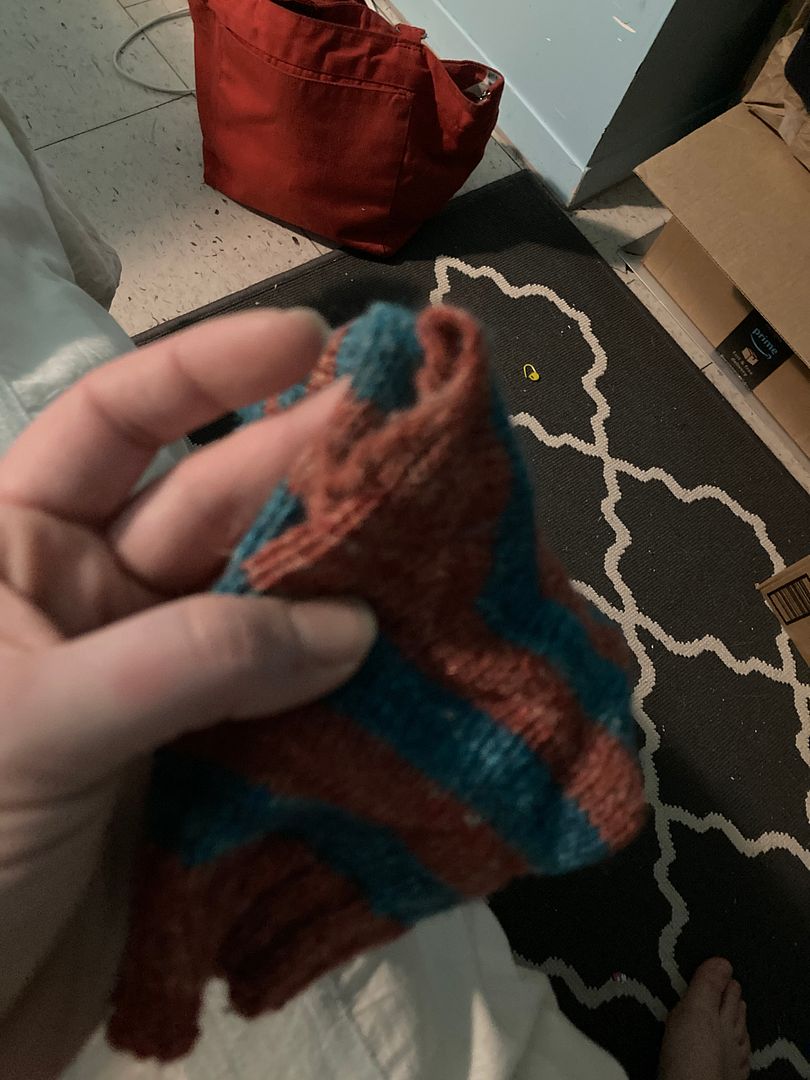
This was almost two months after the first Hill Radnor socks wore holes.
Victim 5: Hill Radnor Traditional 3-ply (23 January 2024)
Since the two pairs of one-colour Hill Radnor socks wore out at the same time, I kept wearing the other socks from both pairs as a new pair. The red sock was the first to go, almost two months after its chain ply partner.
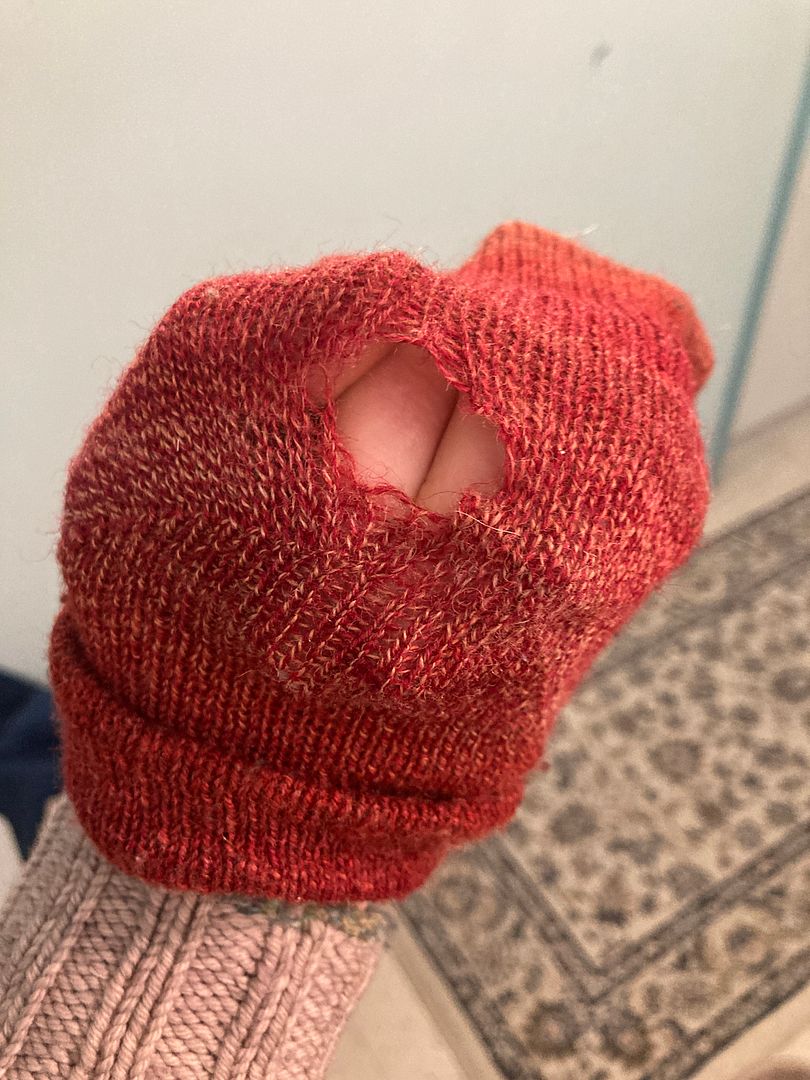
Victim 6: Hill Radnor Combo draft & ply (18 March 2024)
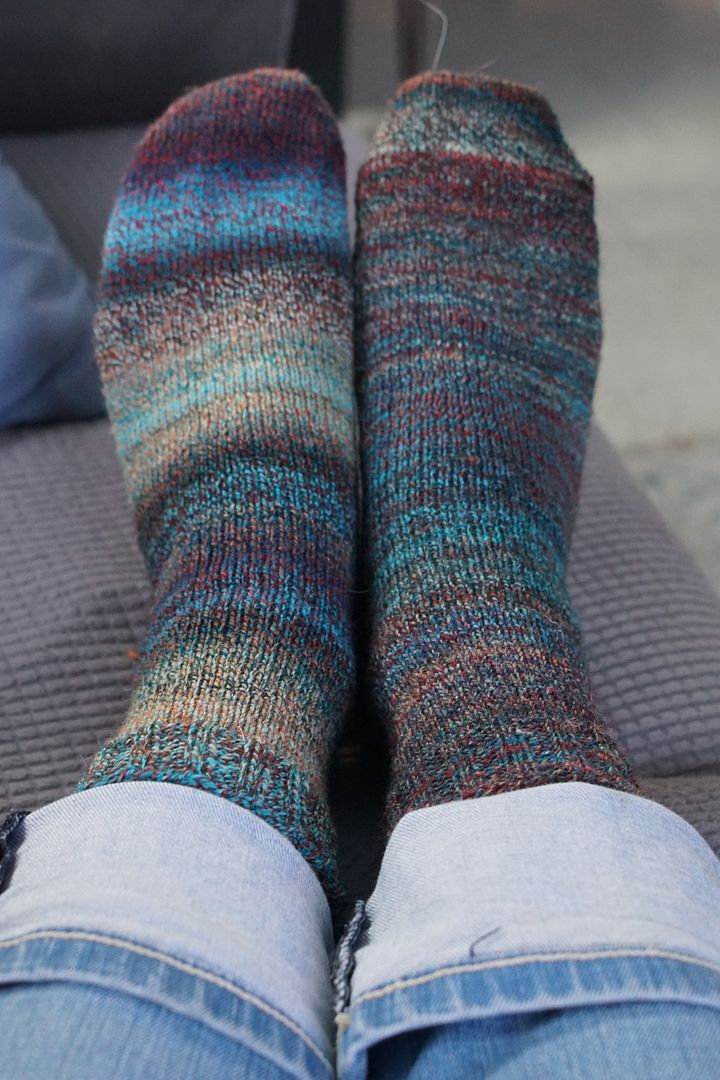
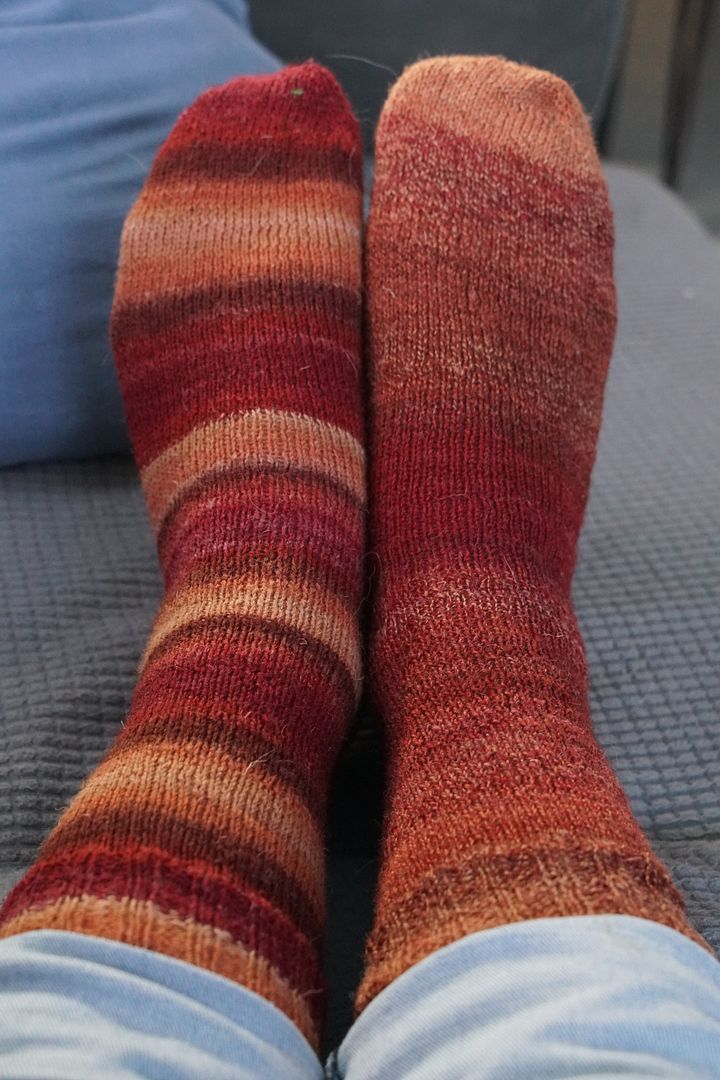
These combo spun socks lasted significantly longer than the other Hill Radnor socks. The sock on the left is combo-plied and on the right is combo-drafted, and they both wore holes in the heels at almost exactly the same time.
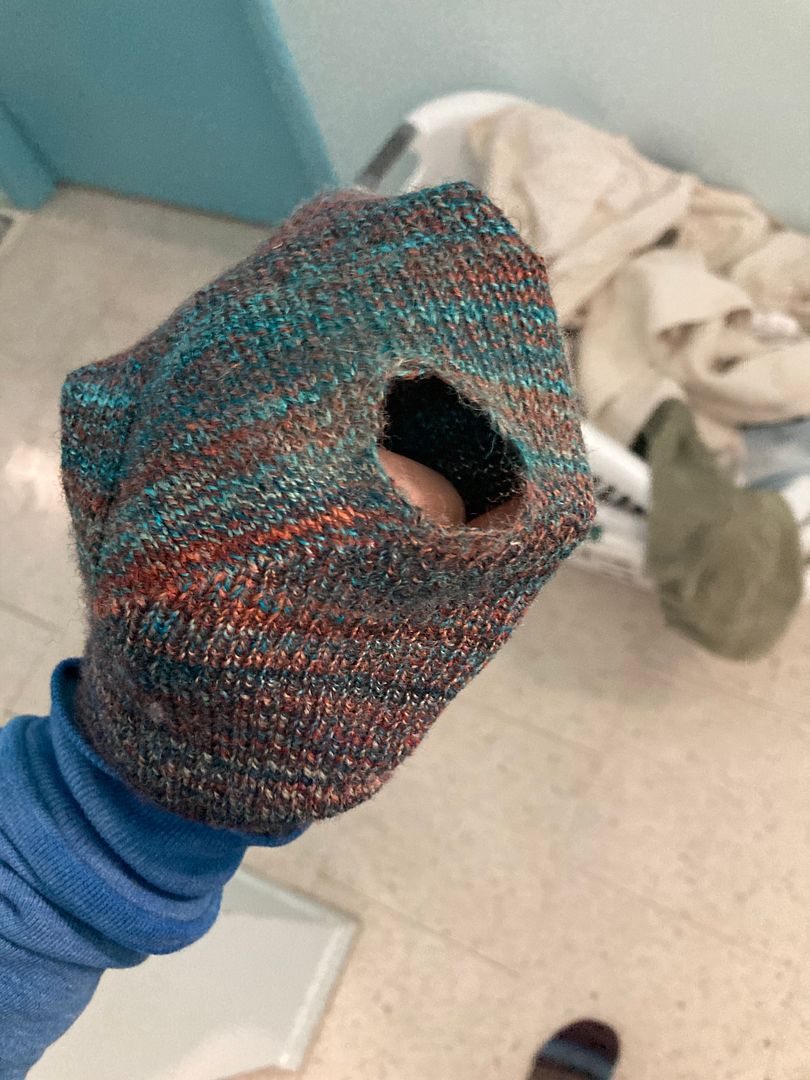
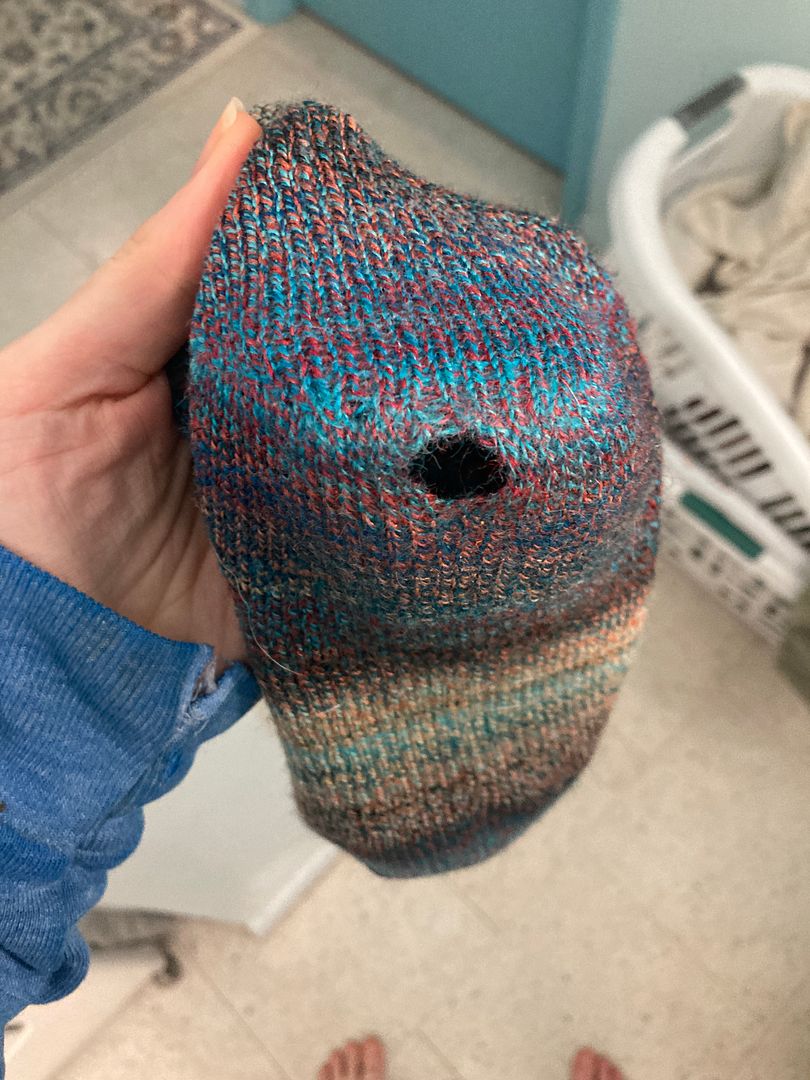
Victim 7: Merino/Silk two-size (21 March 2024)
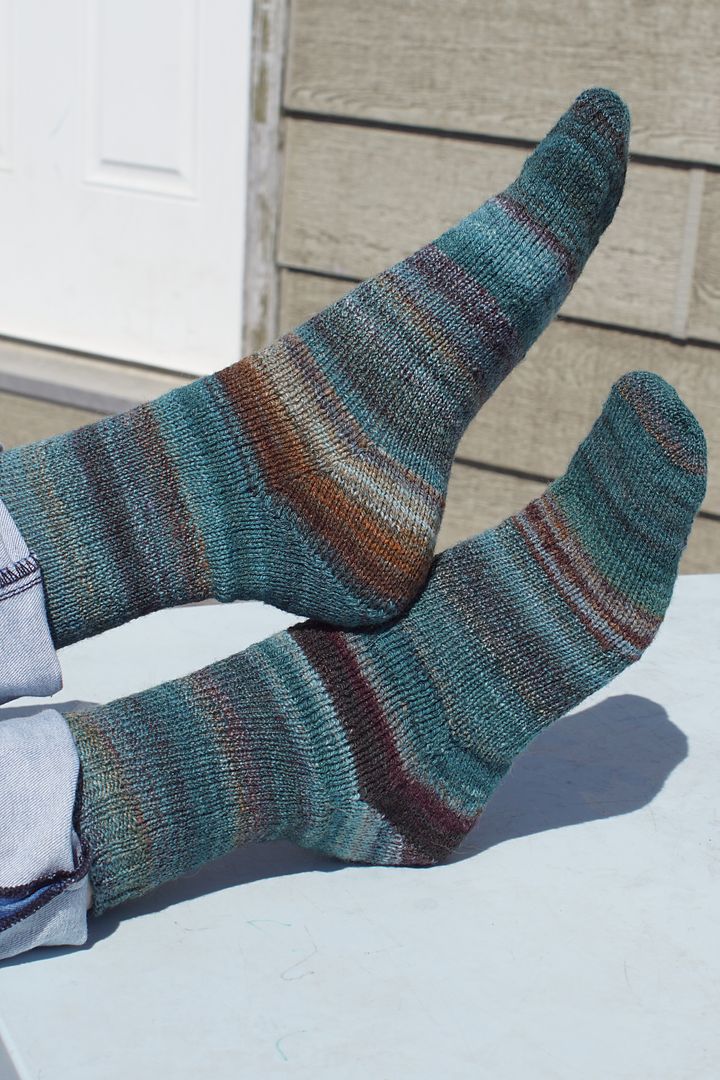
These socks surprised me by lasting quite a long time. As an experiment for the 51 yarns SAL, back in 2021, I spun this braid into a thicker chain plied yarn and a thinner traditional 3-ply. I then used the thicker yarn on the most vulnerable points, on the heels and balls of the feet, without changing to larger needles. This dense fabric lasted quite well.
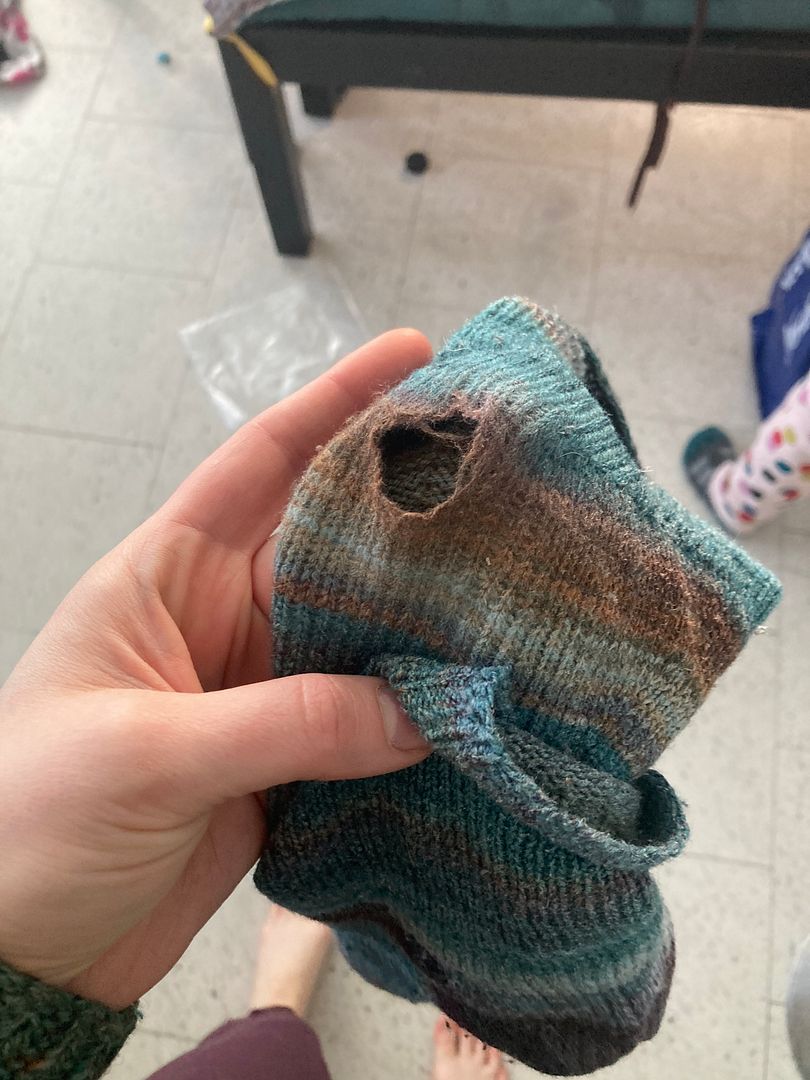
Victim 8: BFL combo draft (21 April 2024)

The superwash BFL socks clearly performed very well, as all of them lasted longer than all but one of the Hill Radnor pairs. They didn’t even develop a hole, technically, but I pulled them from circulation when they had worn to this point. One more wear would have resulted in a large hole, and this is much easier to repair.
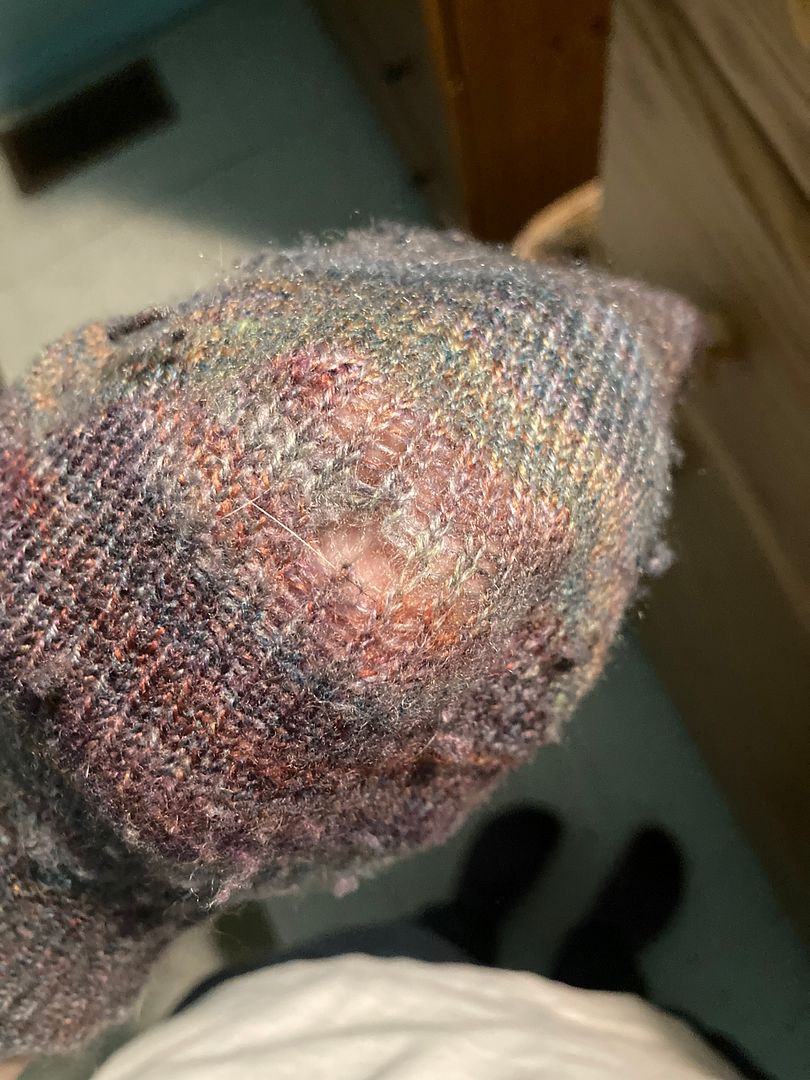
Victim 9: Hill Radnor carded & chain plied (22 October 2024)

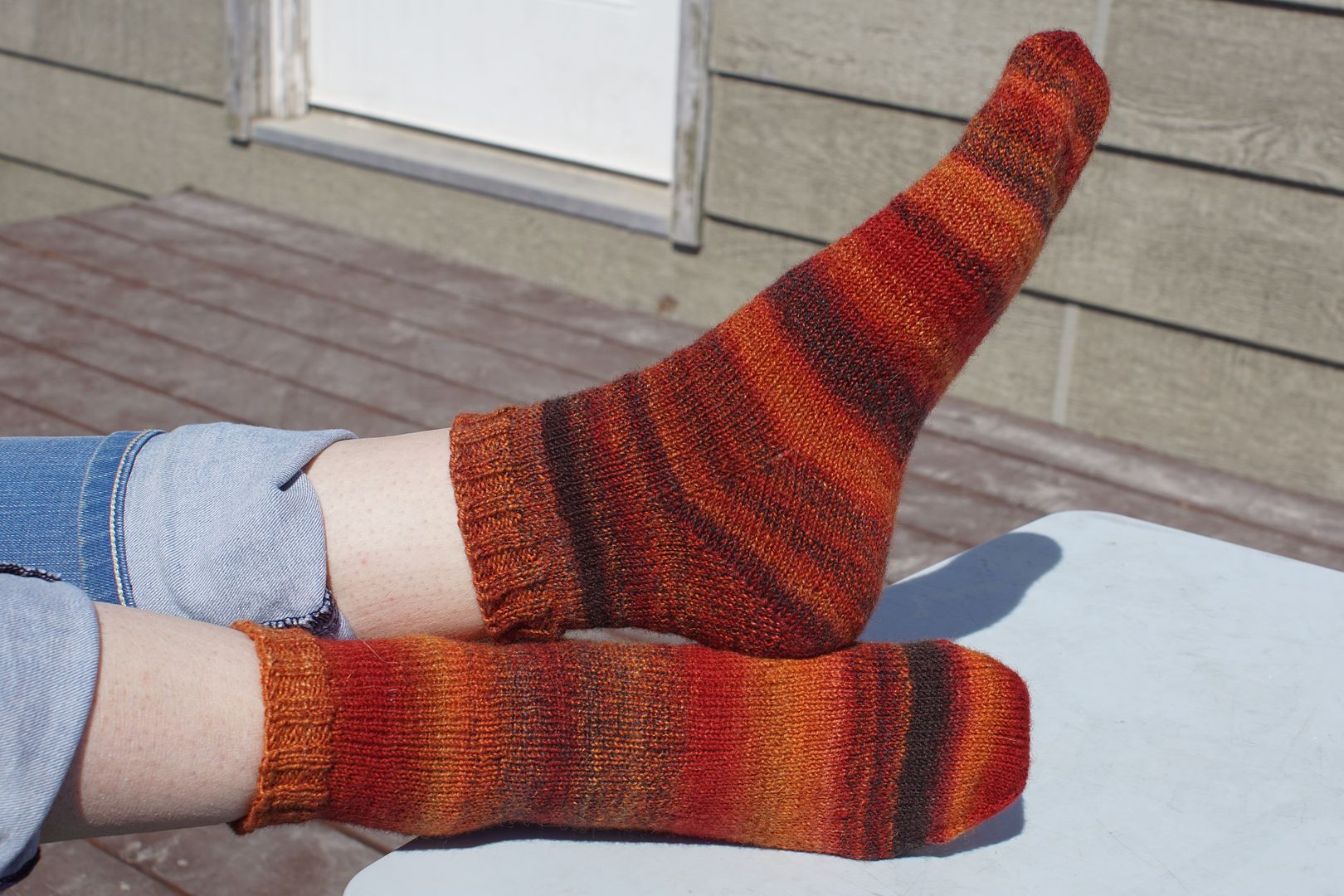
I admit, I’m quite surprised that this is the pair of Hill Radnor socks that lasted the longest. Perhaps because of the carded preparation (although I spun all of these yarns continuous back with smoothing), the yarn had a bit more bulk, and so knit to a denser fabric. I didn’t wear any of my handknit socks during May through September, and these were waiting for me when I got back from Sabbatical. These developed a hole in the ball of the foot, too, so this may have been a snag rather than a wear-through.
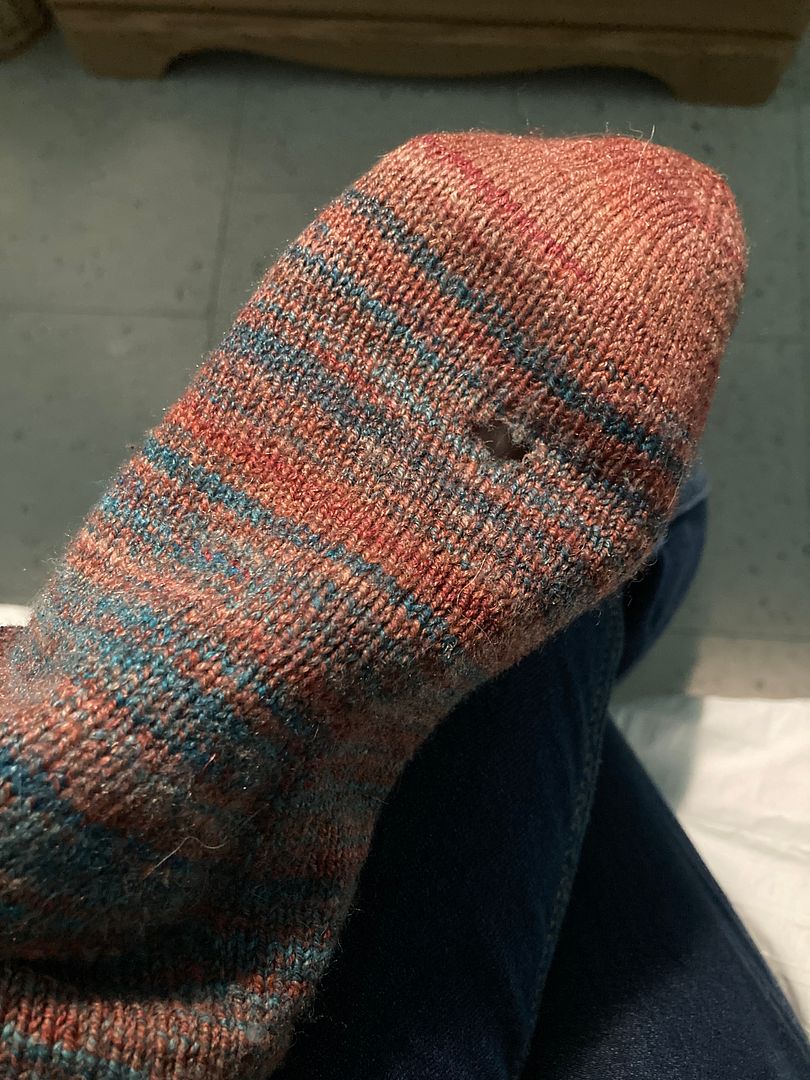
Victim 10: BFL traditional 3-ply (November 2024)
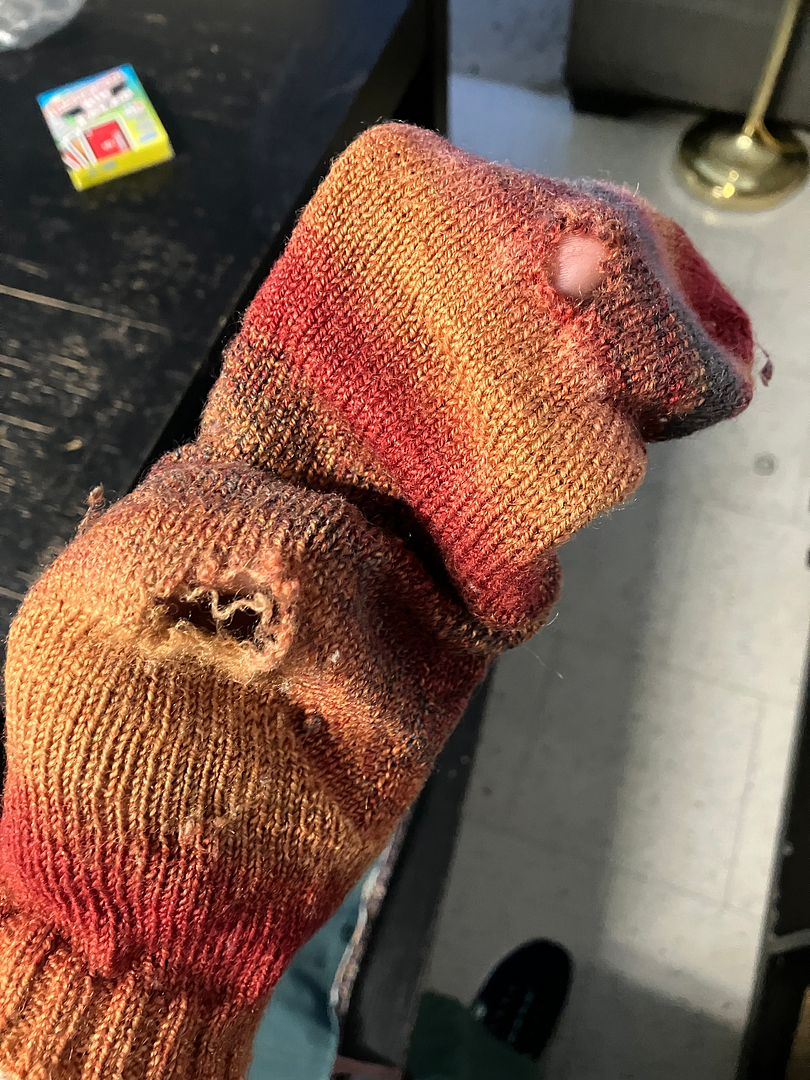
This superwash BFL pair lasted quite a long time as well. It was one of the BFL yarns that I spun to balance, rather than overplying it, but it still lasted very well. It developed holes in the heel and ball of the same foot at the same time.
Unknown: BFL overtwisted traditional 3-ply
I made a mistake here, in that I seem to have lost one of these socks. I don’t actually remember if it’s lost because one developed a hole, or if it just got misplaced in the wash. These are the same fiber and spinning as the socks immediately above, just with extra twist added to spinning and plying. So it’s unfortunate that I don’t remember whether these socks outlasted those.
Victor: BFL opposing ply
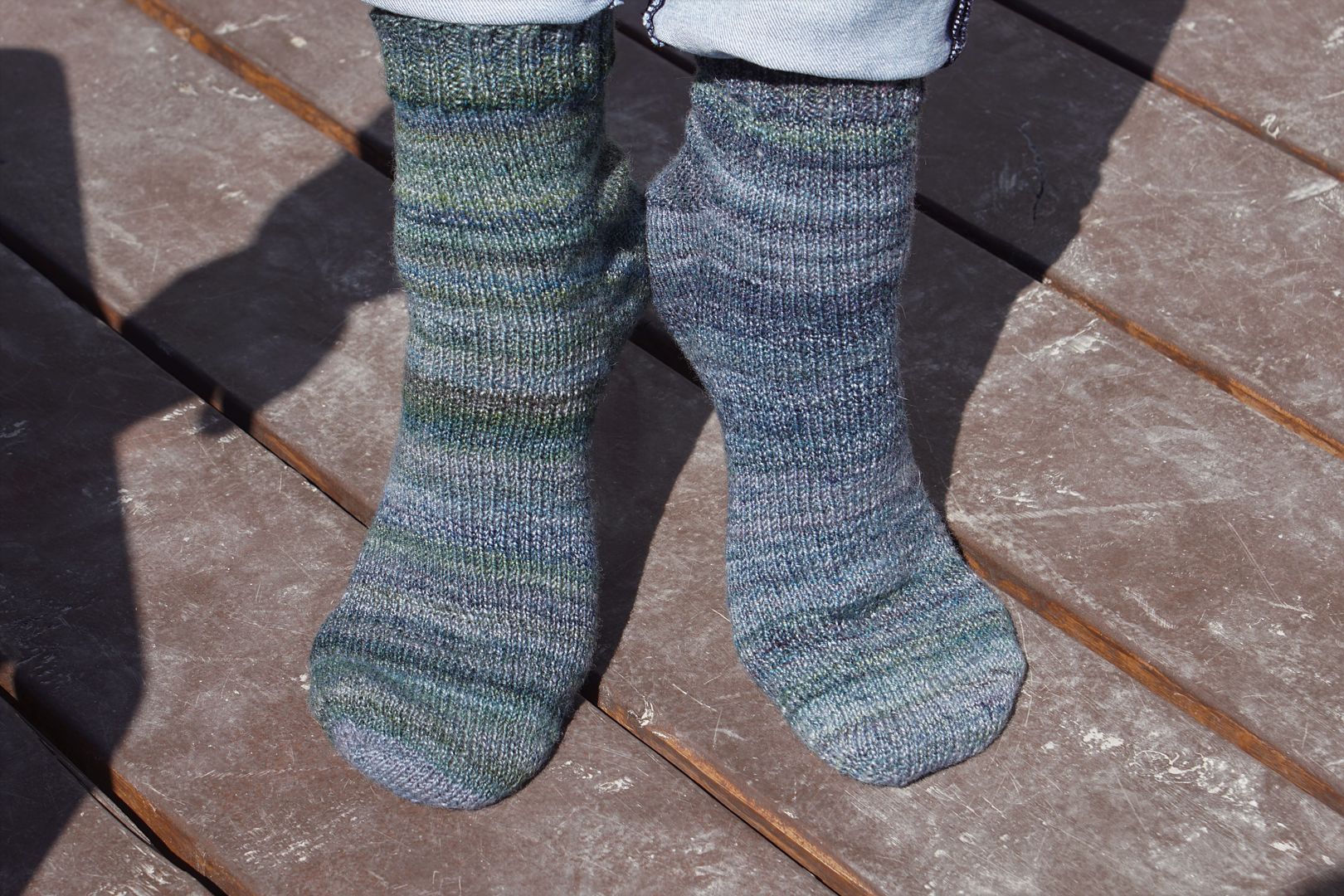
Amazingly, these are the socks that are still going. I have to confess to you, these were my least favourite socks both to spin and knit. Opposing-ply yarn is not cute, and it’s not super-nice to make or work with. My yarn was overplied and overspun, also, and the socks were so biased that they tended to drift around the ball of my foot a little bit – perhaps making their wear more even? That’s generous. Anyway, the heels have held together the longest.
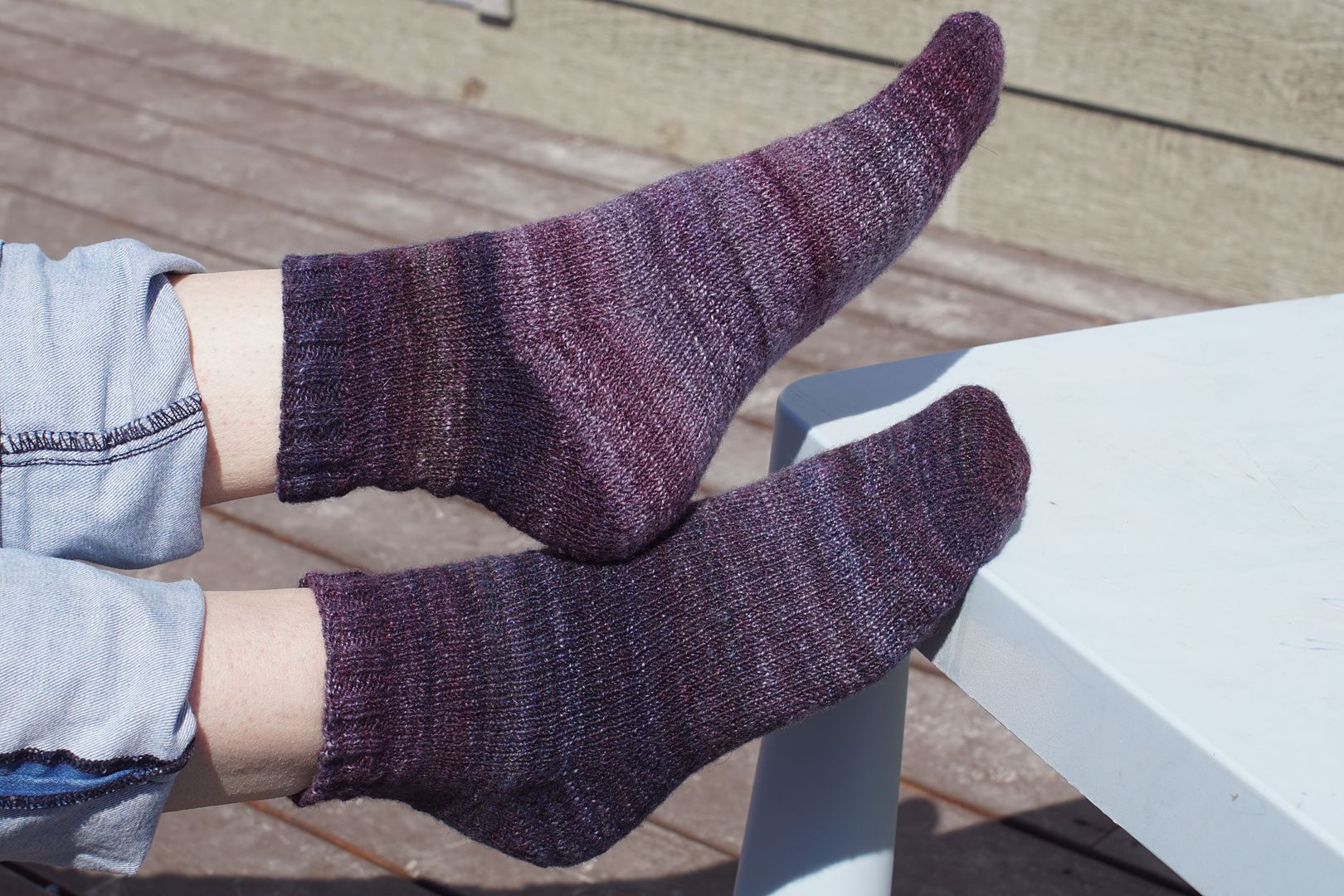
To rank them from longest-lasting to least:
- 11: Qiviut socks (yarn) (2 Oct 2023)
- 10: Hill Radnor (Chain ply) (4 November 2023)
- 9: Hill Radnor Cabled (24 December 2023)
- 8: Hill Radnor Traditional 3-ply (23 January 2024)
- 7: Hill Radnor Combo draft & ply (18 March 2024)
- 6: Merino/Silk two-size (21 March 2024)
- 5: BFL combo draft (21 April 2024)
- 4: Hill Radnor carded & chain plied (22 October 2024)
- 3: BFL traditional 3-ply (November 2024)
- 2 (Unsure): BFL overtwisted traditional 3-ply
- 1: BFL opposing ply
Conclusion 1: Watch how fine you spin. I got so used to spinning fine for socks that I got into the mindset that finer is better, to the point that I was spinning 3-ply yarns so fine that I couldn’t knit them up into sufficiently dense sock fabric. I think that’s a major reason the socks wore out in the reverse order that I knit them, and made for a not-quite-fair comparison between the superwash BFL and the Hill Radnor.
Conclusion 2: Consider your sock pattern. Next time I do this, I will use a top-down heel flap pattern, which is much more suited to my pointy heels.
Conclusion 3: BFL is pretty great. Hill Radnor might be just peachy when it’s spun to a comparable diameter, but long wools are tough for a reason.
Conclusion 4: Give opposing ply a chance.
Conclusion 5: Don’t lose your socks.
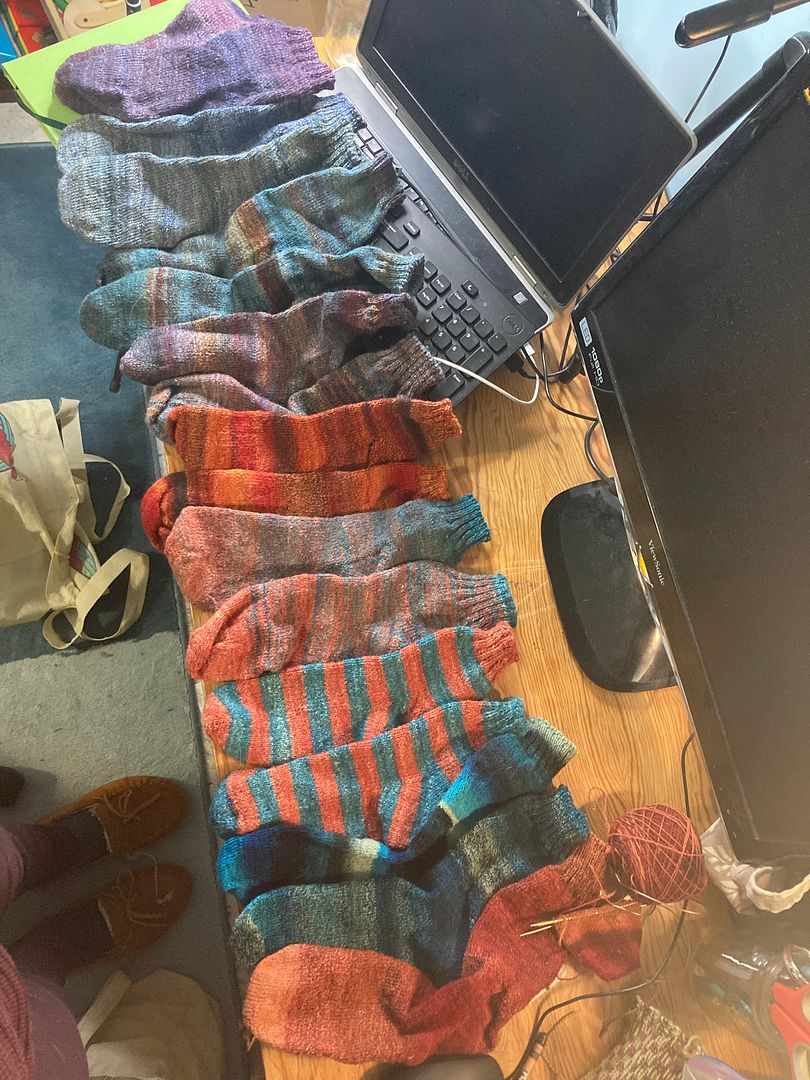
I am already in the midst of repeating this experiment. I will be making seven pairs of socks out of the “Panda” blend, which is a 60/30/10 blend of superwash merino/bamboo/nylon, and 2-3 pairs out of an as-yet-to-be-revealed blend for a new Wool n’ Spinning Breed Blend and Colour Study starting in January, dyed by Meghan of Bramble Ridge. This time I’ll be comparing just ply structure as closely as I can, as I’ll be paying closer attention to consistent yarn diameter, and trying different ply structures for each pair.
If you’ve made it this far, thanks so much for reading! These are only small data points; your experience may very depending on a wide variety of factors. I’ll just keep knitting the best foot-coverings that I can, and report back how they perform, knowing that it will be edifying to a tiny but precious cross-section of humans. Be warm- and fleet-footed, my friends.
 Osborn Fiber Studio
This is so cool! I love long-term projects and follow-ups like this one. I need to knit more often so that my fingers get nimble enough to go back to knitting socks, ha ha!
LikeLike
Thanks! Getting to the follow up takes some doing but I’m so glad I did it! Socks aren’t that bad 🙂 hope whatever you are making brings you joy.
LikeLike
SUPER interesting results, I love that you documented these so thoroughly, lost sock notwithstanding ;).
LikeLike
Haha thanks! I haven’t given up hope that the blue sock will appear someday!
LikeLike
Okay that was me – I had no idea I had some wordpress account and that I was logged into it somehow?!
LikeLike
😂 weird! And slightly disconcerting lol
LikeLike