Hey everyone! I’m here on the blog again, with some very belated posts about some big finishes I’ve had over the last couple of months. I’ve shared about some of these finishes on The Wool Circle, but I still find value in collecting my pictures and thoughts and celebrating these big projects with a post of their own.
I’ll start with Port Charlotte, a sweater that started way back in April, and finally left the needles last month.
The Port Charlotte pattern is one I’ve had my eye on for a while. It’s a Kate Davies pattern from one of her older books, Inspired by Islay. One of the reasons I knit so many KDD patterns is that many of them adapt super-well to handspun. Port Charlotte in particular struck me as perfect for highlighting a smaller quantity of handspun, particularly a gradient, in a festive yoke.
The yarn I wanted to highlight came from one of the early experiments in the Year of Colour, which we declared 2023 to be over at Wool n’ Spinning. In episode 89, we were still deep in discussion of colour wheels, of which I made three total. This episode was particularly fun because after blending the primaries on hand-cards, I made a time-lapse of spinning the final yarn.
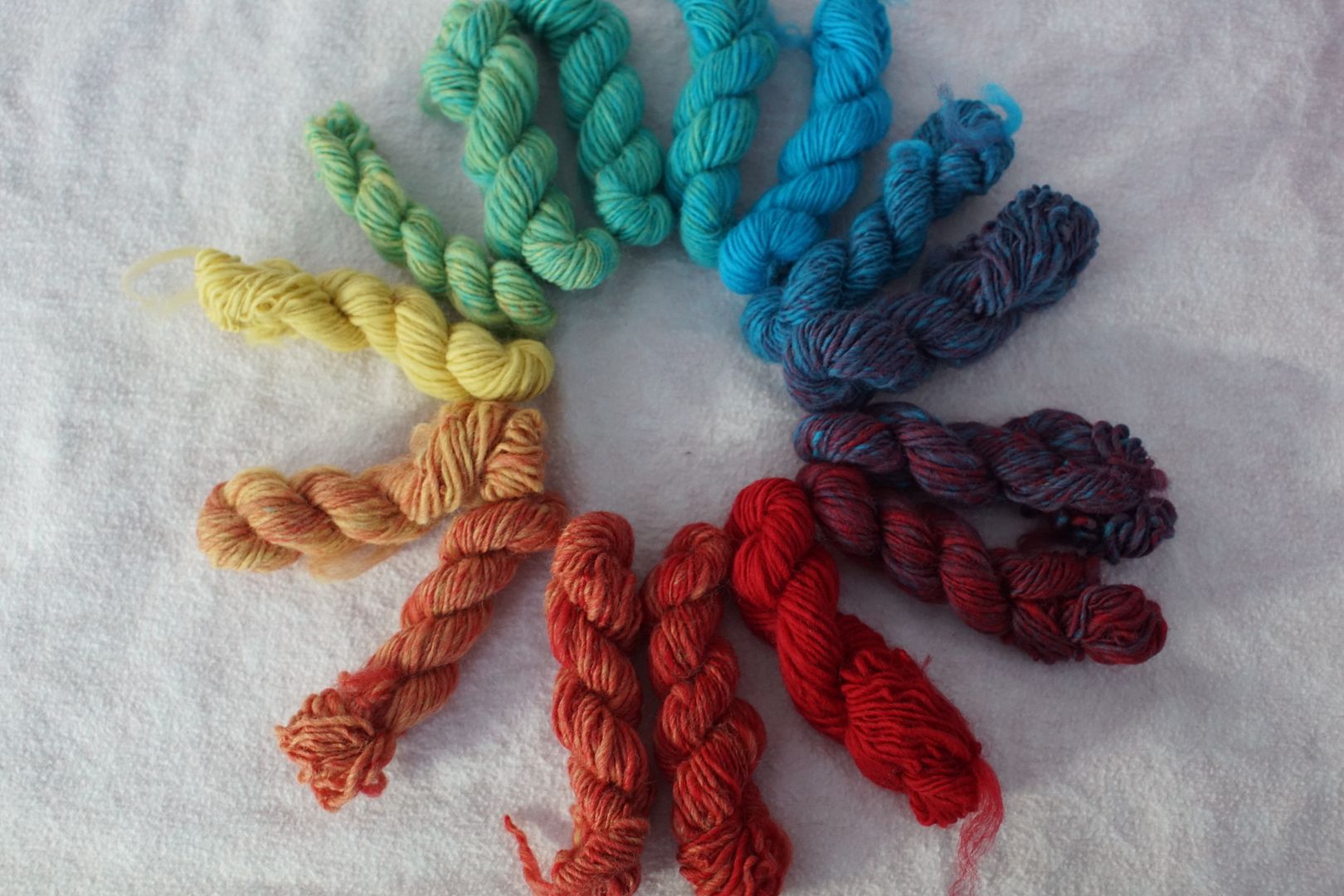
I learned so much about colour that year. Probably the first and biggest lesson I learned, which applies in so many different contexts, is the power of value (light and dark). That was true in making this colour wheel, as I adapted my mixtures around such a light yellow, and it was true in a different way in making this sweater.
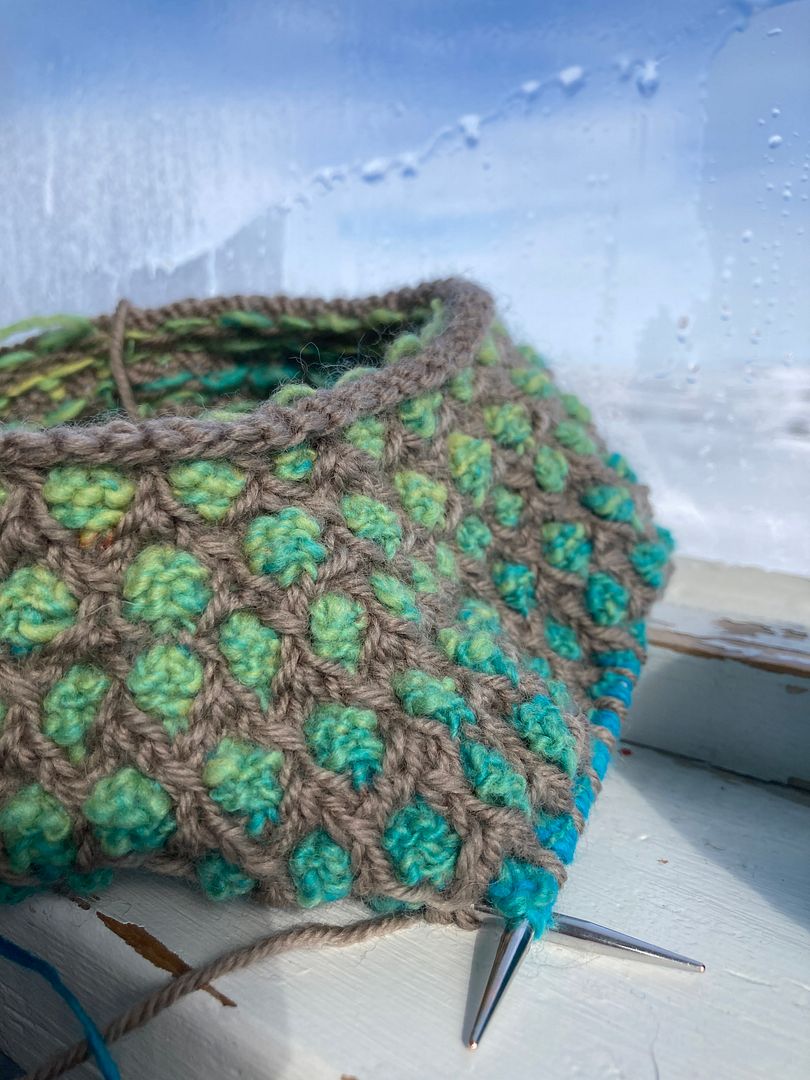
I started Port Charlotte on our last trip to the cabin, back in April, before our long trip. Here I should explain the many alterations I made to the pattern. I knit a couple versions of the Shore Street hat, the accompanying hat pattern with the same stitch pattern in it, to get a feel for gauge. Then, using the measurements on the schematic, I converted the pattern to top-down and knit it to my own size.
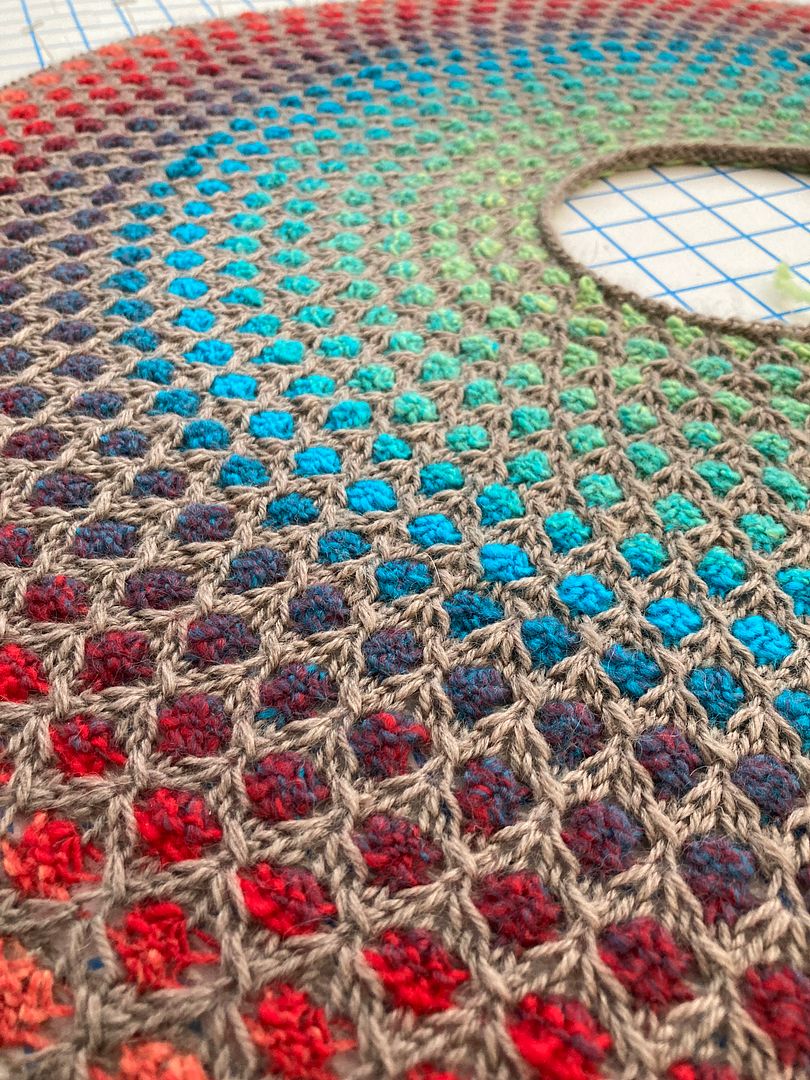
The yoke knit itself within a couple of weeks. I mean, is there anything more entertaining than a beautiful yoke? Whether bottom up or top down? And, for the top-down knitters among us, is there anything more geometrically pleasing than a yoke on a blocking mat?!
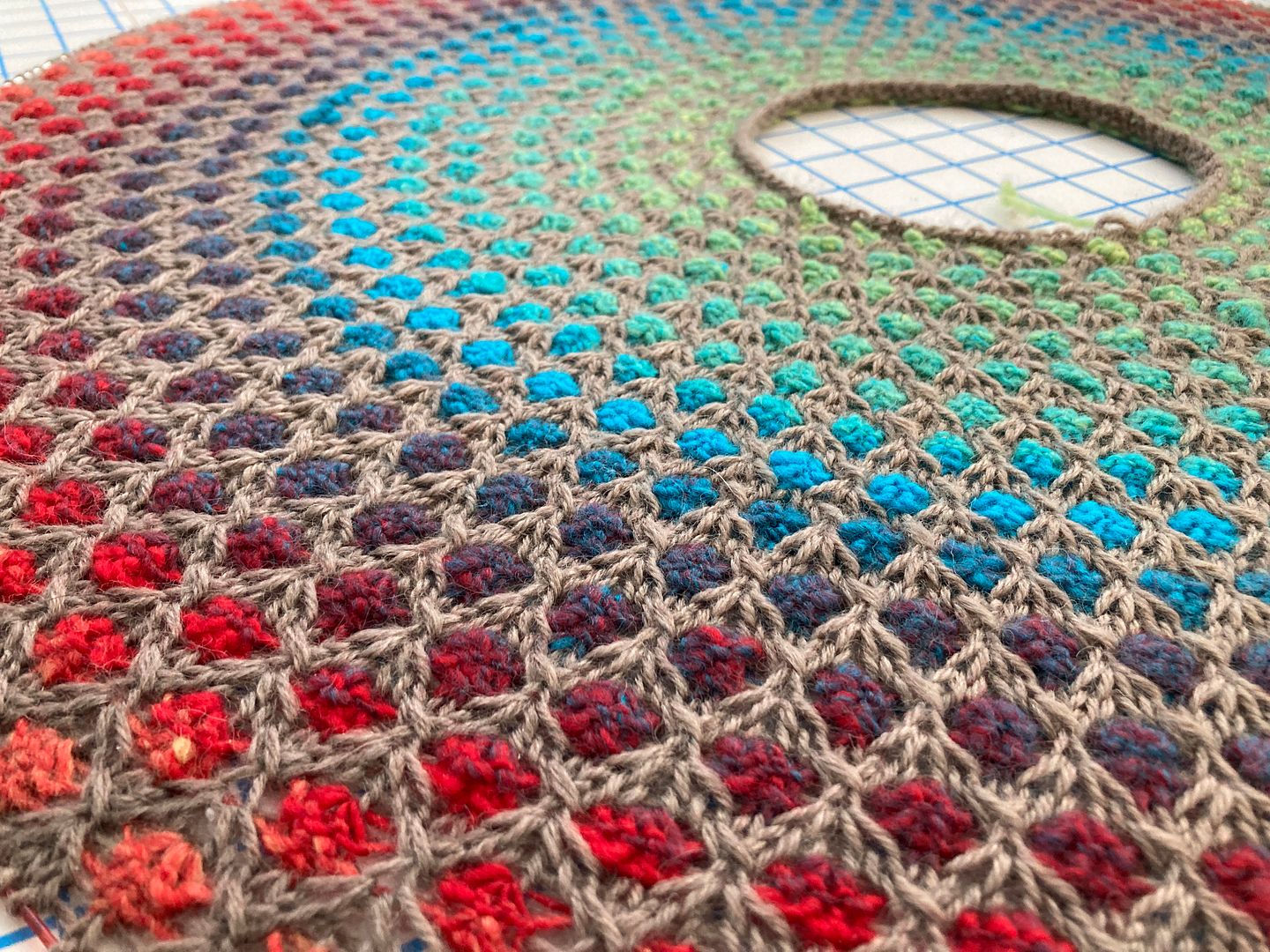
Blocked and admired, there it sat for four months while we traveled. I had other plans for travel crafting, and hoiking around a sweater like this was not on my to-do list. That said, I had it back on the needles within a week or two of being back in town, and I worked steadily away at the body and sleeves until it was finished. I lifted it off the blocking mat mid-September and have been showing it off ever since.
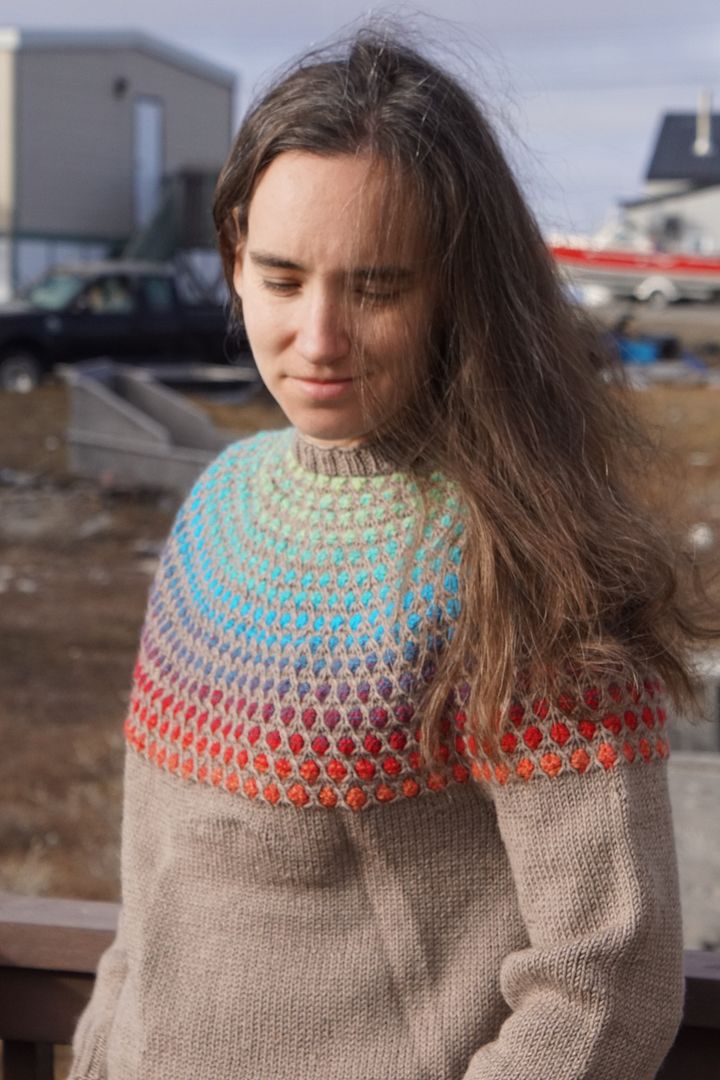
On the rest of the pattern alterations: once the yoke was finished, I referred to the pattern for numbers to split into sleeves and body, then didn’t look at it again. I had intentionally gone for an oversized yoke with lots of ease in the body, and I just kept trying it on until the body had reached that nice slightly-cropped length I’m really into now. I wanted an edging that laid flat but didn’t pull in much, so I went with a 3×1 rib. For the sleeves, I did very gentle decreases down to the wrist, then sharply decreased the remainder for a tighter fit, with 2×2 ribbing for snugness.
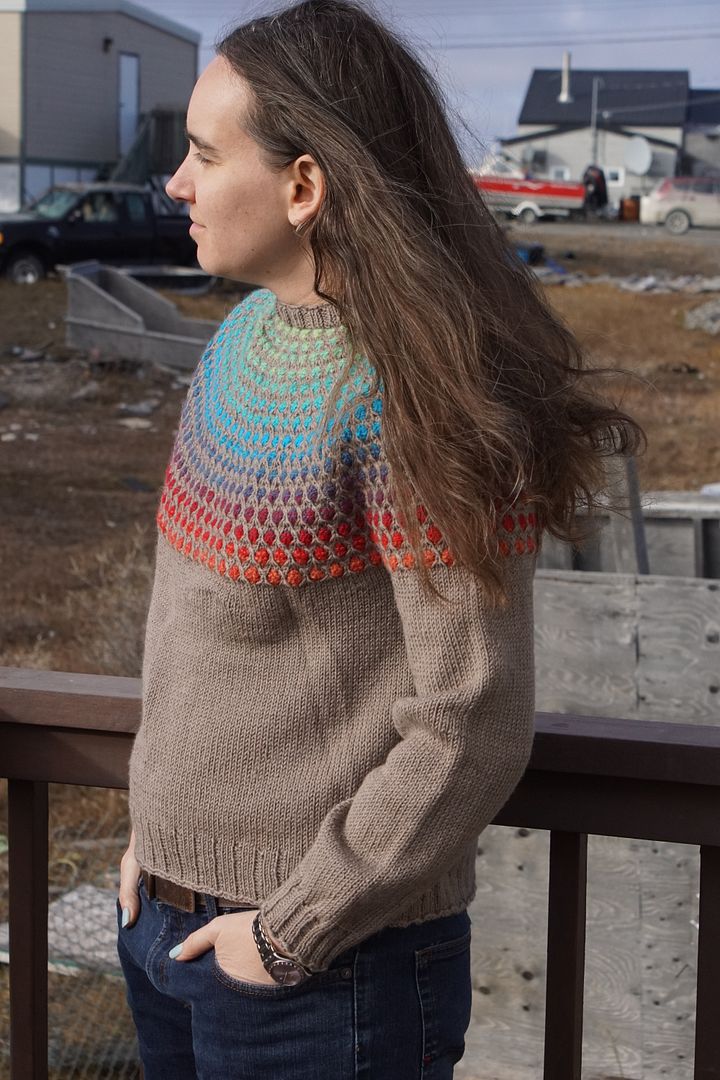
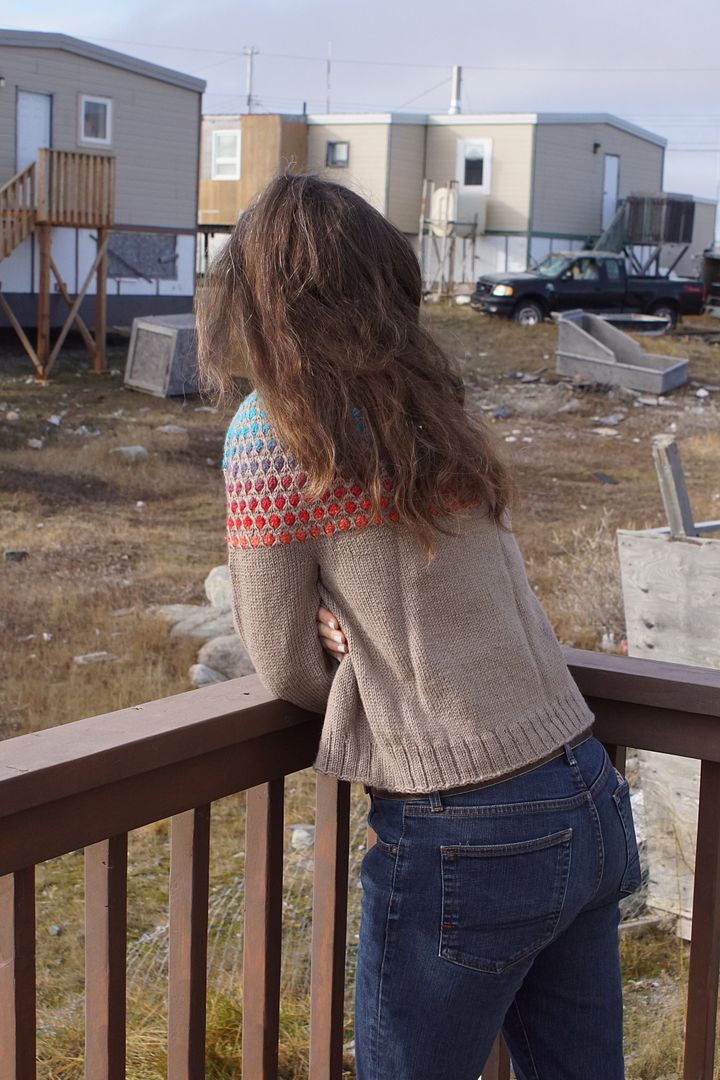
I also added short rows, both above and below the yoke. Lots of patterns don’t include these, but I like lots of them, so I’ve learned to add extra.
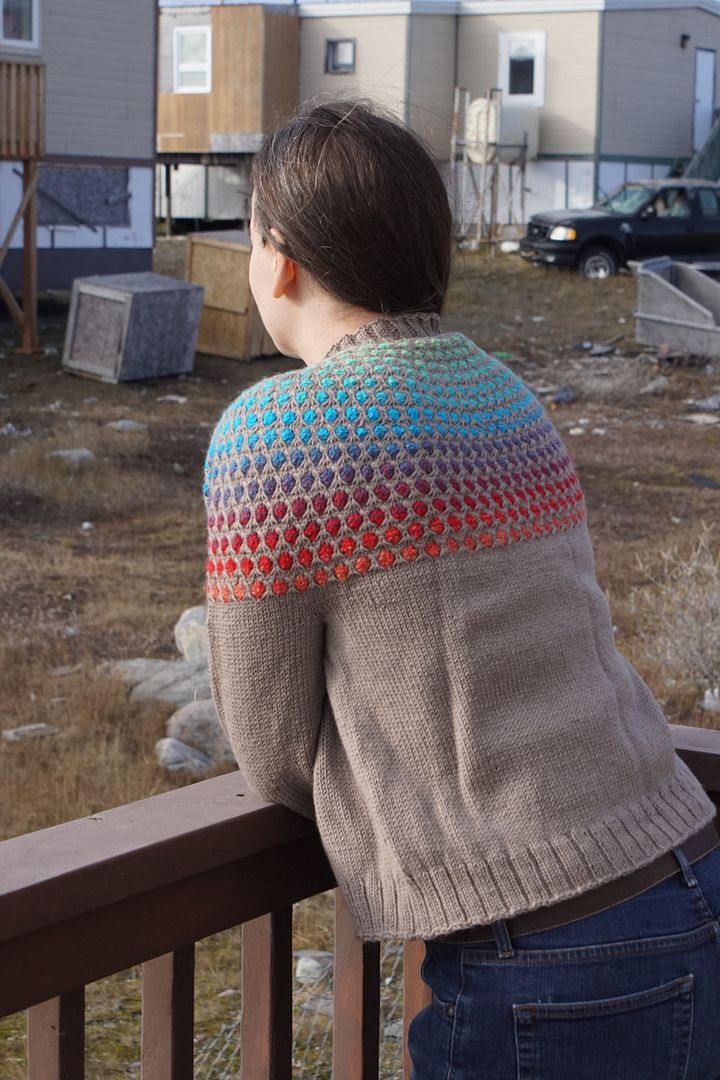
You might be wondering, where are the missing colours in the colour wheel? The story is, my nephew decided when he turned five that his favourite colour would be yellow. So I knit him a hat with yellow in it, and I had to rather raid my samples because I don’t keep a lot of yellow yarn around. I didn’t mind because I knew I didn’t want a particularly rainbow-y look here.
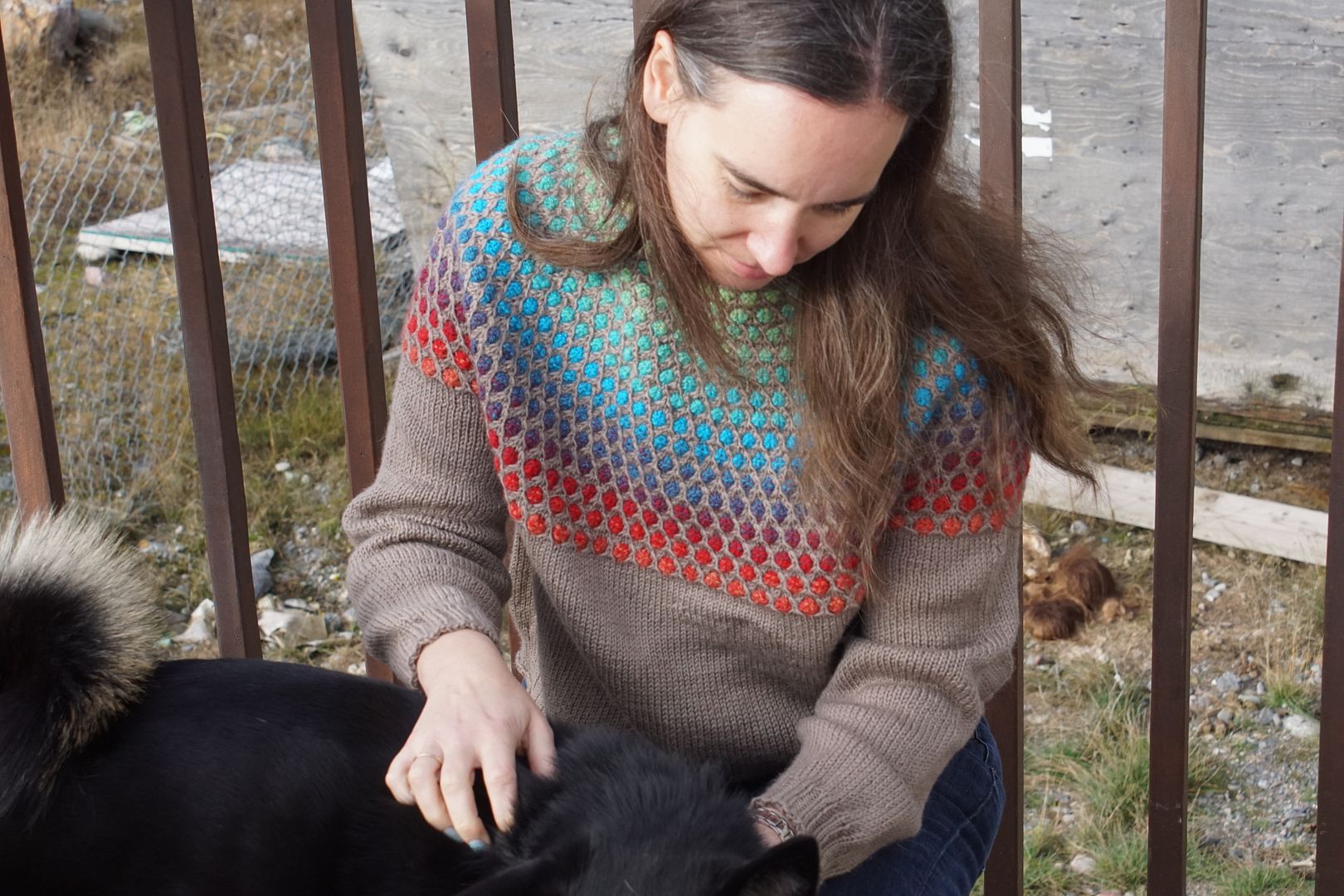
If you’re wondering about the main colour yarn, it’s Patons Classic Wool DK Superwash, in the colourway “Latte.” I bought about 40 skeins in a destash from a fellow Rankin crafter who has since moved away, and I used a great deal of it in my Skep blanket. I still had lots left, though, and it was perfect gauge-wise for this pattern and this yarn. It’s not a colour I ever would have bought to wear, being sort of taupe/grey-brown. It’s almost too non-descript to be in my colour vocabulary. But I am learning that my vocabulary of neutrals could stand to expand; I’m very thankful I had this on hand.
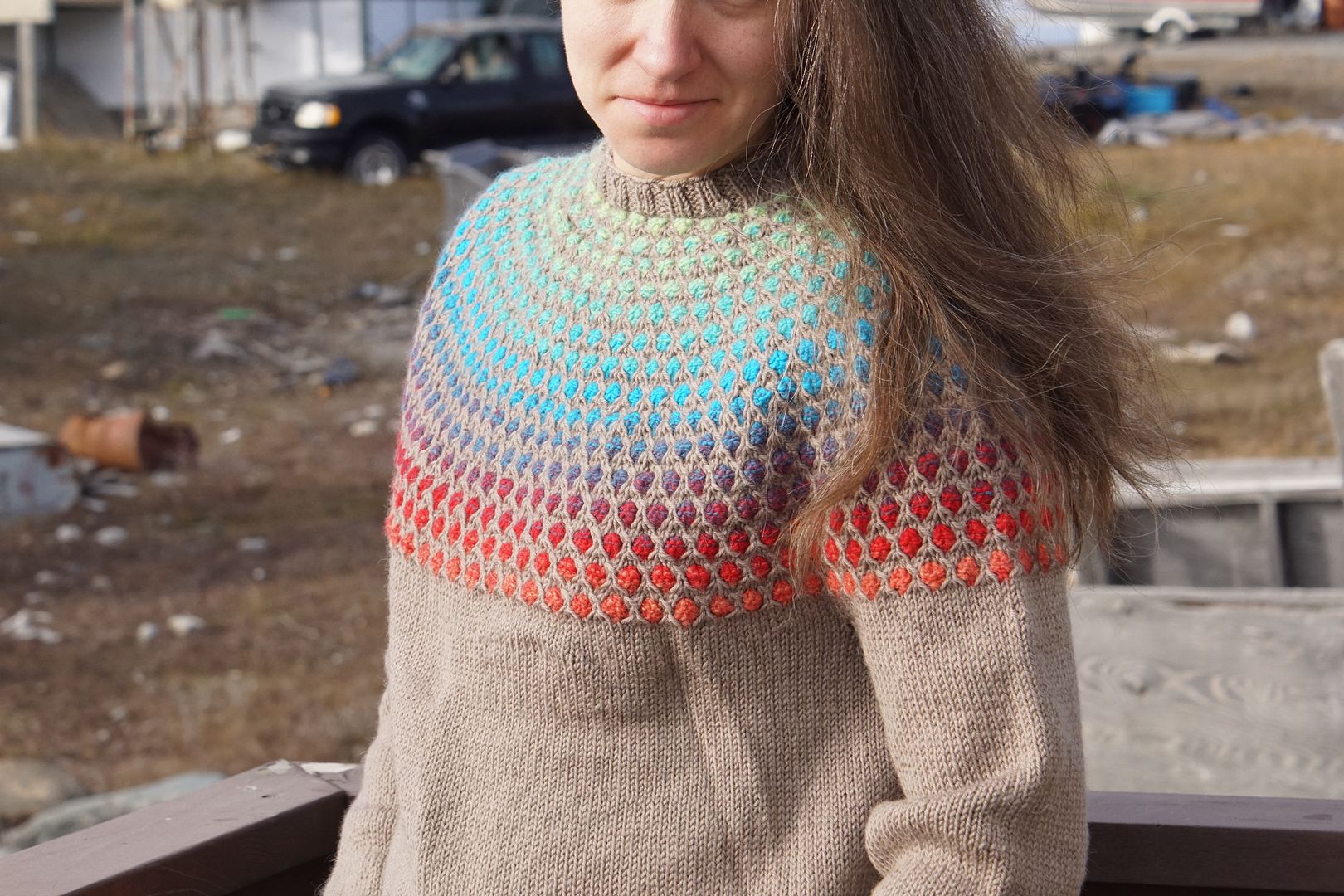
I think one of the reasons this yoke really works goes back to value. The Latte colour is interesting because it’s very mid-value; it looks lighter in these pictures but it’s really fairly middling. My colour wheel, by contrast, includes a gradient from a very light yellow to a very dark purple where the saturated red mixed with cyan. This means that at some points, the contrast colour is lighter than the background, at others its darker, and at others its very close. This creates a shimmering effect as your brain struggles to reconcile the smoothness of the gradient with the different levels of value contrast.
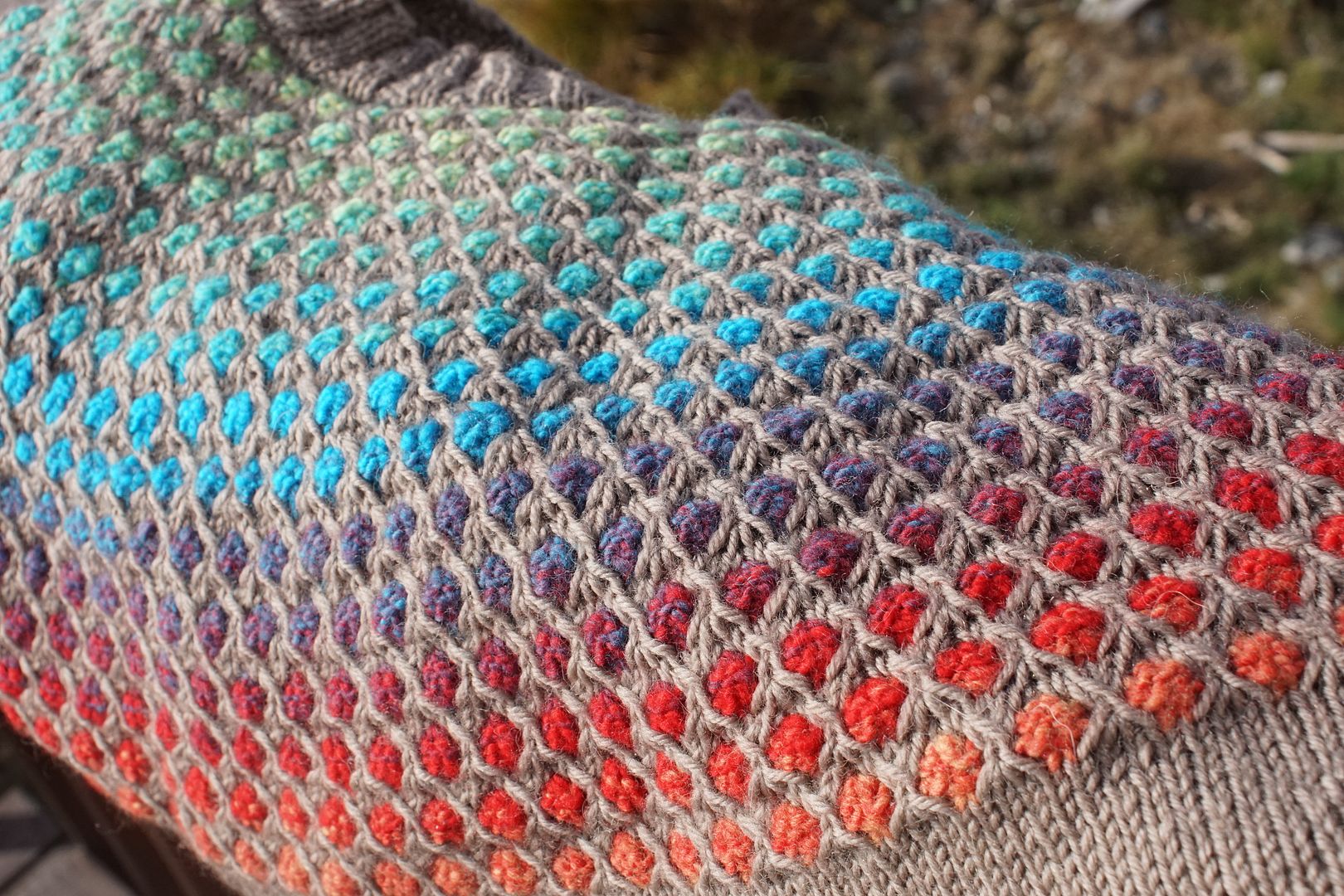
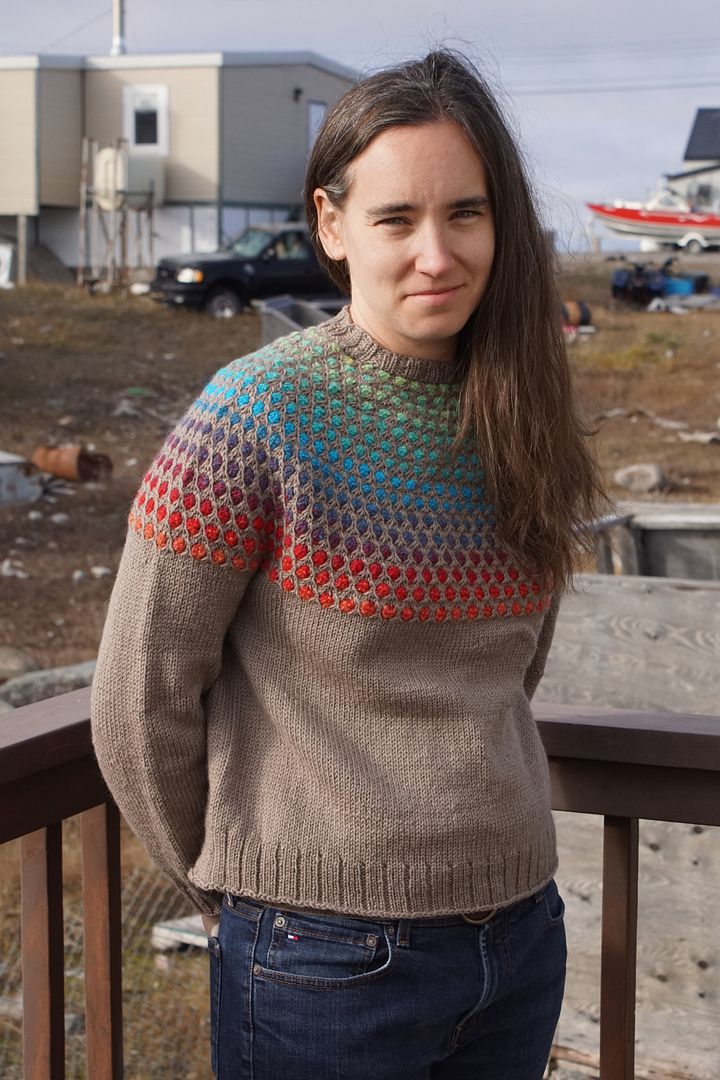
This made for a very successful knit, and with the wide body, also successfully used up almost all my Latte.
Looking forward to more such knits: I have one more of these colour wheel sets, this one made with natural-dyed primaries dyed by my mum, a much larger set with probably twice as much yardage as went into this yoke. It hangs on my wall, asking, “when will I become something?”
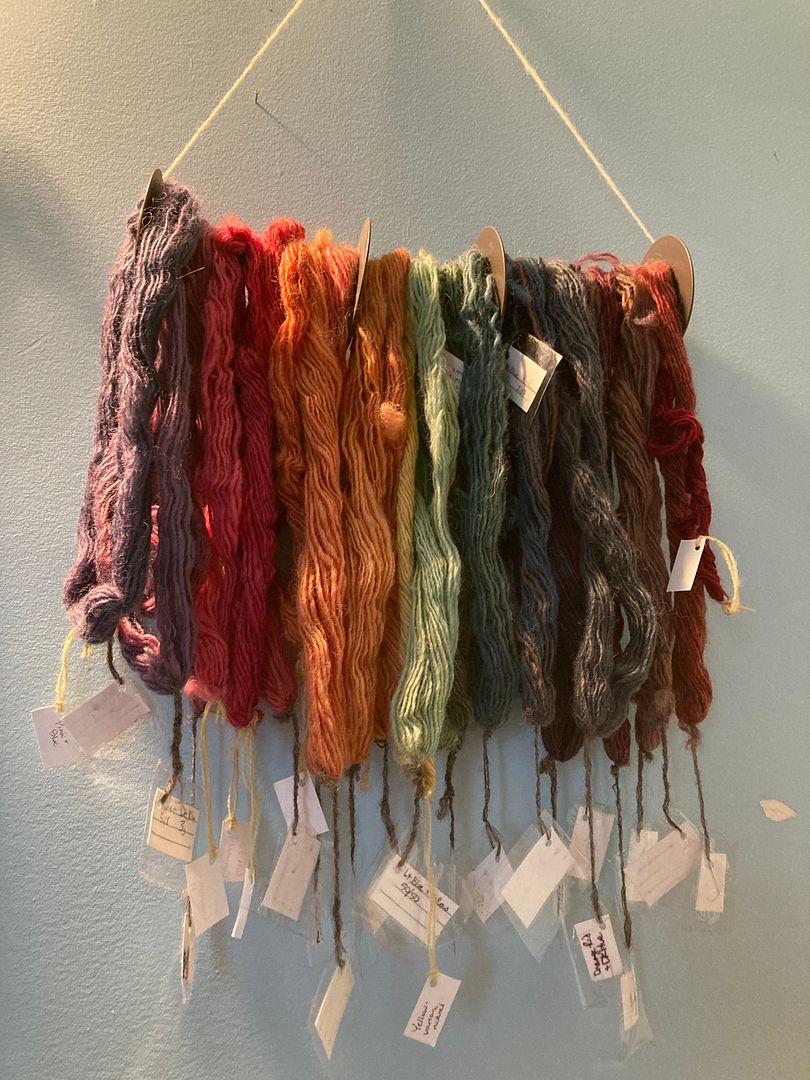
I don’t know, yarn, I don’t know. It’ll probably be a minute. But it does keep me asking, where can I put a larger gradient of yarn? One too big for a yoke, but not soft enough for a scarf? You might say vest, and oh man, I am so not a vest person right now, but I’ll never say never.
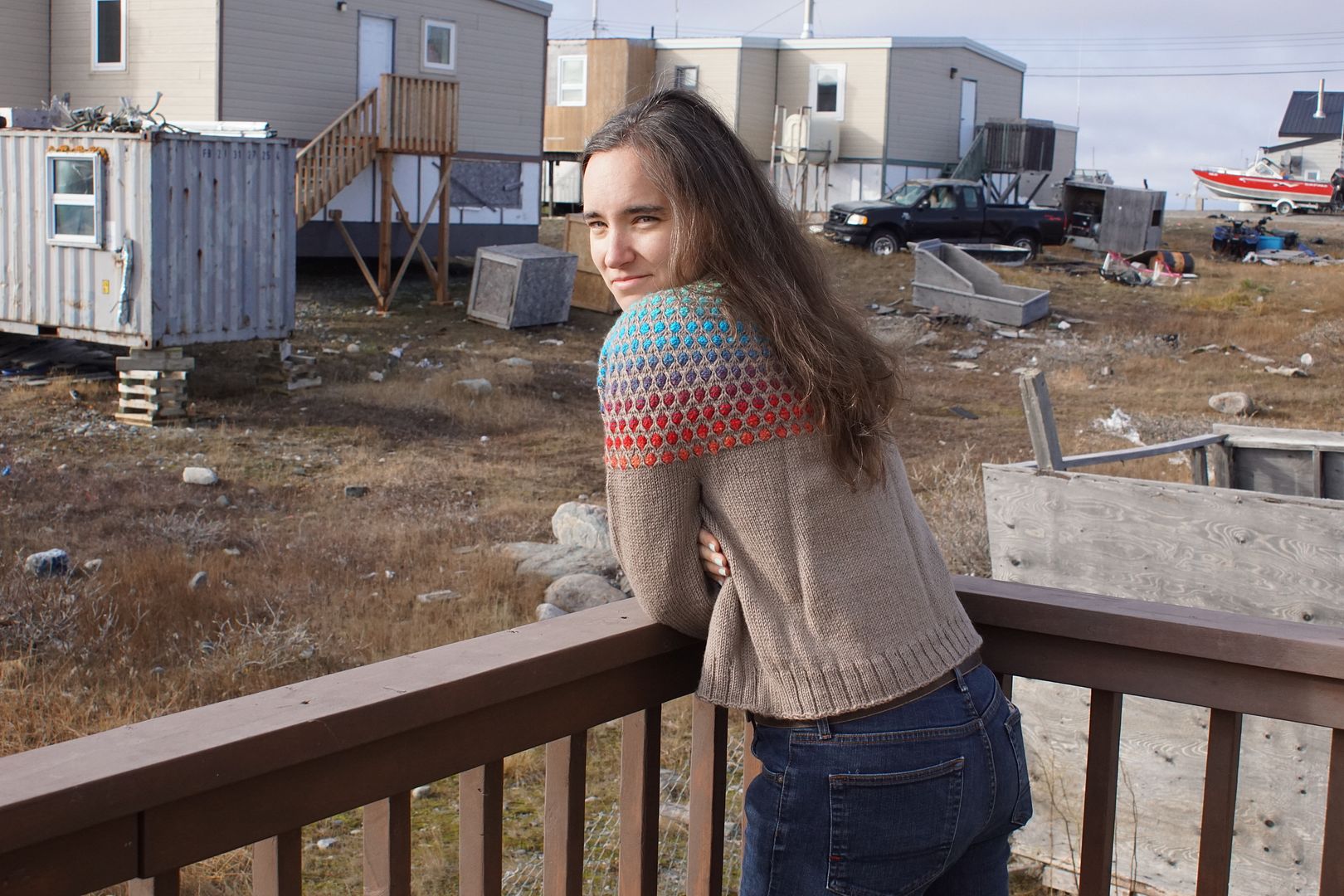
Anyway, that’s my Port Charlotte! Thanks to my honey for taking the pictures in this and the following posts, on our beautiful porch overlooking our messy back alley. Northern life for sure.
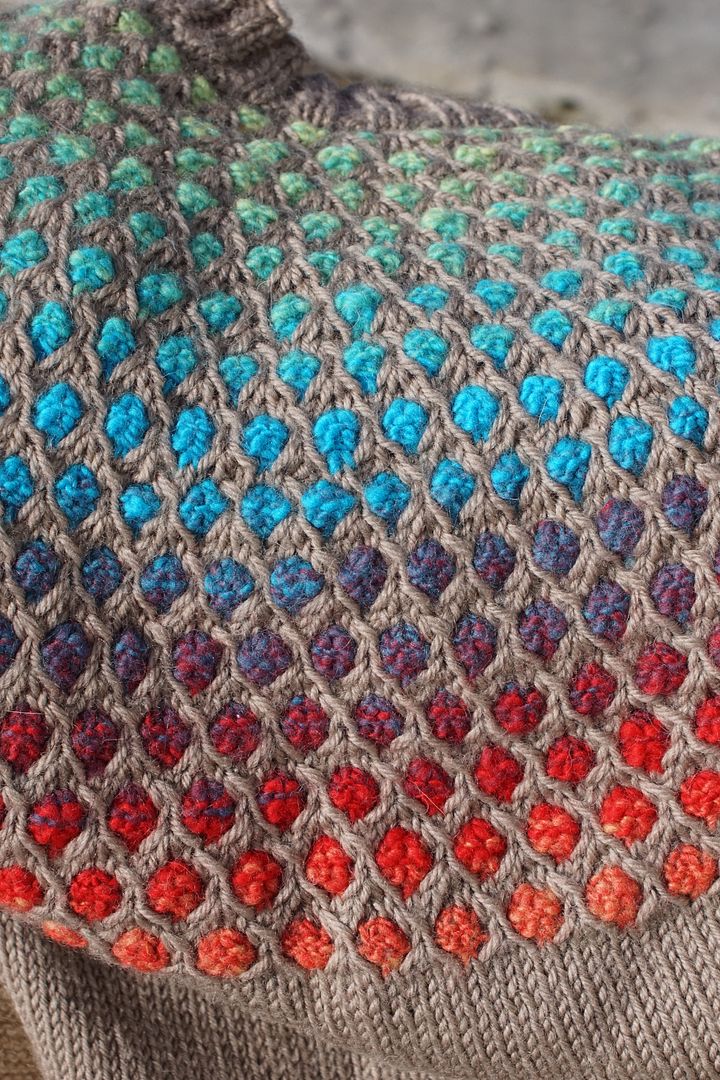
Come back next time; I have more big finishes to write about…
 Osborn Fiber Studio
Gorgeous!
LikeLike
Beautiful sweater!
LikeLike
Thank you!
LikeLike