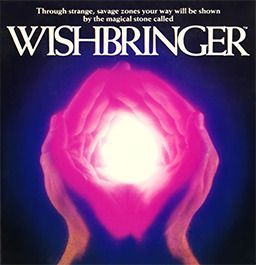
I’ve been knitting for a long time. If you’re a regular reader of this sixteen-year-old blog, you know this about me. What you might not know is that I have been playing video games for even longer. I fell in love with them around the time I learned to knit. There was a Commodore 64 in my parents’ house when I was very little, and as soon as I knew how to read, I would mess about with a text-based game my parents had that came in a box with a map and a physical rock. But I mark my real beginning of a relationship with games when I was around 9, living in my grandparents’ basement while we went through the torturous process of building a house, and my dad bought us a family PC and several point-and-click adventure games.
I never felt like a “real” gamer, for reasons of gender norms and insecurities too predictable to recite. But I kept playing, on and off, as I found time. Over the last thirteen years or so especially, since I discovered video games journalism, this hobby has slowly grown. At this point, I listen to three different gaming podcasts, have an absurd backlog, and curate and share gaming experiences for and with my whole family. It’s time to stop pretending: video gaming is a serious hobby for me. I’m a gamer. It can be with a small g, but it’s just as real.
But how can you love video games? I’ve struggled with this over the years. Gaming and knitting are frustratingly mutually exclusive leisure activities, as both require my hands. And all your fiber hobbies – they’re so analog! They connect you to your offline rural ancestors, and a hobbitcore aesthetic! How can such different pursuits align?
Well, straw man self, I’ll tell you. Lately, I’ve been thinking about how much gaming and fiber arts have in common. Not in their materials, of course, but in the way they fit into a post-modern life. I’ll focus on knitting because that came first for me, and if you’re reading this, chances are good you’re a knitter too.
1. The Stash and the Backlog
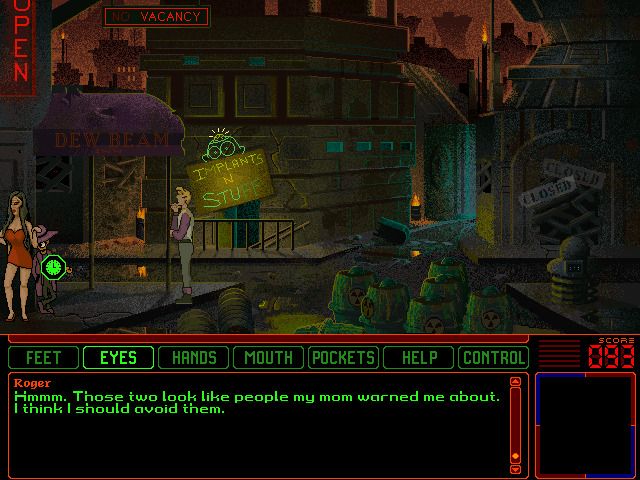
The first thing both gamers and knitters have is a stash. If you’re not a gamer, let me tell you about Steam. This is a service through which you can buy video games for your PC. Steam has a wishlist system, and it also has lots of sales. That means that when you hear about a game that interests you (say, from the video gaming journalism you relentlessly consume), you can add it to a wishlist. Then when it goes on sale, you can nab it. At least, that’s been my practice, and I think that’s pretty common. This has led to me having a library of 283 games in my Steam library. I’ve completed (for some definition) about 137 of these. That leaves almost 150 games I haven’t finished, the vast majority of which I’ve never even opened. Many of these are short experiences that will take less than 10 hours (I still love me some point and click adventures), but still.
If you’re not a knitter, let me tell you about the stash. Stash is also common to quilting, weaving, spinning, woodworking, etc. There’s a problem with fiber arts that shopping is very fun. We have events to bring us together, and they involve a lot of shopping. It is way too easy to buy materials at a rate much faster than you can use them. Stashes can be overwhelming, they can be a source of comfort, or they can not exist at all. Clara Parkes put together an anthology of essays by knitters just about stashes, and it’s delightful, because everyone feels differently about them.
The difference between the crafter’s stash and the gamer’s stash, however, is the crafter’s stash takes up physical space. To me, at least, this gives my yarn/fiber stash a sort of urgency that games don’t have. I mean, my games are taking up space in the cloud somewhere, but that doesn’t bother me. I also have a stash of knitting books, and I don’t expect to knit every pattern in them, but that doesn’t bother me; they just take up shelf space, much more compactly. My feelings about my gaming backlog are somewhere between how I feel about my collection of patterns and my collection of yarns – I’d like to play them all at some point, but there will be pretty much no consequences if I don’t.
My point stands though. Knitters and gamers both have a stash. Main difference is, when I die, it won’t be quite as much work to deal with my gaming stash.
2. How Many Do You Have On the Go?
Recently in a Patreon chat, I asked gamers how many they have on the go at any one time. The responses were wildly different: some stick to one, some said 5-6, some said 10-15! And it struck me: these are WIPs.
Knitters call their on-the-go projects Works in Progress, or WIPs. Everyone has different levels of comfort with how many WIPs they have at any given time. My comfort zone is 3-5, but now that I’m so multicraftual, it’s really 3-5 across all crafts. So I have 1-2 knitting projects, 1 spinning project, and 1-2 projects in either sewing, hand-sewing, fiber prep, or inkle/rigid heddle weaving. But I have friends (*cough* Dionne *cough*) who have seven spinning projects on the go at once! Who have no trouble having twenty projects on the go at once, and just shove one in the back of the closet when it annoys them, maybe to ignore it forever! Some people just don’t find they have to think about it that hard!
I suspect gamers are the same. Some have no problem having a bunch of games on the go, picking them up and dropping them as they are interested. Some prefer to be more monogamous, as we knitters tend to put it.
Recently I tried to pull out of my Steam library all the games that are in some sense unfinished, that I would like to finish. It was a list of 15 games. This was distressing, with the same distress I felt when I once counted up my knitting WIPs and found the number above 5. Some of them just require a kind of time that I don’t have much of. Some I lost momentum on and forgot about, and would really have to restart to follow the story, like a book I put down for too long. Some it’s just hard to decide when I’m done with them, which is a massive difference between video games and knitting, and one I’m actively thinking about in my gaming.
There are many cases when I (or my whole family) start a game and it doesn’t draw me enough to keep going, but unlike a half-finished scarf shoved in the back of a closet, it’s only an emotional sense of obligation that makes me feel like I have to finish a game. And that’s a thread I can learn to cut, I think. Maybe I need to take a cue from Ravelry and make a new category in my Steam library: “Hibernated.”
I suspect the real defining factor in how many games I have on the go is what kind of time and attention they require. Which leads to my next point:
3. A Variety of Experiences
There are so many types of games, and so many different types of knitting. For years, I just wanted to try every kind of knitting there was. They were all new, different, and interesting. I made the most complex lace and cables, I made a fair isle sweater with seventeen colours, I learned two-colour brioche and put beads on my knitting. Those were heady days. The basic knitting skill is the same, knit and purl, but the complexity involved and the concentration required vary a great deal.
These days, I find I like my knitting a lot simpler. I like stockinette, garter stitch, simple fair isle, ribbing, and that’s about it. I’m so OK with that, and I don’t feel inferior for not knitting complex twisted-stitch-lace-with-nupps.
So why have I spent so much of my life feeling inferior because I bounce off the proverbial twisted-stitch-lace-with-nupps of video games?

There are so many types of games. They require anywhere from 2 to 200+ hours of your time. They require one button or 12+. They have complex stories to emergent stories to no story at all. They require hand-eye coordination or they don’t. They require brain power or lateral thinking or brainless repetitive action. Is it any surprise at all that different people like different things, or find different games fit into their lives differently?
There are plenty of types of games that I like the idea of that I find I don’t actually want to do. I love the idea of open-world RPGs, Souls games, that sort of thing. But these require a kind of time that is very precious to me – the same kind of time that complex lace and cables requires. They require sitting down for more than an hour at a time to get into a groove and stay there. They require commitment so the muscle memory in your fingers stays with the right controls. In the economy of my life-minutes, they just don’t win.
But I play so many games. Considering how many people play only Minecraft or Roblox or LoL, I’m probably in the top 1% of gamers as far as number and variety of games purchased and played annually. But they tend to be games that fit in my life. They are the garter-stitch-and-movies of games, or the equivalent of a massive KAL where the motivation comes from knitting a pattern with a group.
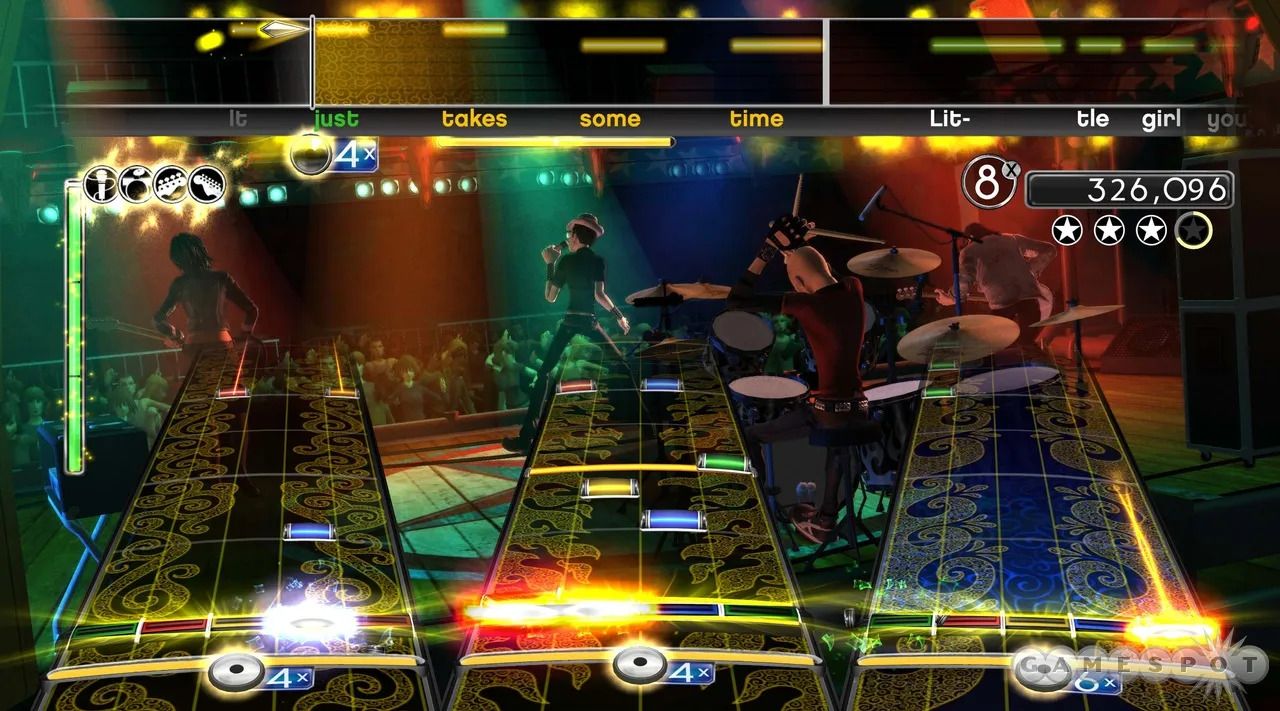
Like in knitting, that’s really what defines how many WIPs, both in games and knitting: how many different kinds of time that I have. I like to have one game to play on my own, one that I’m playing in the evenings with Jared, and a cluster of party games that we play as a family. I think I’ll be able to be more reflective and intentional about this in future.
4. Communal Experiences Online
I don’t remember the exact year, but my gaming hobby changed when I started reading Rock, Paper, Shotgun. It was around when Stringbean was born. I didn’t realize it at first, but this was my entrance into the deeper world of video games journalism. The writers over at RPS were funny, they were adults, they were honest, and they had a diversity of preferences and specialities.
This isn’t exactly like the knitting community. That community exists on Ravelry forums, in an Instagram feed, in chat groups; it’s very peer-to-peer. Gaming forums exist, and are in fact very large, and have a long history of being potentially toxic, especially towards women and those uninterested in “getting good.”
But what RPS did begin to tell me is that, in the world of gaming, I could find my people. I really found that in my favourite few gaming podcasts, populated with people my age, genuinely open to a diverse level of skill, commitment, and interest, while doing the real work of games journalism. I’m dipping my toe into the small support communities around those podcasts.
What the online communities of knitting and gaming share is a sense of common experience. Sometimes a new game or a new knitting pattern will come out, and it strikes a chord with people. It has a moment, and playing or knitting it at that time gives one a sense of participating in the zeitgeist, in understanding the moment. Perhaps it’s all fictional and parasocial, but it gives a sense of meaning and togetherness to what is in reality a pretty solitary activity. In gaming, everything is bigger and faster; the turnover is quick and the numbers are about tenfold. But when Jared and I played Blue Prince (2025) and loved it, I had the same sense that I had in knitting an Andrea Mowry pattern. Like what it must have felt to watch Lost as it aired – I am a part of what is happening right now. It is in my hands. Not monoculture, but the closest we get these days.
5. An Economy of Digital Products
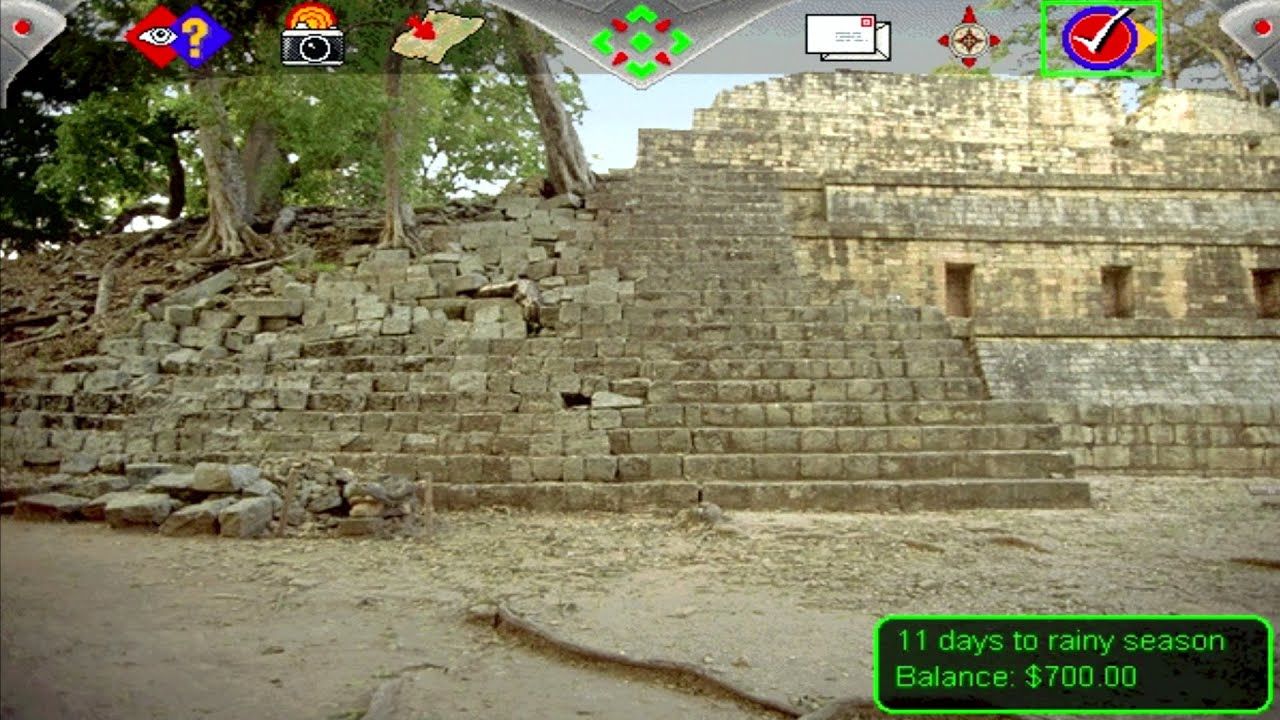
This leads me to a more esoteric topic for most people: as I listen to gaming podcasts that include lots of interviews with people who make independent video games, their struggles remind me of my struggles as a knitwear designer. Both are fundamentally creative fields; both are primarily digital products; both are products that are often bought and never used; both need to be technically excellent to result in a good experience for the end user. Both are part of a sort of gig economy that relies so much on word of mouth and communication. The questions of how to survive as a creator in an economy like this, how to think about marketing, how to make decisions and set expectations, feel incredibly familiar to me.
Knitting is a very old craft, but the internet is what has really caused it to resurge in the last twenty or so years. Its portability and low bar of entry allows it to fit seamlessly into modern life. And today, the flat-world economics of digital distribution have allowed independent designers come out of essentially nowhere to become huge successes. That’s also true of video games – in the world of Steam, the bar of entry has gotten lower and lower, and almost anyone can make a game. The entries in both platforms have multiplied insanely, more and more every year, and it becomes harder and harder to stand out and succeed. But there’s also a wonderful glut of choices for both makers and gamers.
See where I’m going with this? I don’t know how much more I can say, except that I feel like I’m absorbing some helpful ideas about being a knitting creative by listening video games journalism. It all happens on a much larger scale with gaming than with knitting. Video games as an industry is about 5x bigger than the film industry, and some folks I meet are surprised there are still people who knit (let alone spin), but the parallels are relatable and informative, especially in the indie game scene.
6. Physically Interacting With a Story
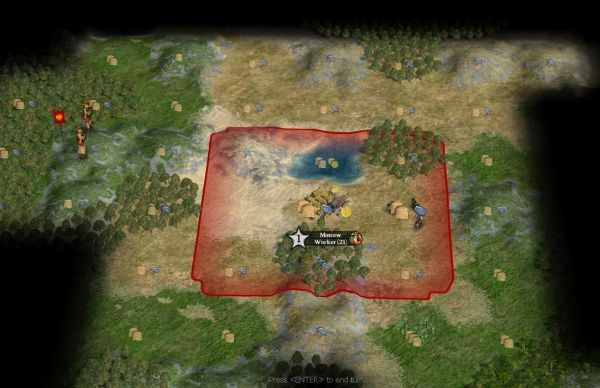
When it comes down to it, knitting and gaming are both interactive entertainment experiences. Both take something that someone else made, and you use your hands to make it your own.
With games, there is often a literal story that you are inhabiting as a character. Sometimes the story emerges out of the way you play. Sometimes it’s just a puzzle. Sometimes, as above, it’s the community you’re participating in. But the interactivity is what defines it as a game. How much interaction is involved is part of the conversation, part of the creative decision making that went into the game.
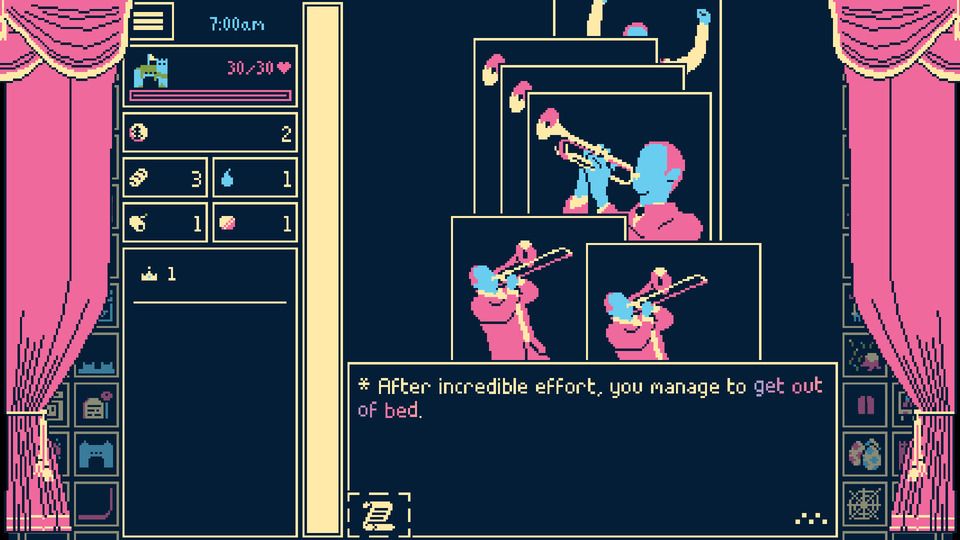
The connection to story in knitting is a little more abstract. You’re participating in someone else’s creativity by using a pattern, but you might not even do that. You’re using yarn someone made, and that yarn had a story. Universally, the more we learn our yarns’ story, the more meaning it gives our knitting. Even if you grew the sheep from a lamb and process the fleece all the way to yarn and knit with it, you’ve made your own story, and you probably have a whole history of gaining the skills you needed to do that.
But the kind of knitting I find the most compelling is the knitting that connects us more explicitly to a story because of the design’s inspiration. I spent a couple of years knitting patterns inspired by The Lord of the Rings books and films. I love it when my knitting takes me on a journey, because the pattern comes with a story. But far more than just reading it, I’m taking that story in my own hands, telling it forward, as it were.
Lots of games do this too, with narratives emerging out of how a series of events plays out uniquely. But even if it’s a totally railroaded story game, we keep the story going when we talk about it. This is what I love about video games journalism; reflecting on that experience makes it new again, interacts with my experience, and sinks that stone deeper into my memory. I think, as I integrate this side of my life more, instead of thinking of it as an occasional exotic indulgence, that’s how I’ll be drawn to do it. With others, understanding stories.
In Conclusion
So what do you think? So far, so obvious? Are all hobbies just on one great continuum of leisure pursuits in the post-modern late capitalist search for meaning and purpose, so of course they’re connected?
For me, this integration represents a long journey of releasing ideals and accepting life as it is. Knitting, for a long time, felt like the first step into what is now recognized as the “tradwife” lifestyle, whose ideals have been revealed to me as essentially privileged and largely morally bankrupt. In other words, I thought I wanted to farm, and now I realize I don’t. Crafting and video games are both ways that I search for new experiences and connect to stories, and both are granted meaning in the ways they connect me to people. In the end, it’s all about love and relationships, because we can’t take any of it with us. And as someone who finds connecting with people hard, I appreciate that connecting to stories we love is a way to come alongside one another. So that, poorly and slowly, is what I will continue to try to do.
P.S. happy 10-year-anniversary of priestly ordination to me, Jared, and our friend Francis. This is a weird way to celebrate it, but if you’ve made it to the end of this post, I think you understand why.


I’ve always struggled with the idea that video games are a waste of time and I should be doing something more productive. Knitting has a tangible end product so it’s an acceptable hobby. Your analysis has given me a different perspective that I will need to ponder. I like the idea of gaming as a way to interact with people. Thank you,
LikeLike
I think that’s fair, as knitting folks have used this as a defence of knitting, against those who find it outdated. But there’s no need to pit that argument against something else positive, right? Hope you find joy in all the activities you love.
LikeLike