Book launch day came and went, and I survived! And you lovelies started to actually buy it! Holy smokes! I’m so thankful. If you haven’t gotten a chance yet, of course I’m going to include the ordering info up front!
Buy Migraineur softcover book on Amazon.ca (also available on Amazon.com and other marketplaces)
If you want a complimentary ebook with your purchase of a physical book, forward your receipt to osbornfiber@gmail.com with your ravelry name. Offer good untill December 31. Please allow 24 hours for your request to be processed.
If you want digital only: Buy Migraineur ebook on Ravelry
We still have four more patterns to reveal, and they are some of my favourites. (OK, they’re like my children. They’re all my favourites in some way.) Today’s shawl pattern, Waves, is in some ways one of the simplest concepts. But it has a teensy weensy intarsia twist.
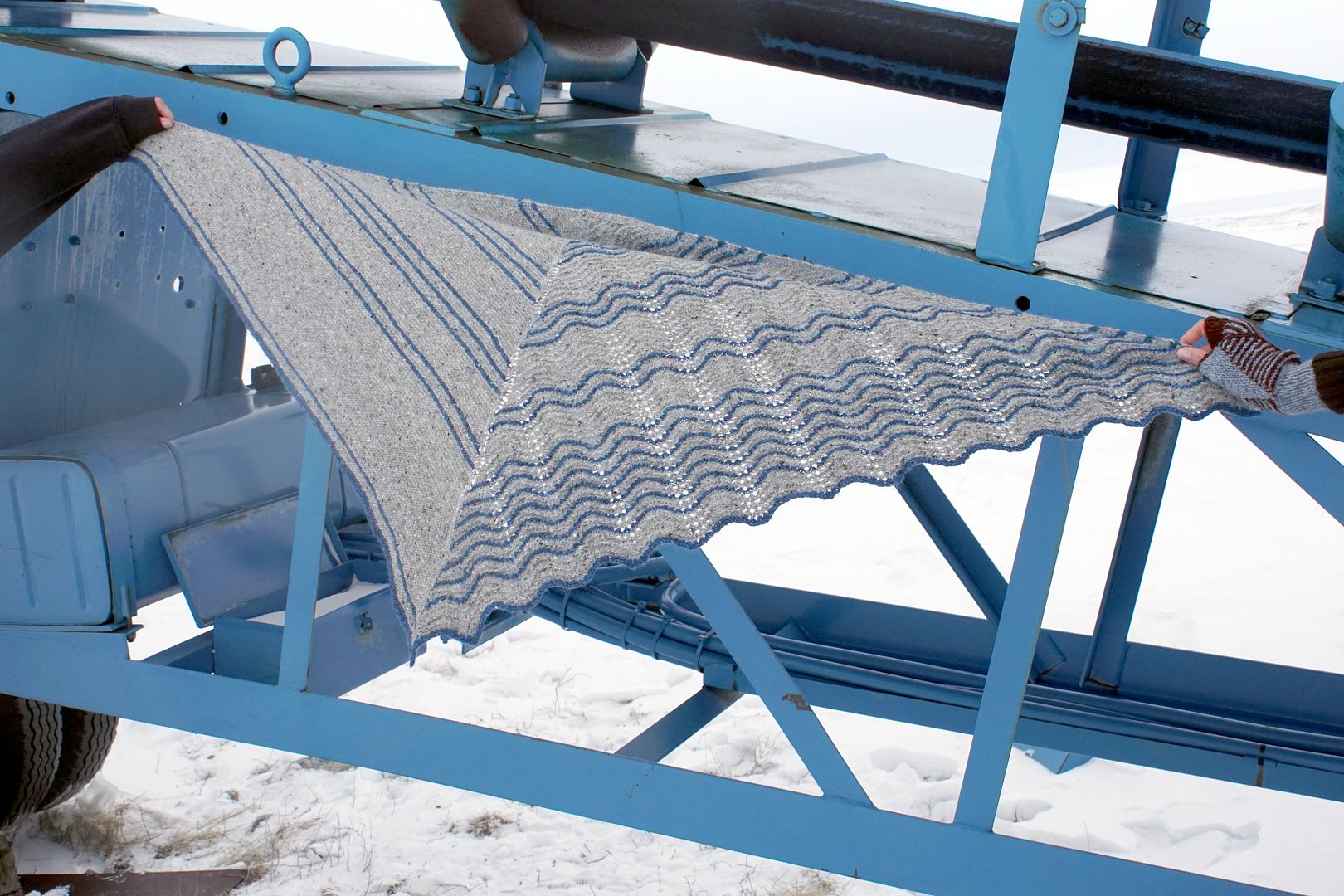
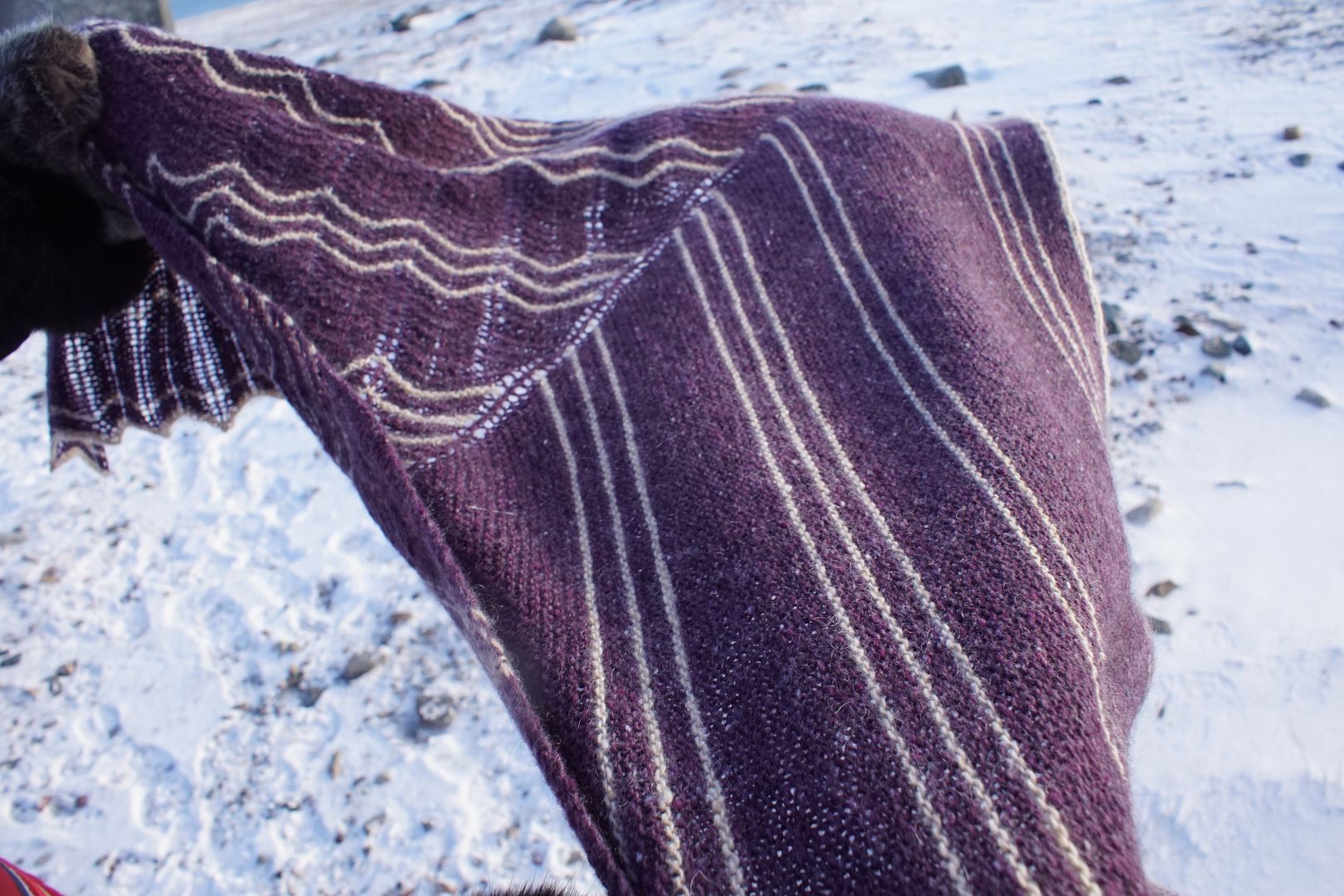
Migraine pain tends to be asymmetrical, which is why most of the shawls in this collection are asymmetrical too. This one describes the simple reality of one-sided, radiating pain. The other side doesn’t always feel it, but sometimes catches residual echoes or referred pain. I’ve attempted to capture this by taking a basic triangular shawl and making one side garter stitch, and the other side a variation of the timeless Old Shale pattern.
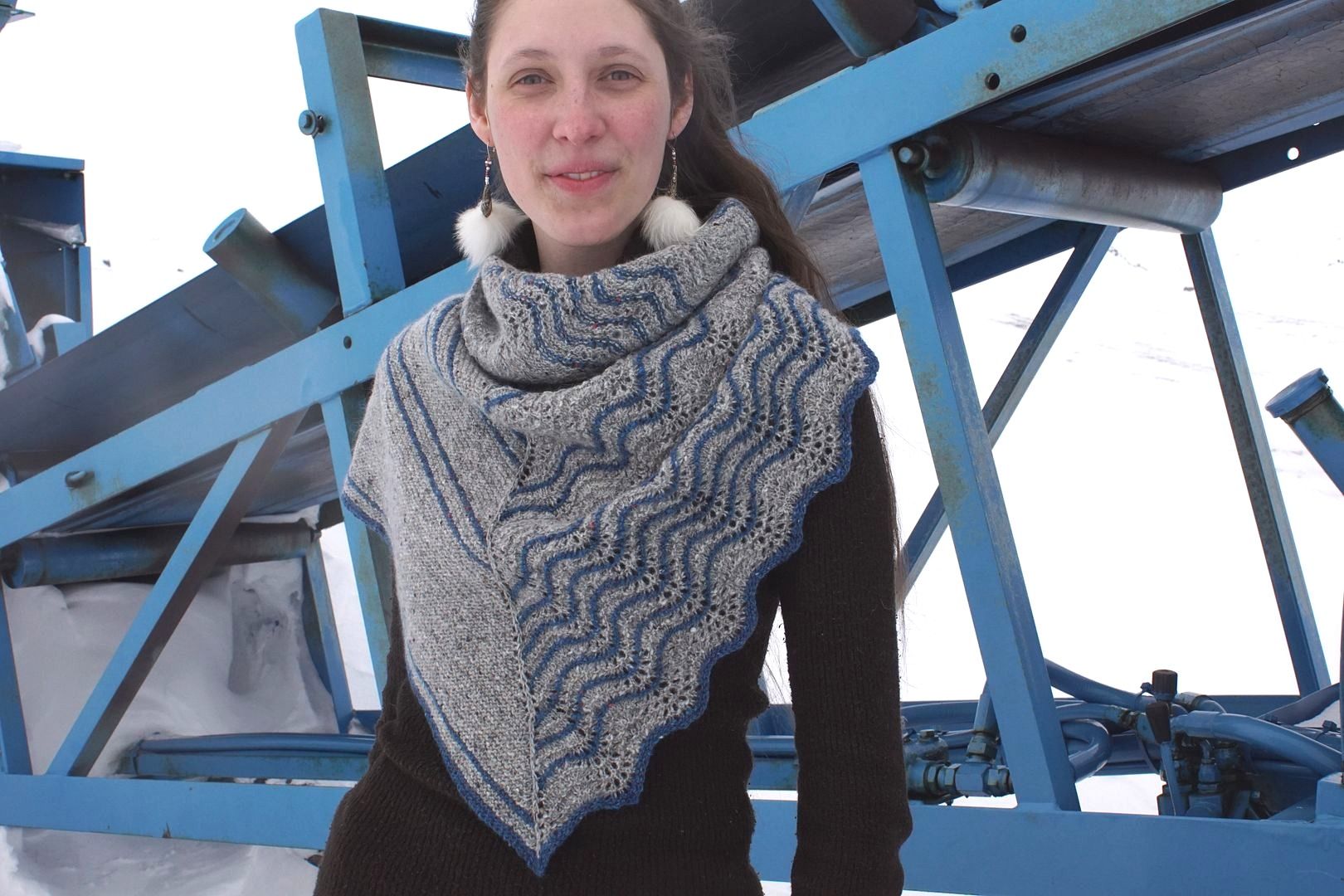
The asymmetrical waves are achieved with some exceedingly simple intarsia. I’ve given extensive directions on how to start and stop each colour, so this would be just fine as a first intarsia project, especially if the lace part is old hat to you. The only other bit of faff in this project is swapping back between two different one-row lace charts to keep the old shale pattern lined up as the shawl grows.
I’ve offered this shawl in two suggested colourways, inspired by views of the sea: Morning (above), with grey Birkin and royal blue Tarbet; and Evening (below) with purple Gloamin’ and natural white Hirst. This is also a perfect pattern for highlighting a handspun colourway with a neutral background, or making your own colour combination associated with your own experiences.
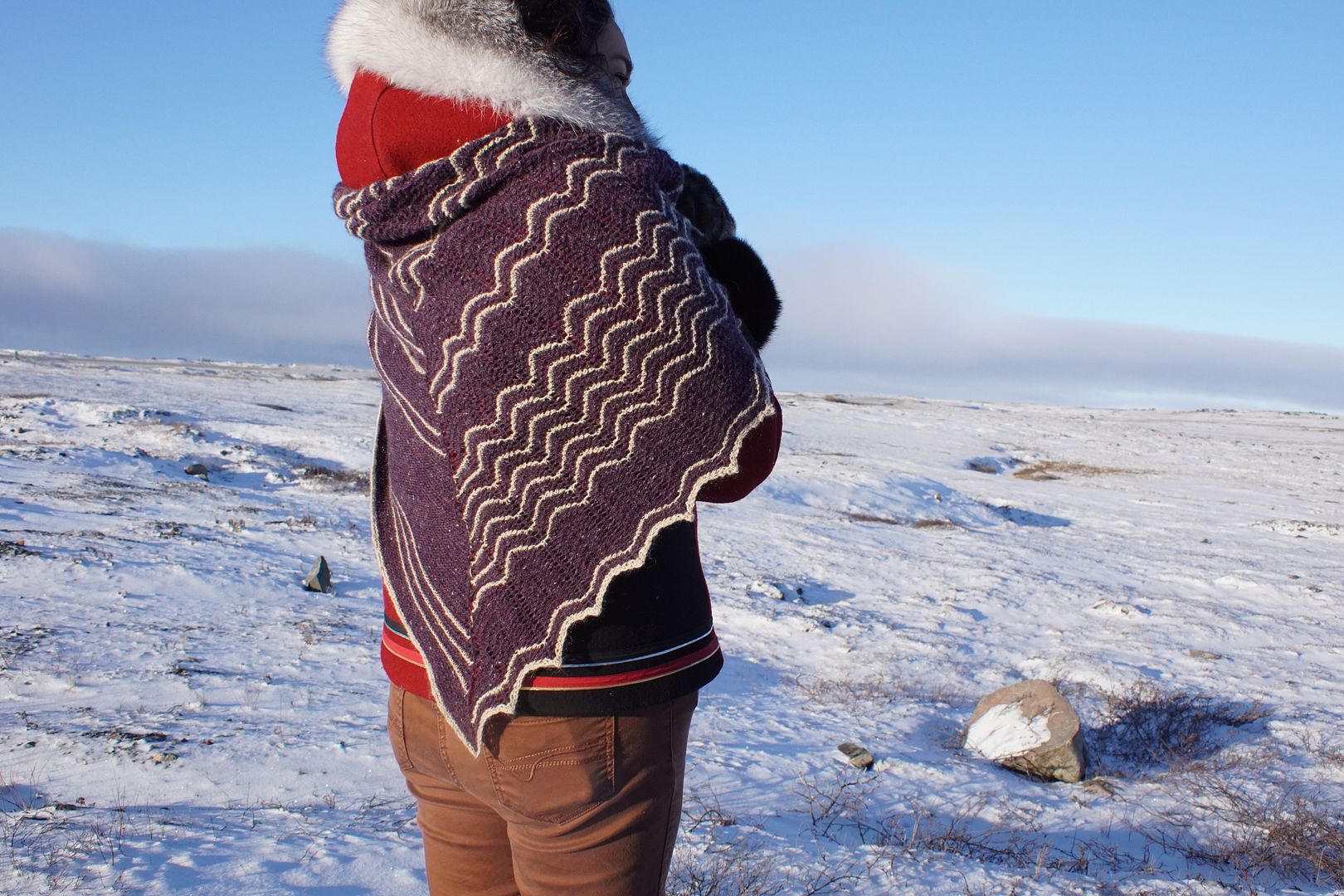
The shawl as written is a middling size, not too big and not too small. But you could easily stop at any point if you want a smaller shawlette, or keep knitting as long as you want – you’ll just have to come up with your own stripe sequence. Or, knit it at a different gauge with a different weight of yarn, and carry on until it’s the right size or you run out. Top-down triangle shawls are wonderfully flexible that way.
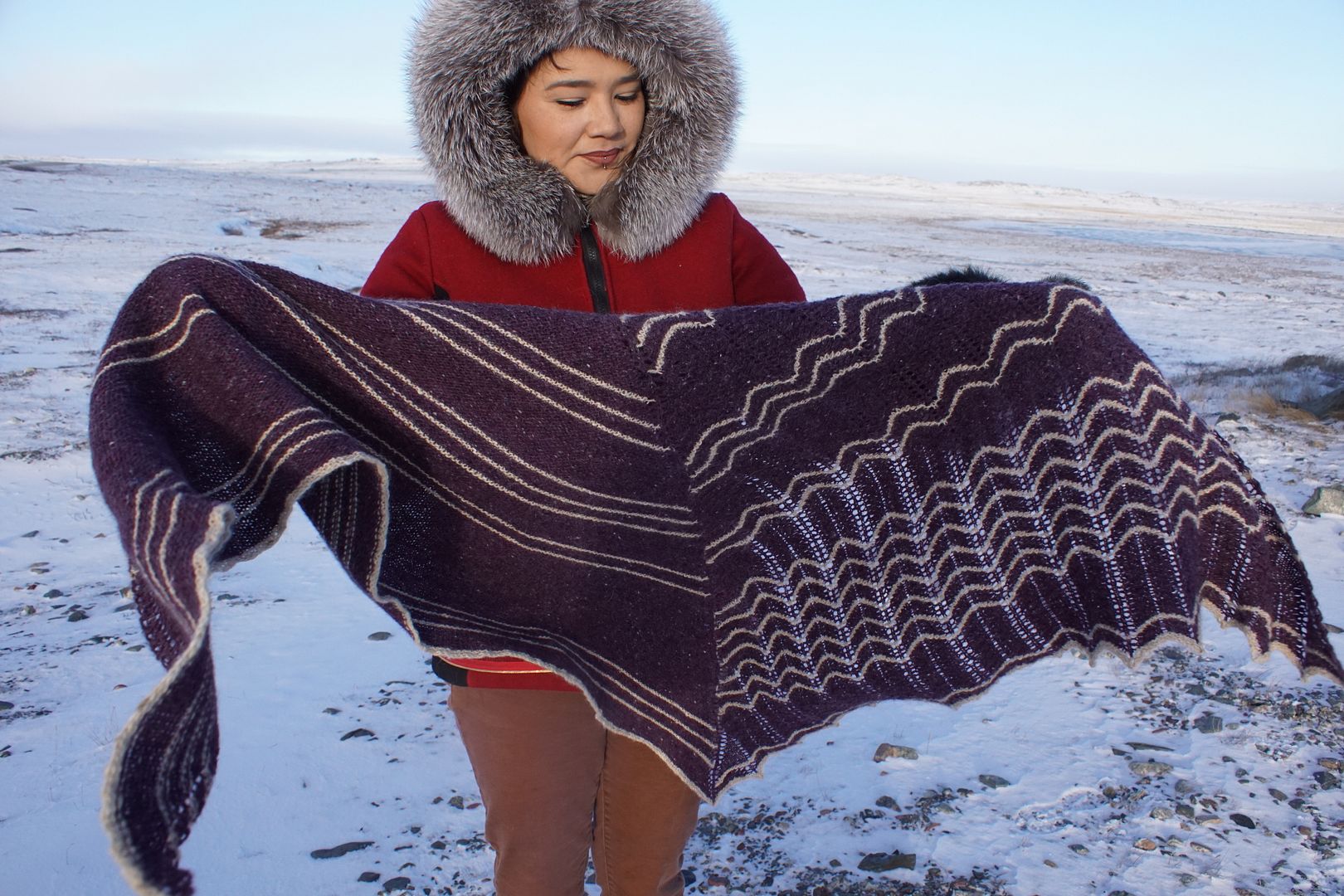
Just how assymetrical your shawl is may depend on your knitting style. The sample I knit (grey and blue) I easily blocked so that the Old Shale and garter halves are the same size, and the center line falls straight down. My test knitter, however, ended up with a more relaxed garter stitch section, giving the center line a bit of a slant, like some very popular shawl patterns in circulation these days. I encourage you to embrace what your gauge makes, and don’t be afraid to block severely.
I think this would be a perfect pattern for a knit-along or SPAKAL. What colours would you use if you make some Waves?
Thank you to Valerie Moreno for knitting the Evening sample, and to Akumalik and Marikah Sanguin for modeling.
 Osborn Fiber Studio
2 thoughts on “Stacks of Waves”