As some of you might remember, a couple years ago I completed a collection of handspun, hand-knit socks, and put them through systematic wear to figure out which fibers and structures worked best for me. See the socks here, and the conclusions here.
I’m pleased to announce that over the last six months, I have completed a second cohort of sock yarns for the next stage of this experiment. These sock yarns are all spun from the same fiber, from two dyers (who may even have sourced their fiber from the same place, I don’t know), and being spun in such quick succession are certainly similar in terms of my own general spinning techniques.
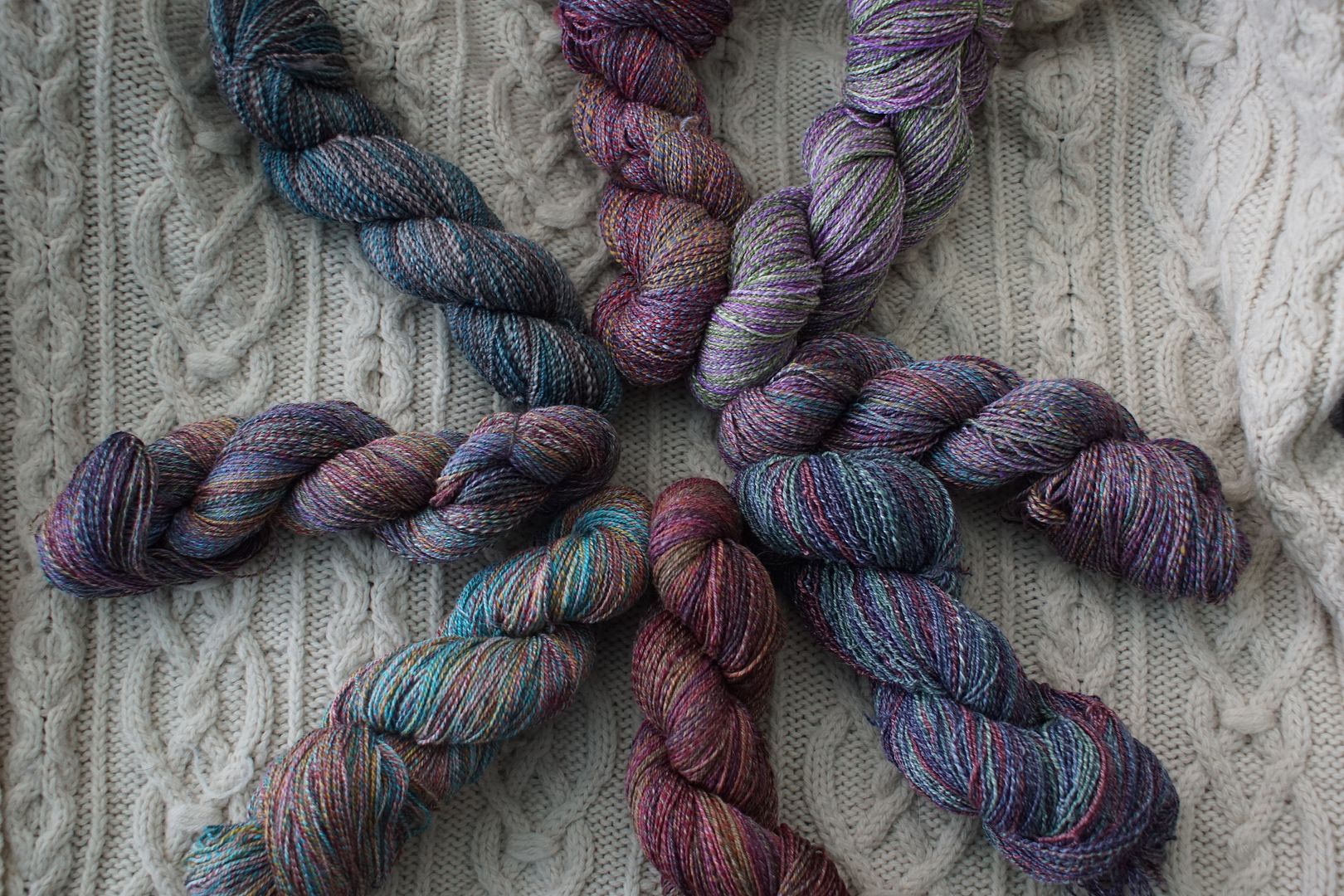
They are all spun using a fiber blend nicknamed “Panda,” which is 60% superwash merino, 30% bamboo, and 10% nylon. I bought all of these braids back in 2020, during my first trip to Vancouver. As Fibers West was canceled, before social distancing was really in place, Rachel and I made up for our lost festival by blipping around to different dyers and supporting them as we could with our small purchases. I bought several braids of fiber, and had always intended to spin them up for socks, comparing sock structures. With the yarn structure chapter of our two-year project working through The Spinner’s Book of Yarn Designs by Sarah Anderson, the perfect occasion arrived. I’ve been sharing them on the Wool Circle as they’ve been spun, but now that they’re all complete, it’s time to post about them here! Let me introduce you to the skeins.
1. Traditional 4-ply, on Tapestry by Sweet Georgia Yarns
Colour handling: colours loosely lined up in plying
263 yards, 1586 YPP

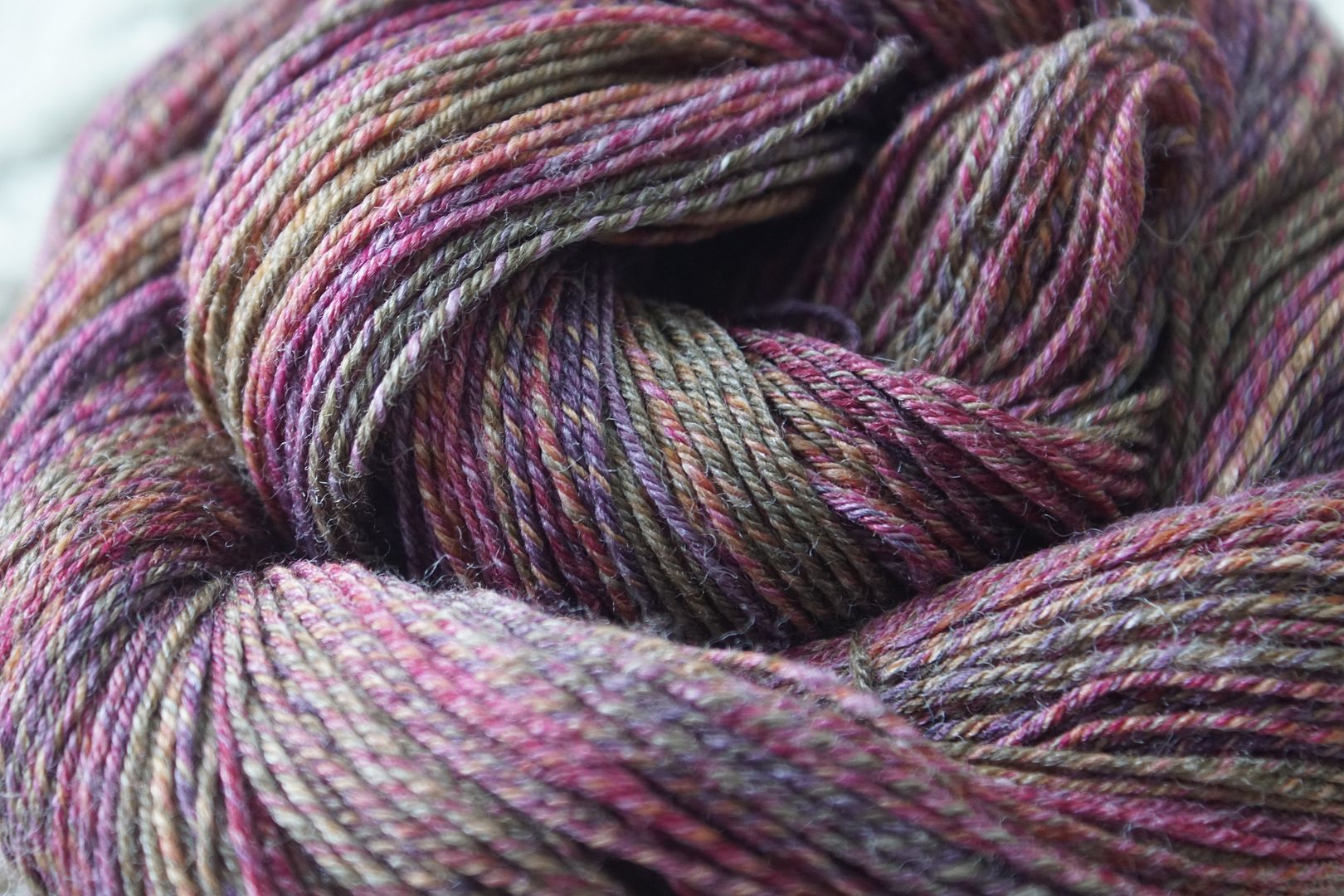
Not much to say about this yarn; it’s pretty normal! Aside from being extra-round for being four plies, which is lovely, squishy, and elastic. I went for lining up colours in plying, which inevitably drifts apart as plying goes on. This means one sock will have stronger colour alignment than the other.
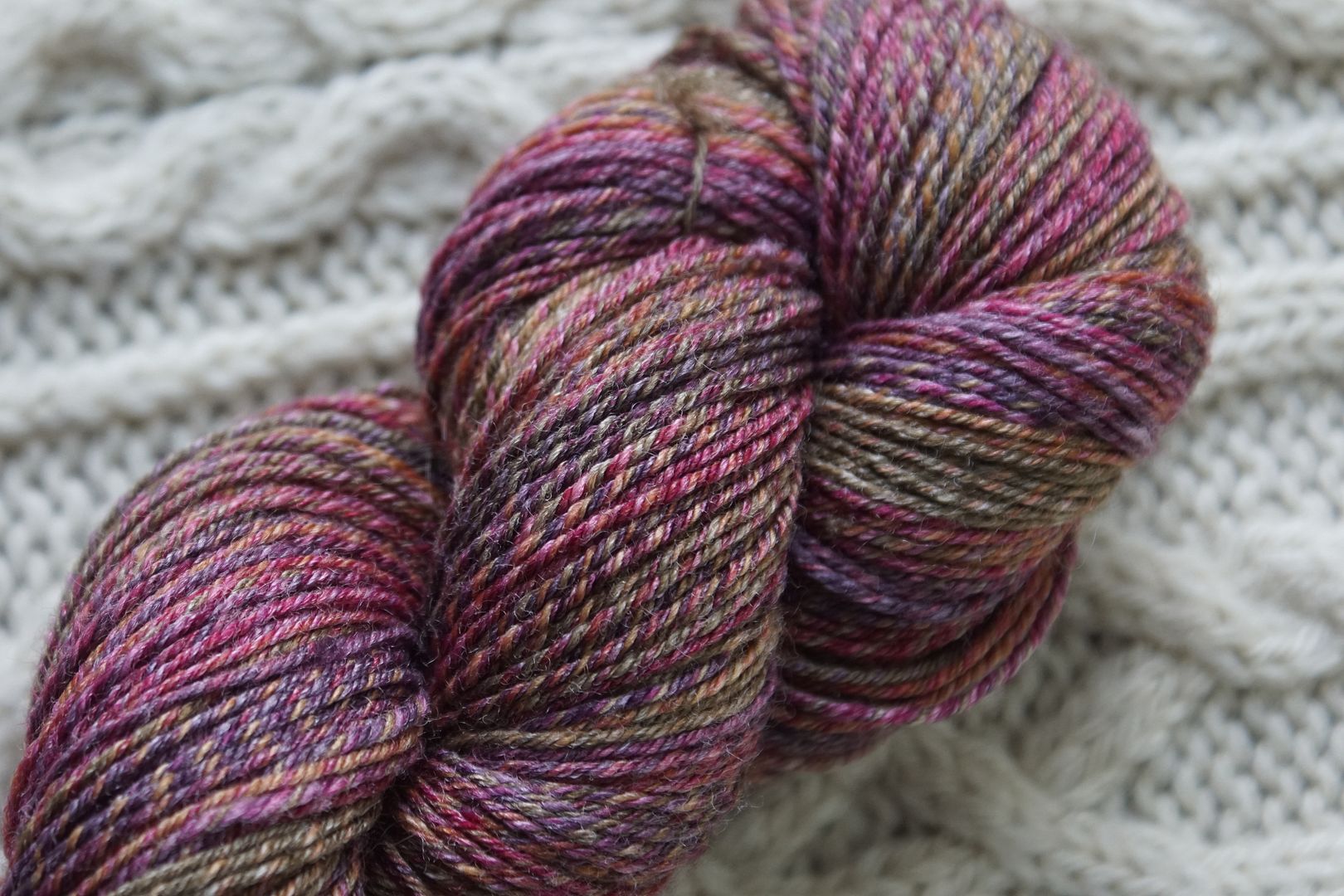
2. 4-ply Hawser, on Graffiti by CraftyJAKs
Colour handling: random
300 yards, 1560 YPP

Hawser yarn: make 4 singles, then ply 2 pairs of singles in the same direction they were spun, so they’re super twisty! Then ply these pairs together, which takes lots of twist. This construction comes from rope making, and is supposed to be more elastic. I went a little hard on up-plying and soft on the second plying step; I went back and added more ply twist. It’s hard to know what Hawser yarn is supposed to look like, but I like it more the longer I look at it.
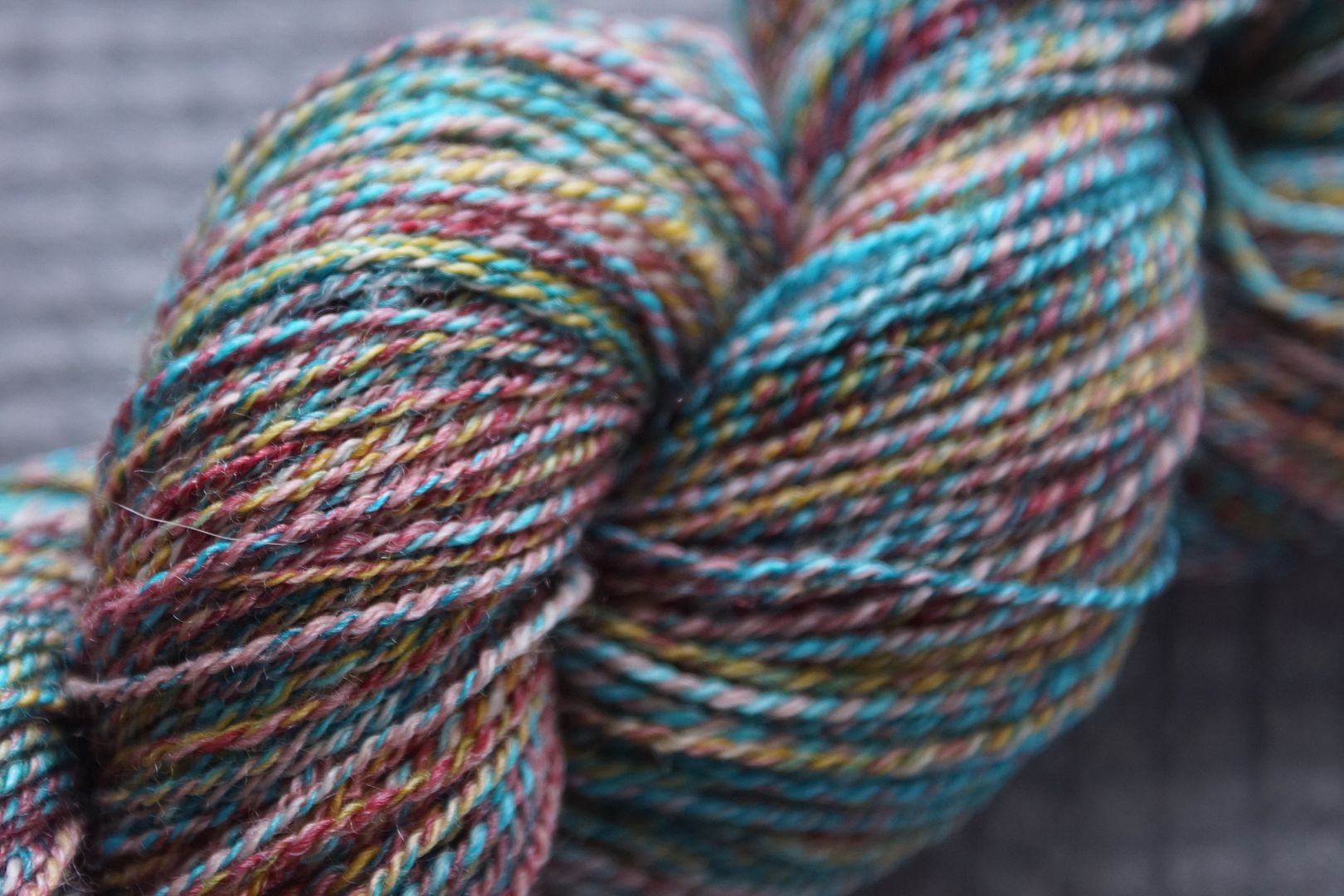
3. 4-ply Cable, on Spring Flowers by Sweet Georgia Yarns
Colour handling: narrow strips, maximum mixing
280 yards, 1562 YPP
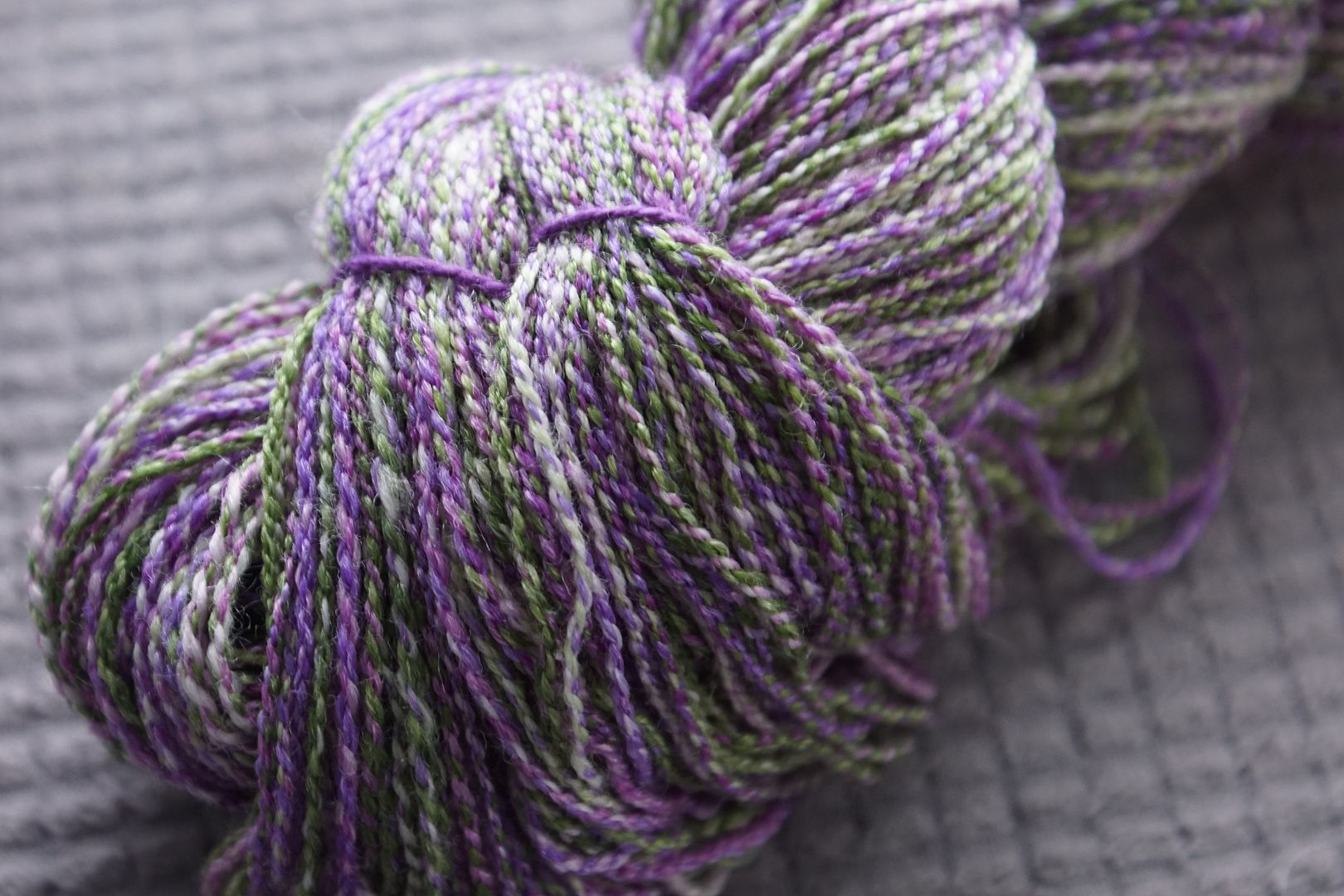
Cable yarn: make 4 singles, then ply 2 pairs of singles together with double the usual amount of twist, then ply the 2 pairs together back in the original direction. I wanted maximum mixing of this high-contrast colourway so the little blips of colour that poke through in a cable construction would be extra blippy.

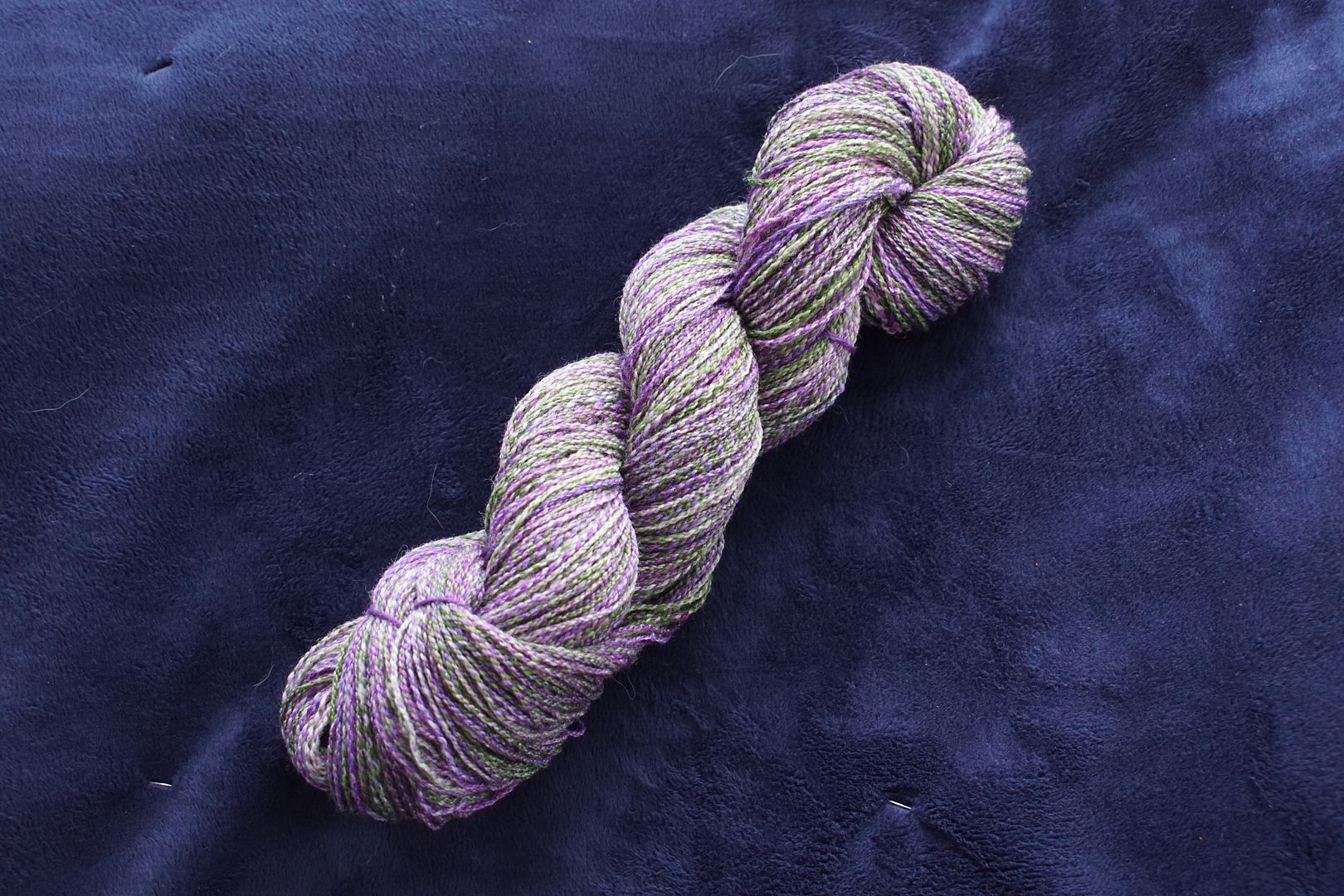
4. Crepe, on Lava Love by CraftyJAKs
Colour handling: Blue and purple separated for 2-ply; Yellow through red separated for single as double gradient
261 yards, 1403 YPP

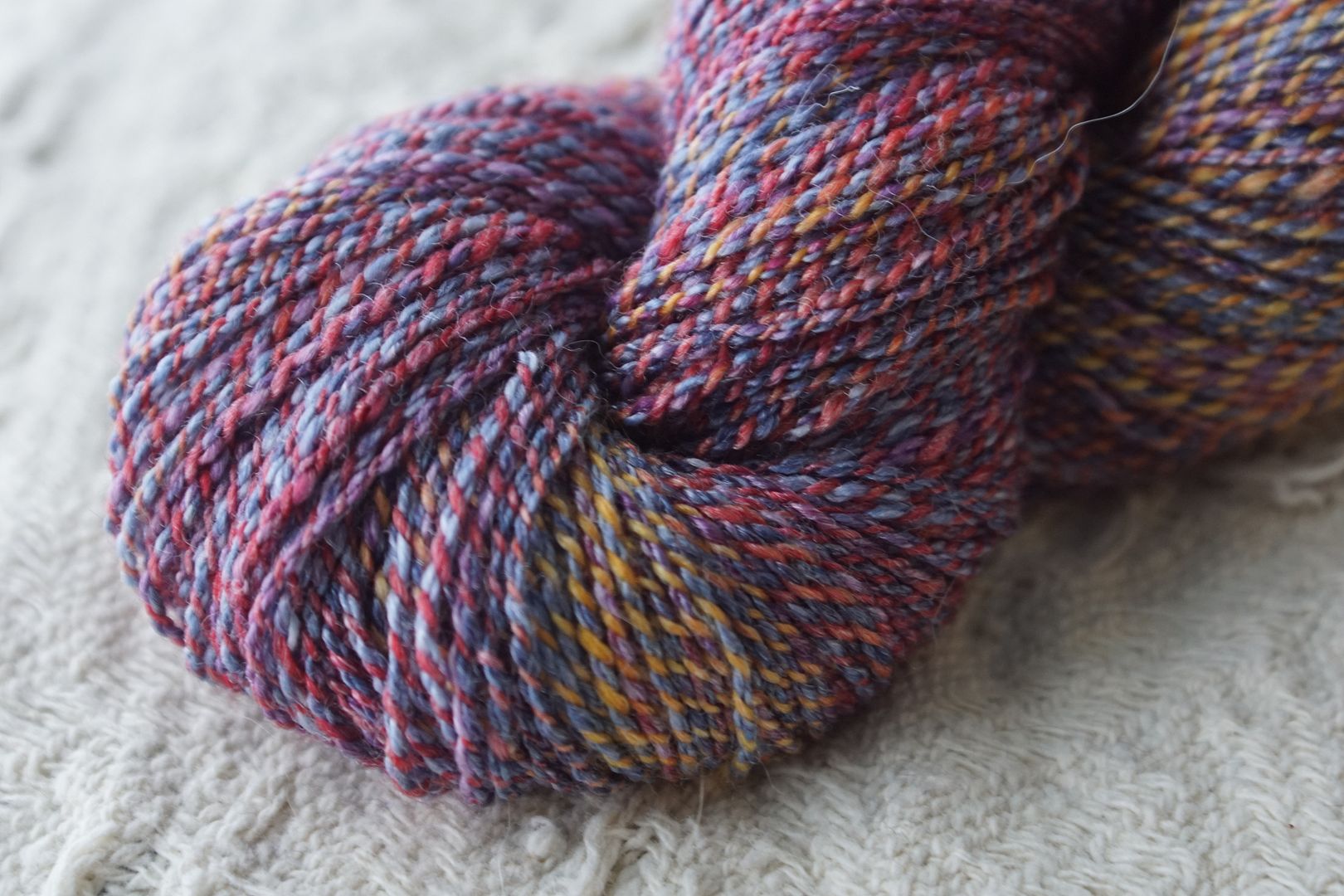
Crepe: make 3 singles, 1 plied in a different direction to the other 2. Ply those 2 together with double the normal twist, then ply them together with the third single. I went a little thick with these singles, giving me the lowest yardage, but other than that I’m really pleased with this yarn. Crepe is just so interesting-looking.

5. 3-ply Opposing Ply, on Arctic Berries by CraftyJAKs
Colour handling: colours lined up in plying, restarted at halfway point for lining up on 2 socks
292 yards, 1685 YPP
Opposing ply: make 3 (or more) single, 1 plied in a different direction to the others. Ply them together normally, opposite to the direction of the majority of the plies. Going a little finer on the singles, and not too hard on either the spinning or the plying, I like this opposing ply better than the first one that I made. Opposing ply yarns are growing on me!
6. Gimp, on Shipwreck by Sweet Georgia Yarns
Colour handling: stripped into quarters, functional fractal
278 yards, 1669 YPP

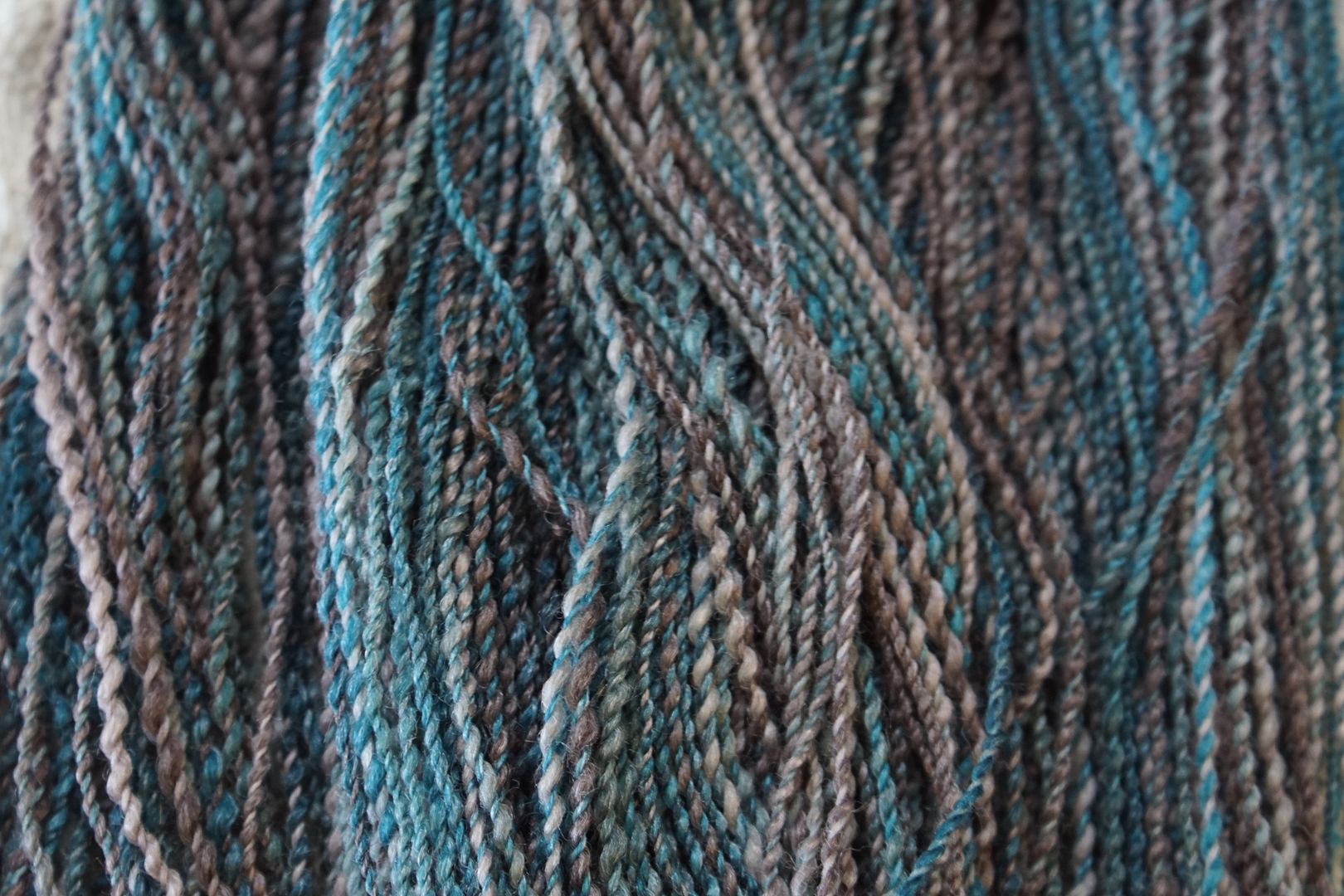
Gimp: spin two singles, one twice the diameter of the other other. Ply together normally. This was fast and fun to do, and I’m in love with this colourway. I’m really curious to find out how it performs.

7. Traditional 6-ply, combo plied from all of the above
Colour handling: narrow strips
289 yards, 1897 YPP
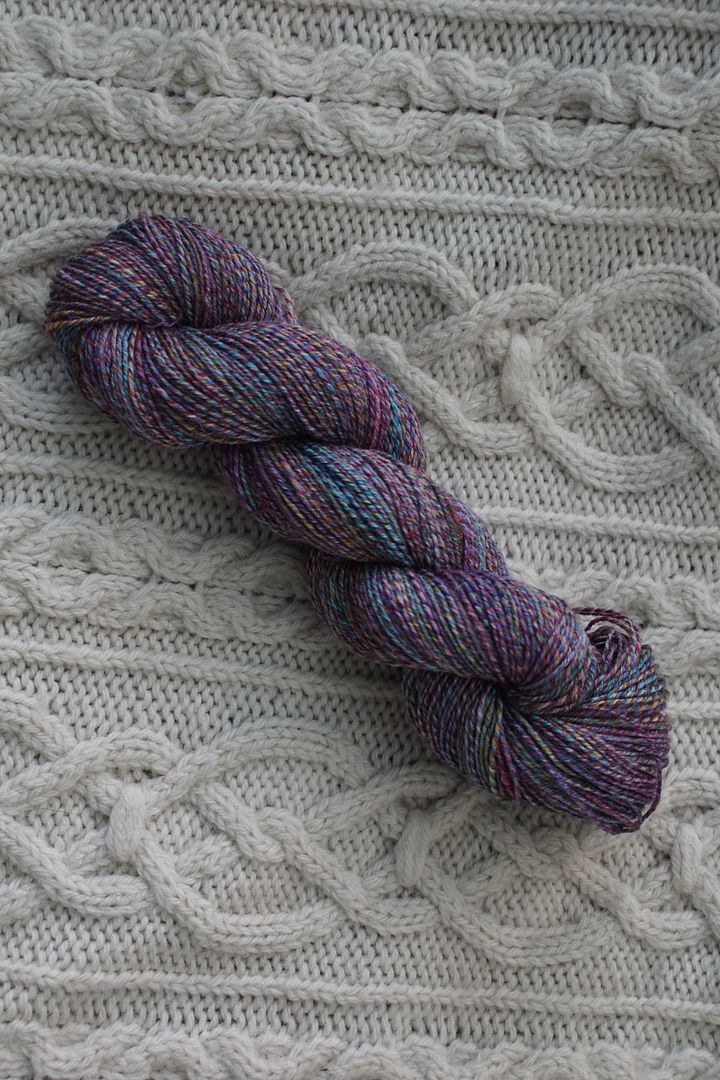
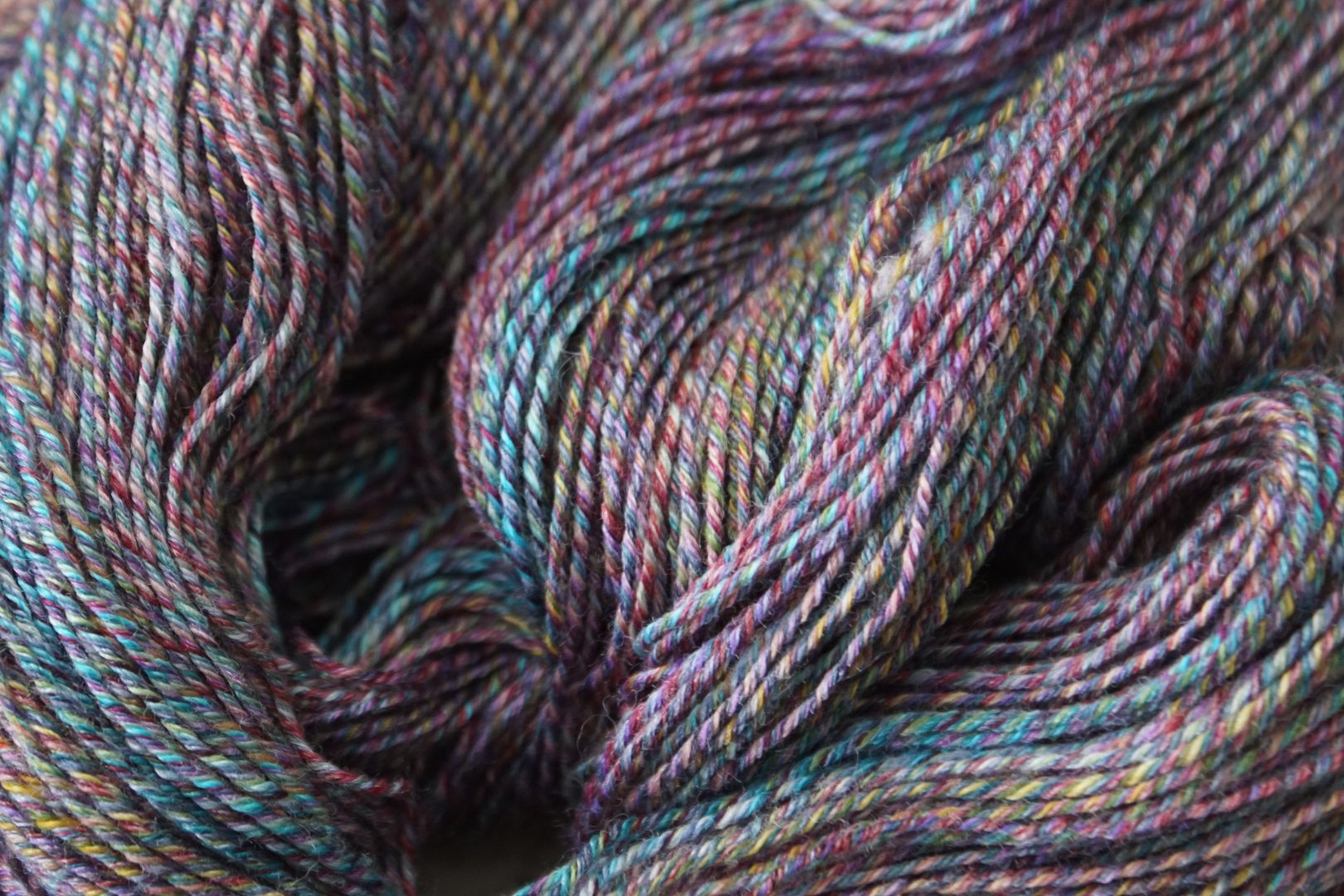
I went nuts with these last two yarns, spinning the leftover ounce from each braid superfine onto six separate bobbins. As a result I ended up with two more 3-oz sock yarns, 6-ply this time! Although it’s extremely round with the six plies, I didn’t put any more twist into these superfine singles than I did in the other singles, so they’re relatively low twist. I don’t expect them to perform any better than the other sock yarns.
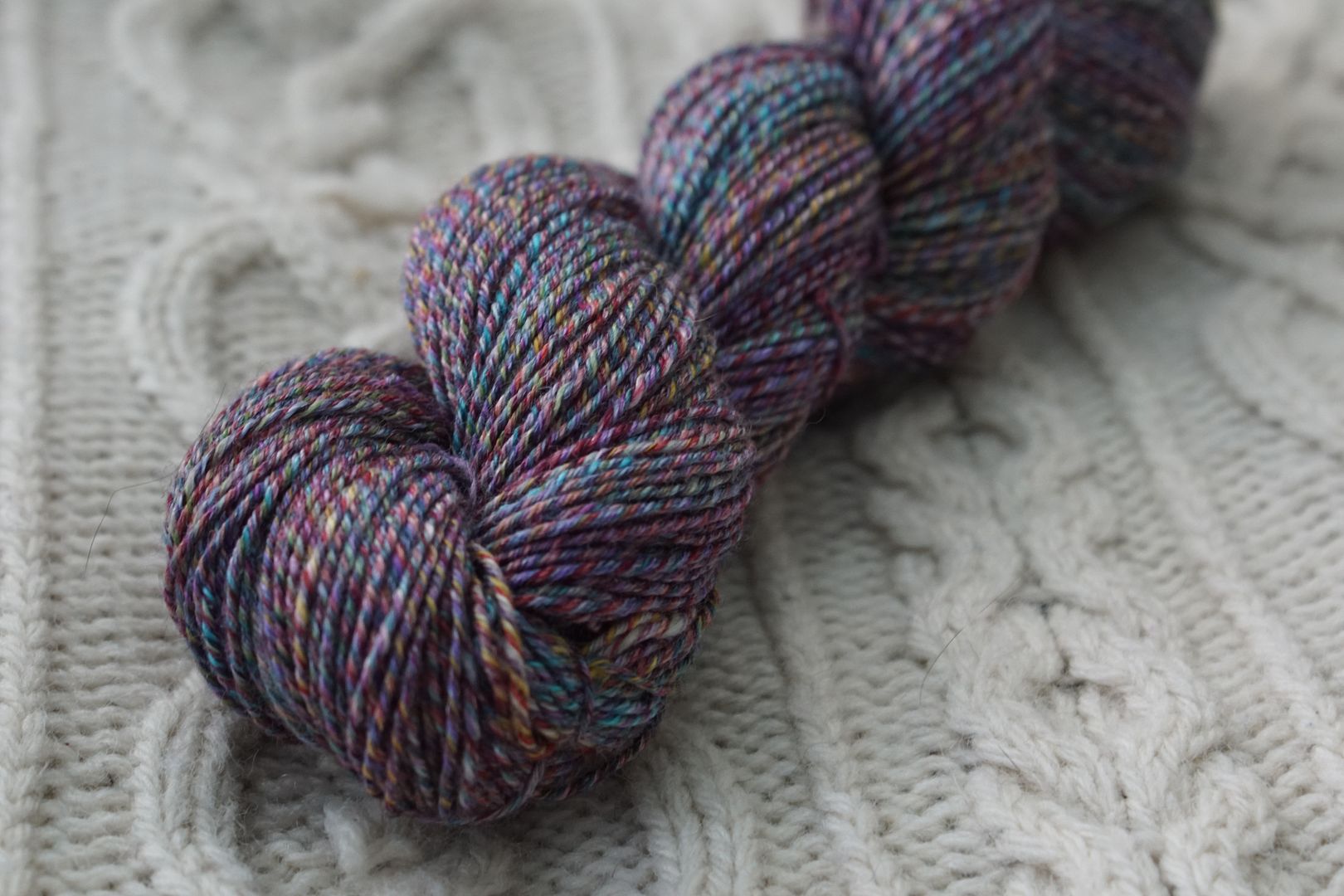
8. 6-ply Hawser, combo plied from all of the above
Colour handling: wide strips
299 yards, 1682 YPP

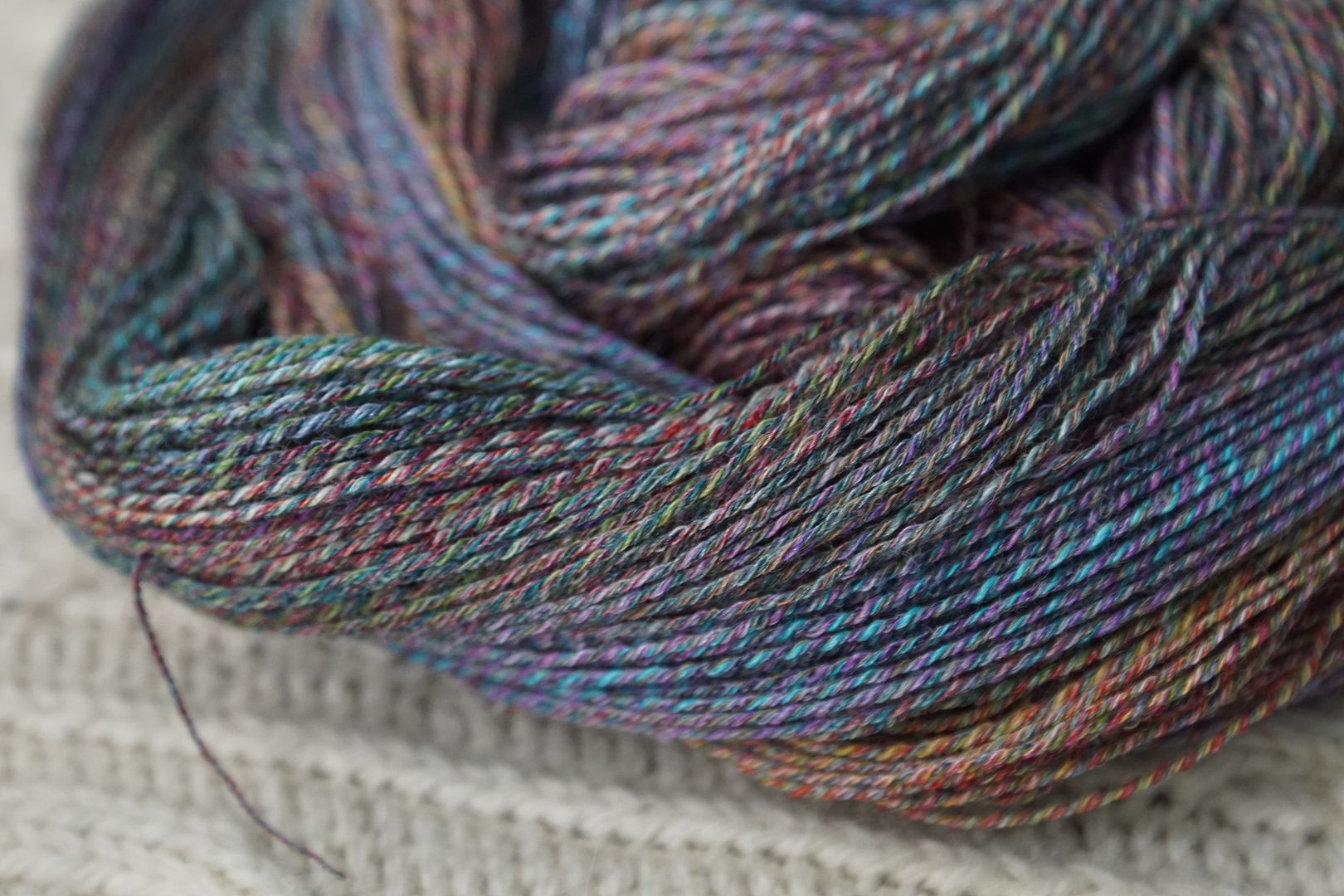
Wide strips made for longer colour stretches, meaning these socks will have long and complex stripes. The Hawser-ness of the structure is not obvious to me, nor does the yarn seem more elastic than the traditional 6-ply, but it is very attractive.

So, yeah, this is an incredible amount of spinning I have been noodling away on for the last little while! By my calculations, it’s a total of 22.4 oz of yarn, 2,273 yards total, with an average of 1630 yards per pound. By Spinzilla rules (counting each single and plying step separately), it was about 14,000 yards of spinning. I kinda can’t believe I did it, and I’m really proud of this collection!
Since I got pretty low yardage on all of them, I will definitely be knitting them all toe-up. I’m trying a new-to-me pattern, the toe-up heel-flap recipe from Kate Atherly. It’s a toe-up mirror of the exact top-down sock construction that fits my foot best, and I already know all the ways I customize the construction to fit my foot. Of course, I want to knit them all the exact same way – for science!
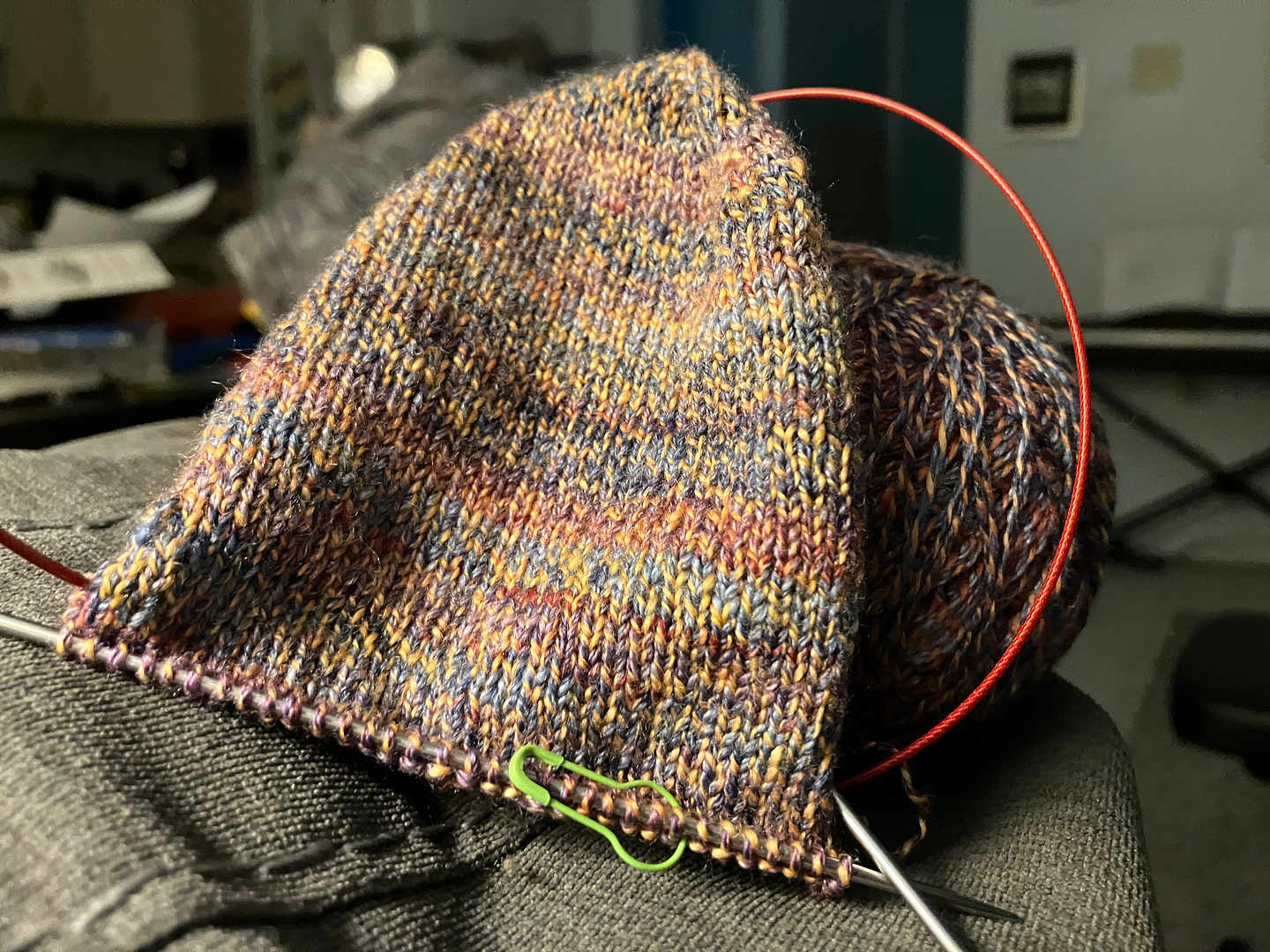
I cast on the first sock yesterday, and I was immediately surprised with how “planty” the blend feels. If you have worked with bamboo or other viscose fibers, you know what I mean – it’s just a little squeaky and stiff. Not too much, though. I have never worked with this fiber before; I liked spinning it, and I sure hope I like knitting it!
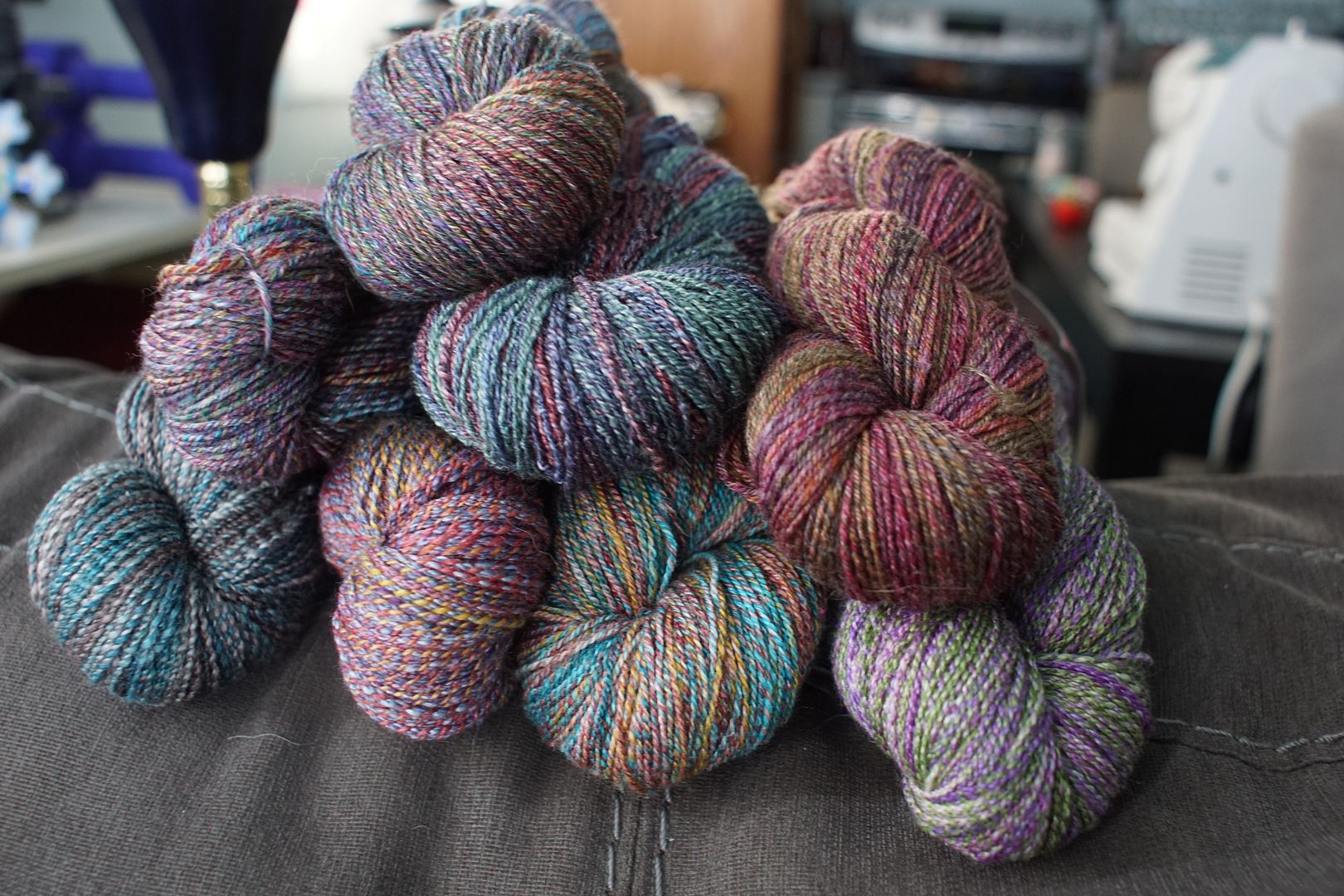
I’ll be back in a few months, with eight new pairs of socks!
 Osborn Fiber Studio
One thought on “Socks for Science: Cohort 2”