The last big finish I’d like to share with you this week is another souvenir of my summer. But it starts earlier, with a book I received for Christmas: Knit, Fold, Pleat, Repeat by Norah Gaughan. Norah is a master of knitted fabric, and she really went to town in this book using unusual directions and constructions to create intriguing pieces. The whole book really has really captured my imagination, but the one that wouldn’t let go was Afloat. Click the link to see the pic from the book. See all those draping folds of fabric? They’re made by just making… extra fabric. I knew that much stockinette stitch was not for me, but when we went to a place that I could get yarn suitable for machine knitting, I hatched a plan to make this sweater my own way.
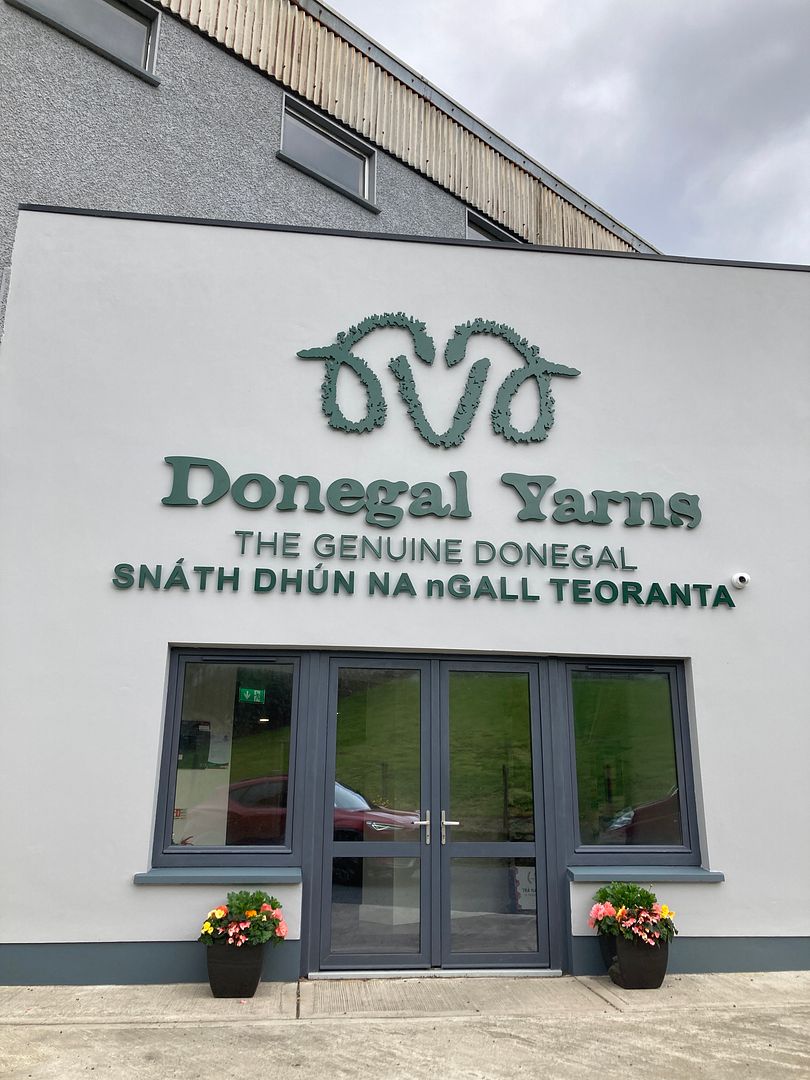
For my video tour of this very cool mill, see Episode 123 of the Wool Circle. I came away with this rather shocking haul of yarn.
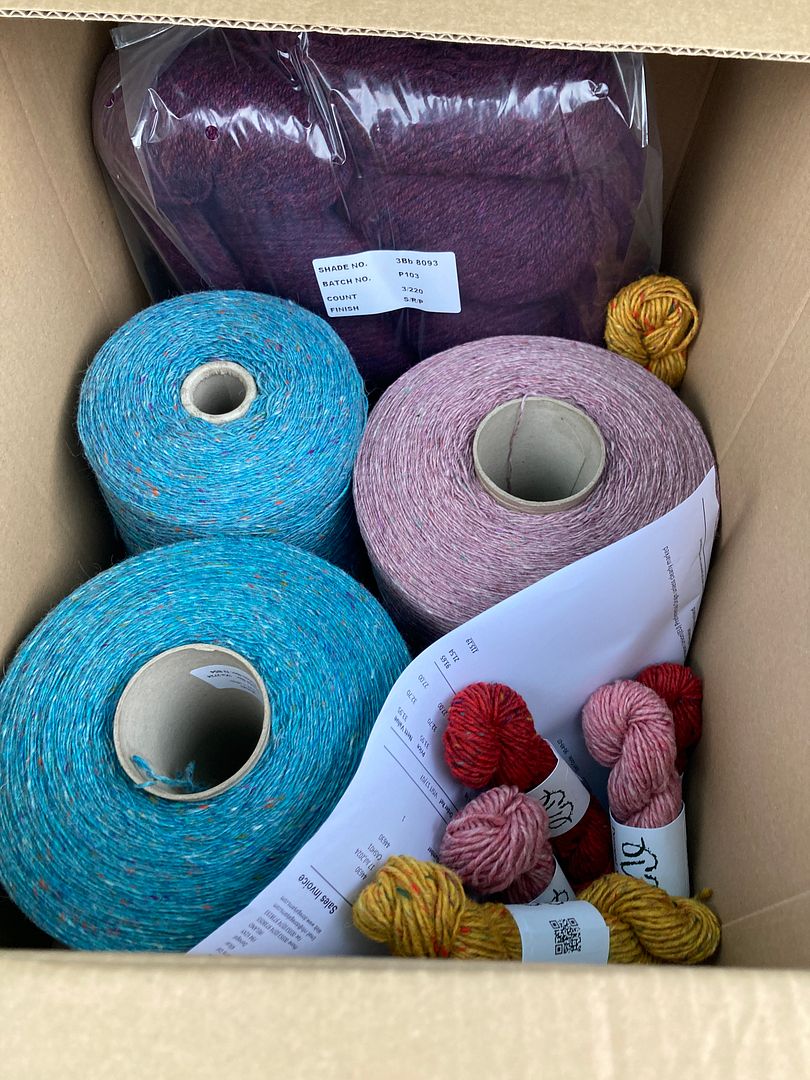
I shared some of the blue yarn (Milarrochy Tweed in the new “Out Sea” colourway) and still had a kilo to work with. When I got to my mom’s house, I spent a day converting about half that cone into a giant stockinette panel – totally guessing as to the width, as I didn’t have the book with me – and skeined the rest. I did know that the gauge was meant to be quite open for this yarn to give it lots of drape.
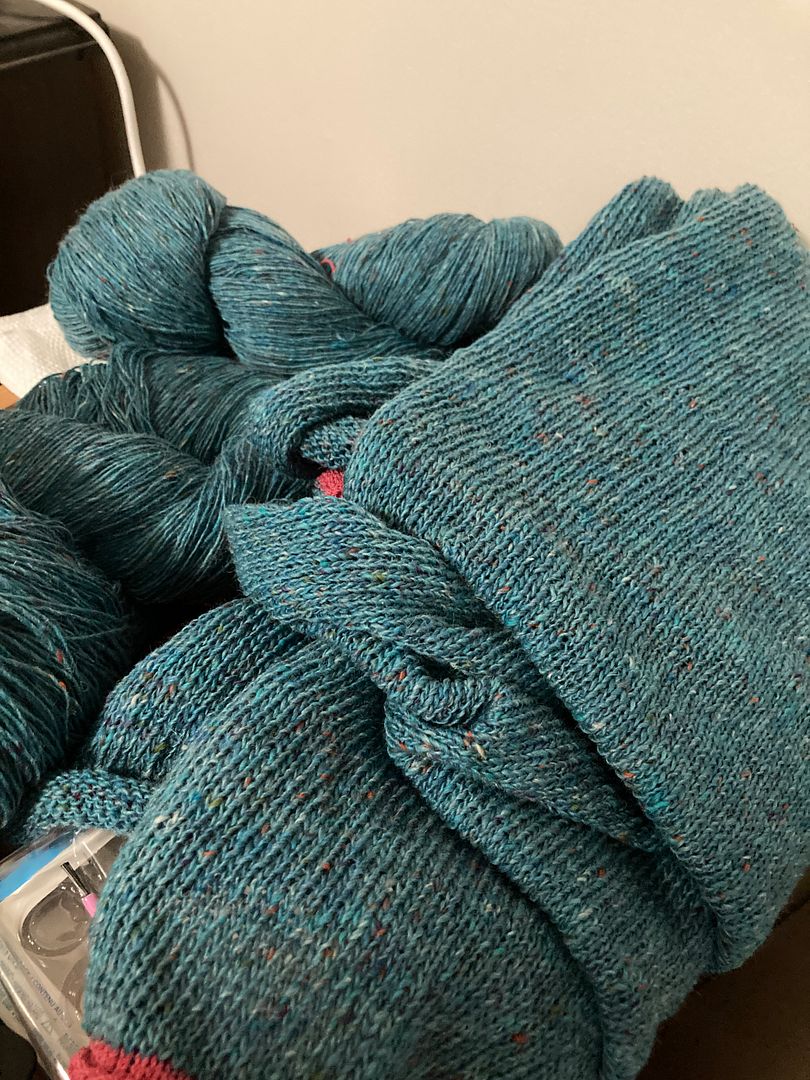
Once back home in Canada, I blocked the panel to properly measure it and wash all the spinning oils out of it. I also had to wash the remaining yarn and make another swatch, to try to match handknitting washed yarn to machine knitting oiled yarn.
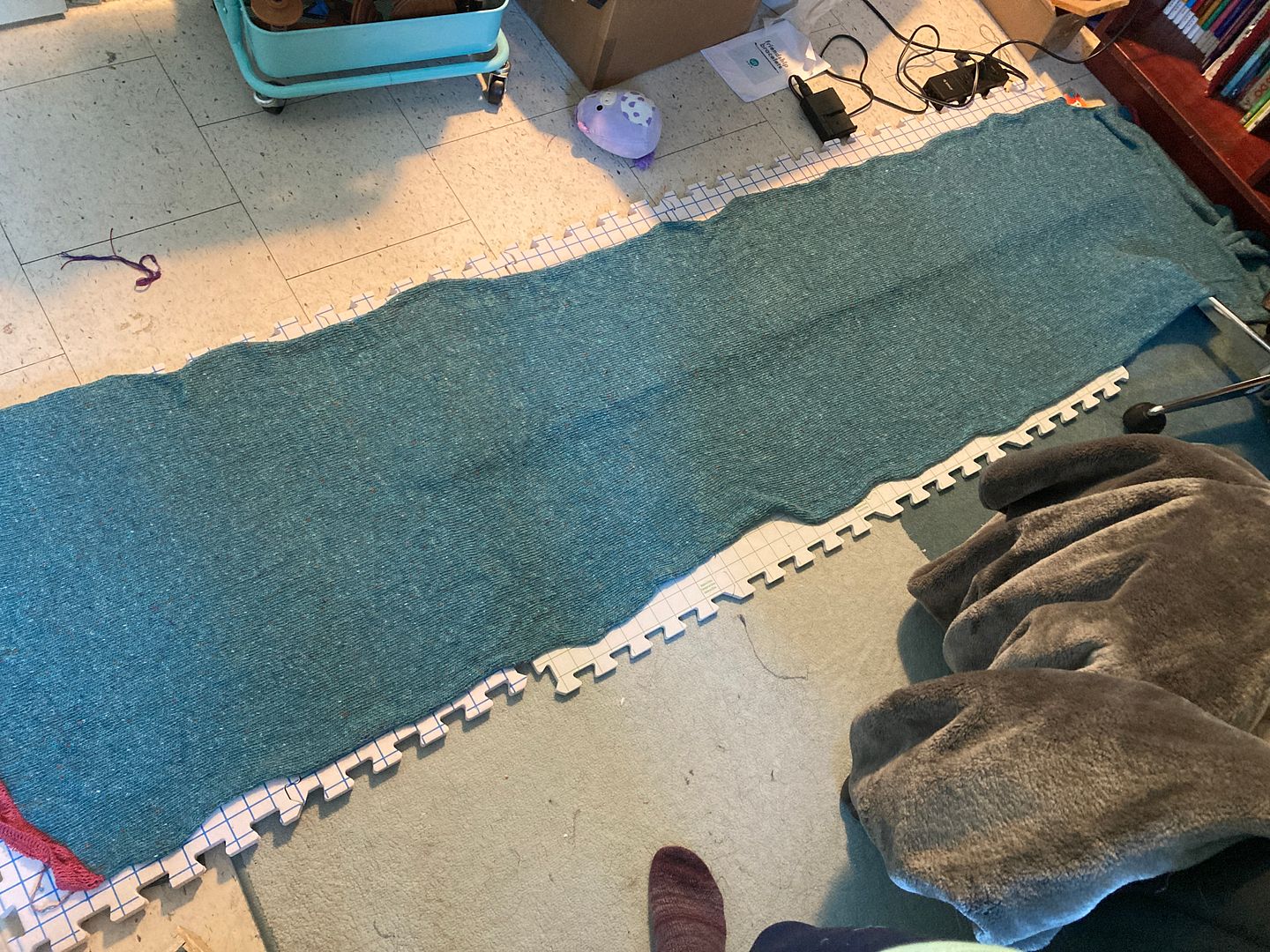
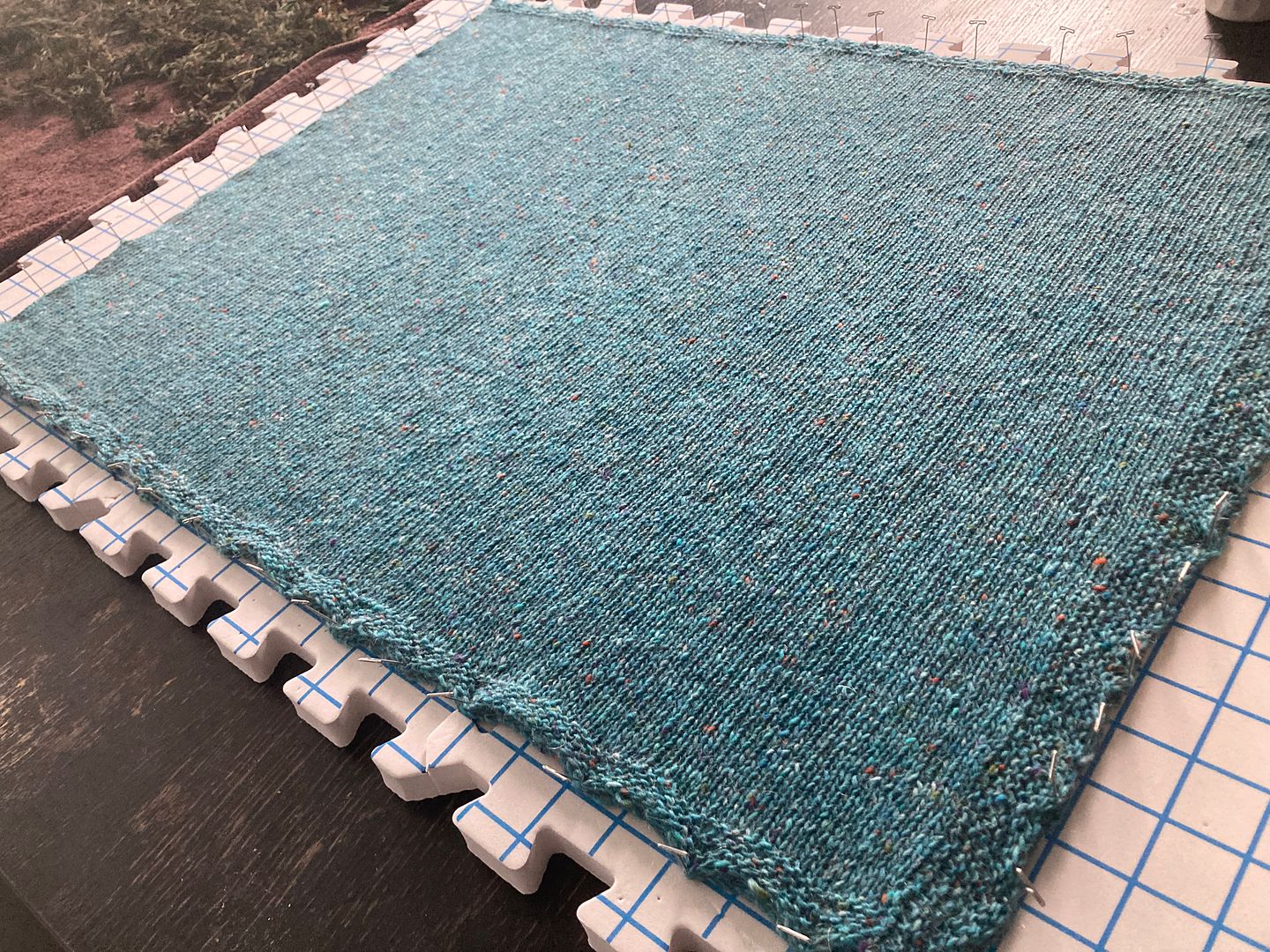
Once measured, I divided this big panel into four panels. The pattern called for just two pieces, a very wide front and back, but I had a different plan. I carefully counted rows, leaving enough in between to create garter stitch edgings on the top and bottom, then I added a third edging along one side. I blocked these panels severely to rectangles – I had clocked the fabric’s alarming tendency to bias, and we’ll just have to see how well it keeps its shape as I use it. I think that’s just a matter of the yarn being used straight off the cone, still energized from spinning. Now that it’s washed, I believe it’ll be more pliable to my desires. After all, the balled Milarrochy Tweed that I use doesn’t tend to bias, nor did the yarn I handknit after washing.
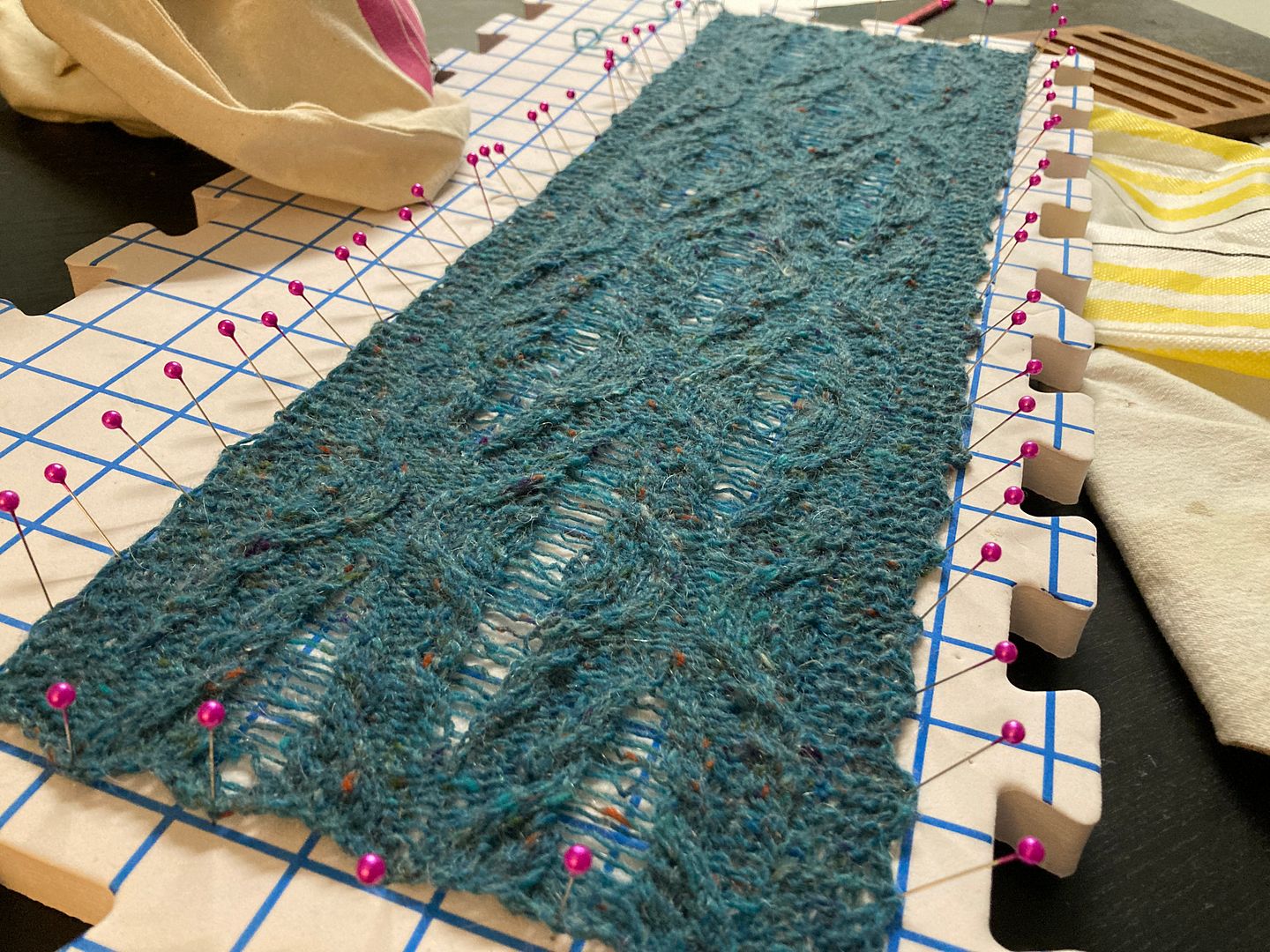
I took a couple of days to knit the front panel, which was super fun. This is exactly the amount of heavily patterned knitting I can tolerate; I don’t have the patience for allover cables and lace anymore, and it would have made me bonkers to try to follow this complicated chart in the middle of an enormous stockinette front!
Last of all were the sleeves. I went for two-at-a-time sleeves knit flat, which is slow, but when you’re done you’re done. And I like the fact that when I mix up when to do decreases or increases, at least the two sleeves match!
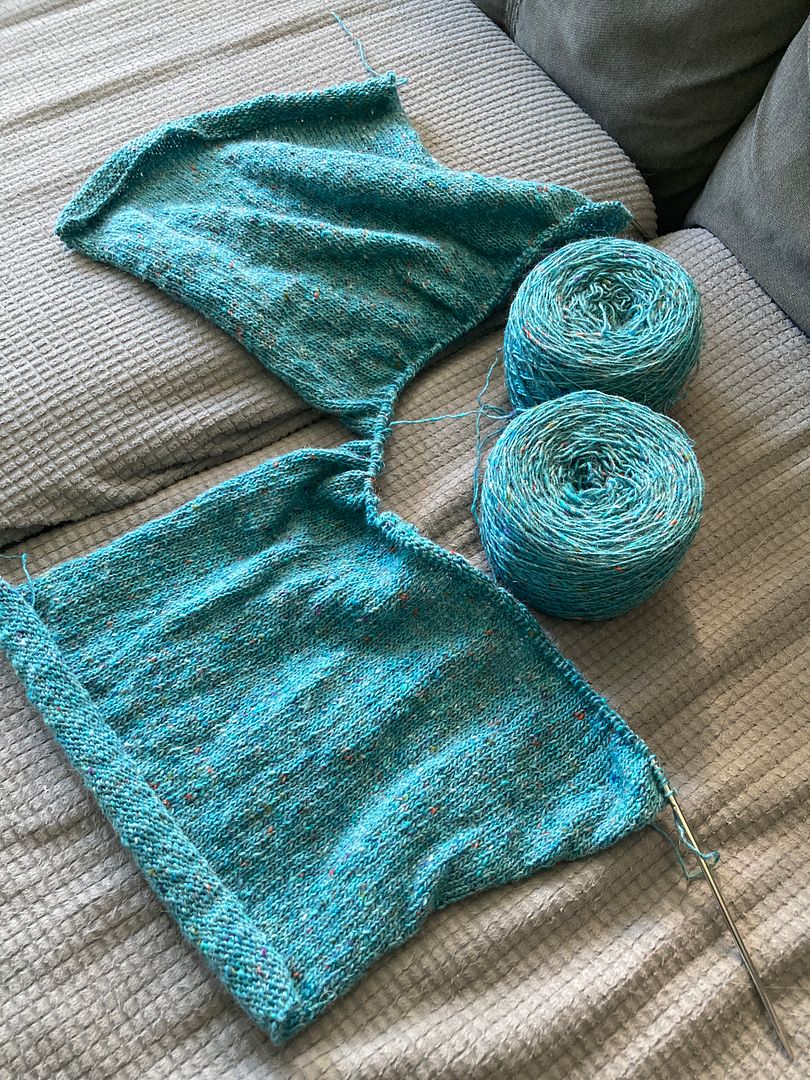
The pattern seemed to be telling me to make these very gentle raglan decreases, but after blocking I realized the issue here. From tip to cuff, this sleeve is vastly longer than the distance from my neck to my wrist.
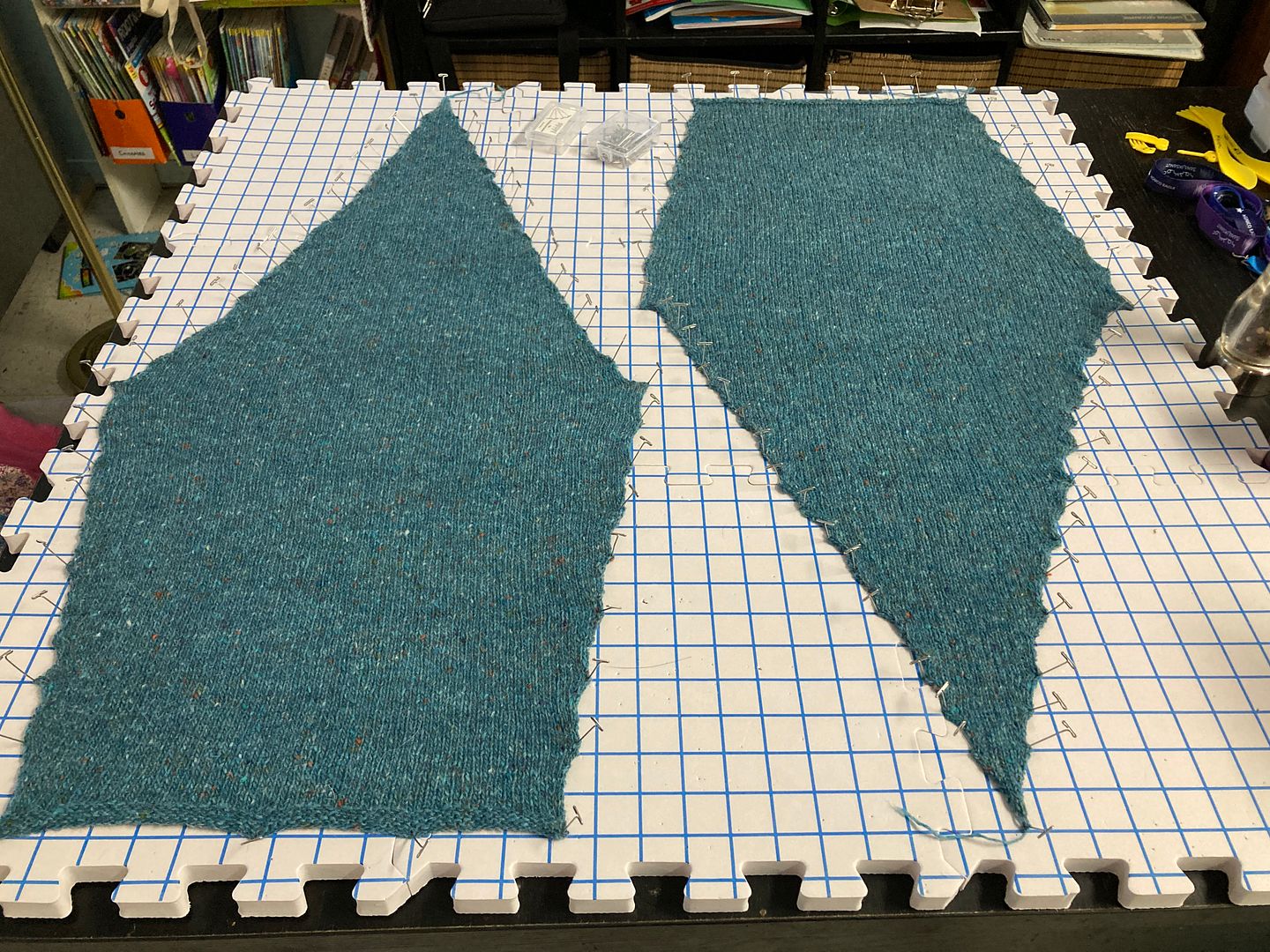
I had to rip back and install more average 45-degree raglan decreases. It could have been that I misunderstood the pattern, but I didn’t want to re-knit the whole of both sleeves just to get that deeper raglan.
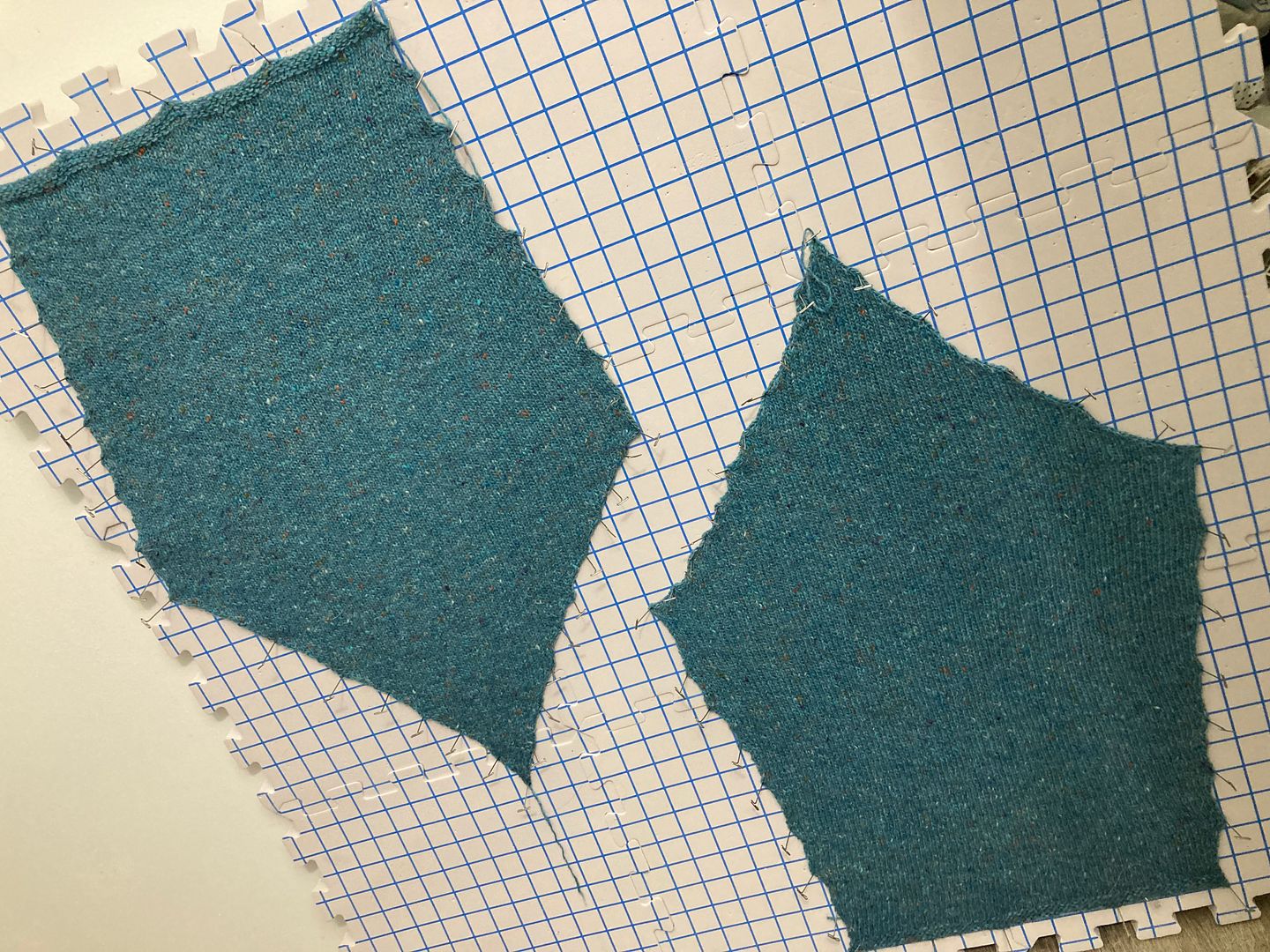
To assemble: First, I sewed two panels together for the back. Then I sewed the other two panels onto the front, but leaving a wide edge from on the panel, later steeking off the excess. I had imagined originally that I would knit a centre back panel as well, but my panels ended up so wide that I didn’t want to add more width. I hope that makes sense.
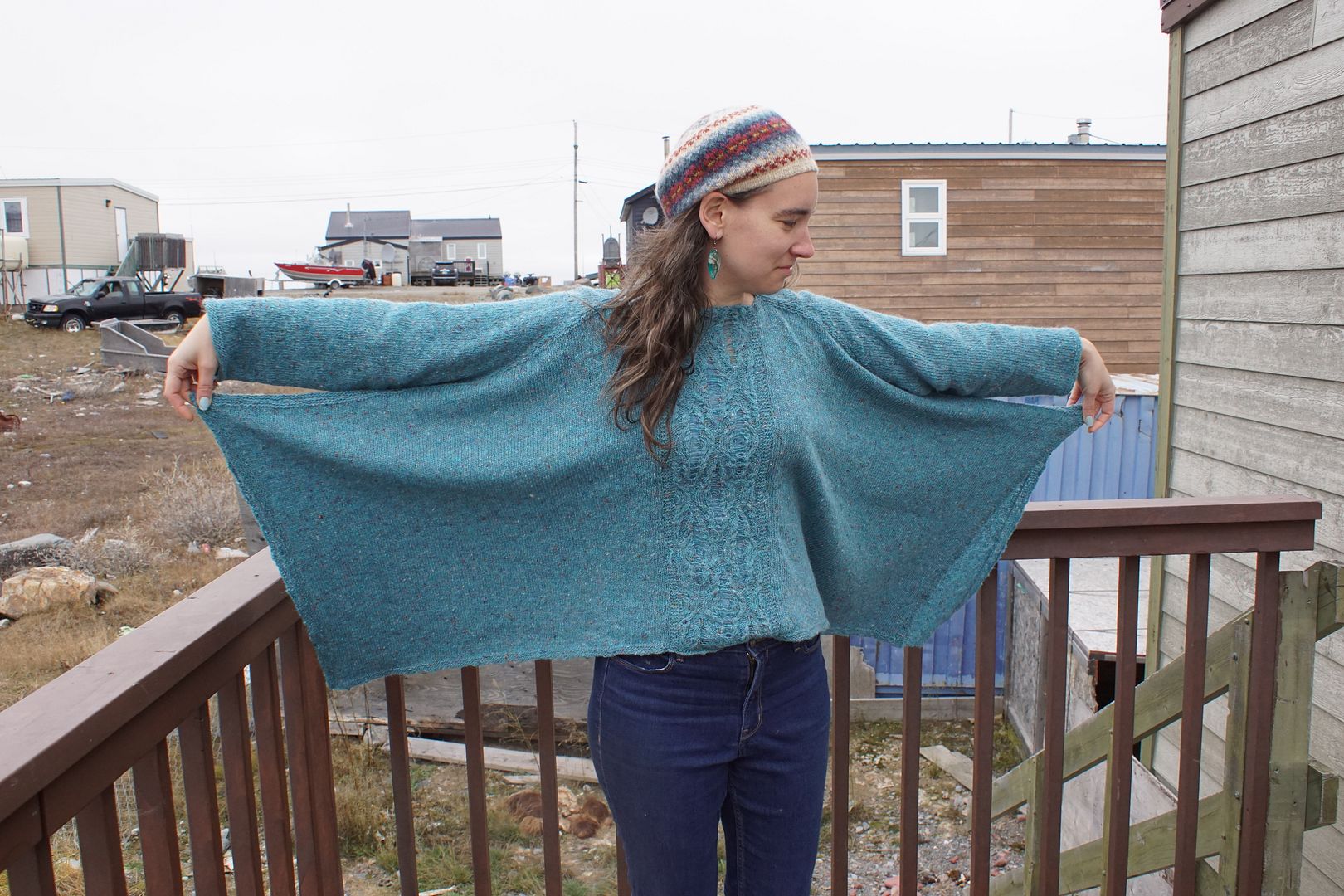
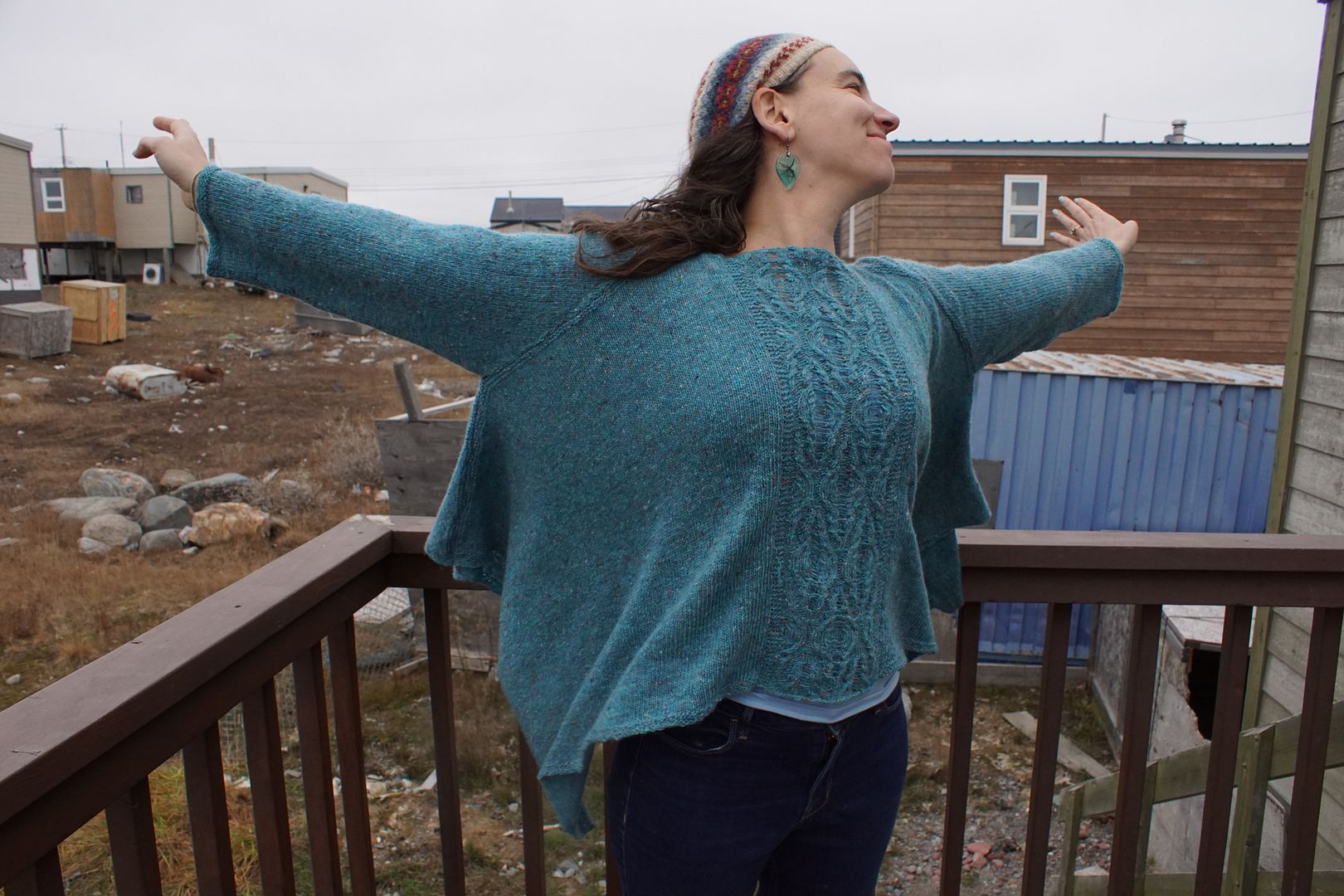
The sleeves are added at an angle pointing upwards from these two enormous panels, then the rest of the fronts are sewing together along the top edge. All that excess fabric makes the lovely folds you see.
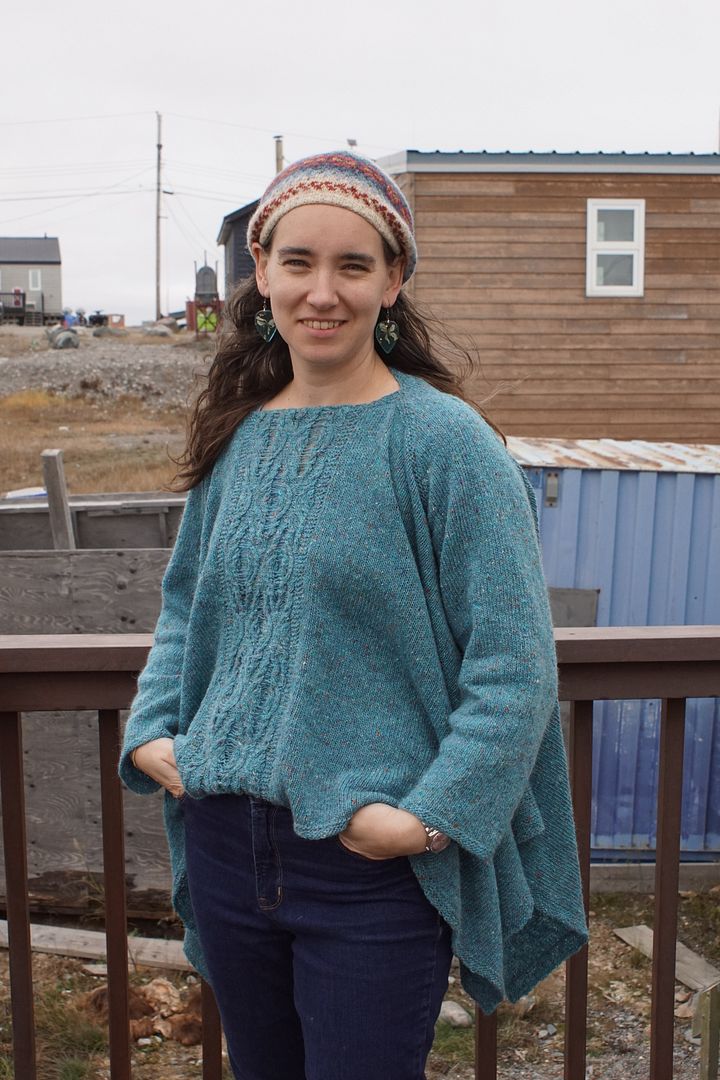
It’s a really interesting fit. All the weight of that fabric hangs on the two points of the shoulder where the top of the raglan sleeves meet the front and back, which feels rather funny. Once I get those two points centered, the whole thing does stay pretty balanced, and it feels like wearing a blanket with sleeves.
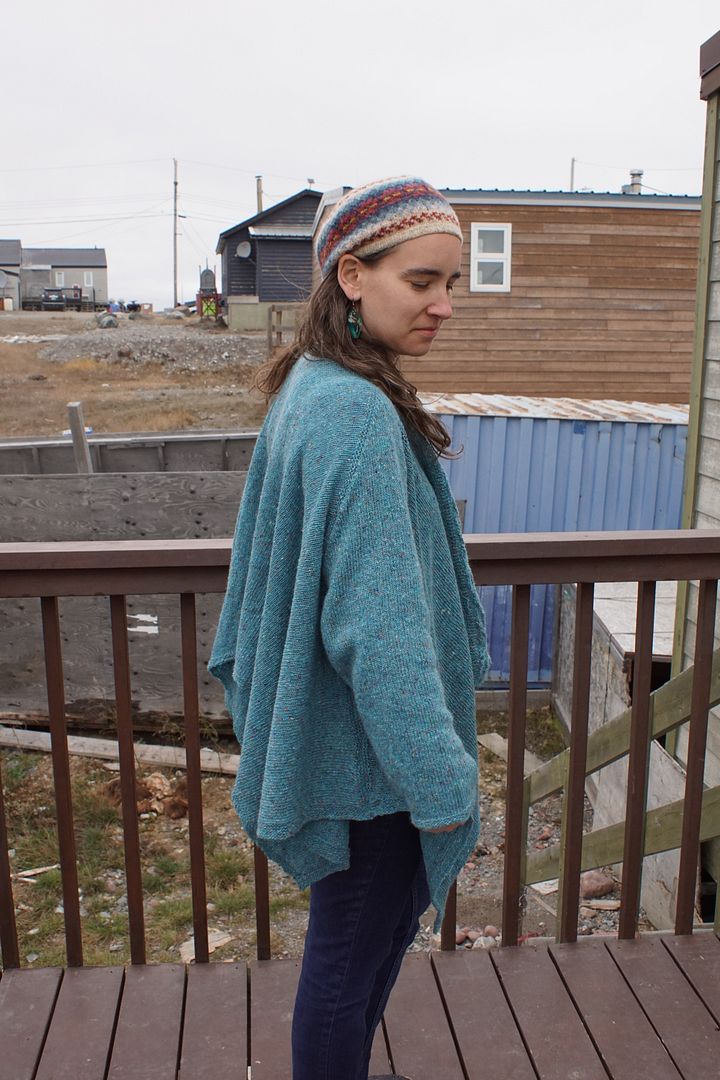
It will also be super-interesting to see how this fabric wears. I’ve used Milarrochy Tweed a lot, as you probably know if you’re regular reader, but I’ve never worked with it at so loose a gauge, and I’ve actually never knit a sweater out of it, believe it or not. Even though it’s a singles woolen-spun yarn, it tends to wear extremely well because of the mohair content, which acts as a sort of protective shield. It can felt – the hat I’m wearing has definitely fulled a bit after being washed a little too aggressively – and how that translates into sweater wear is an open question for me.
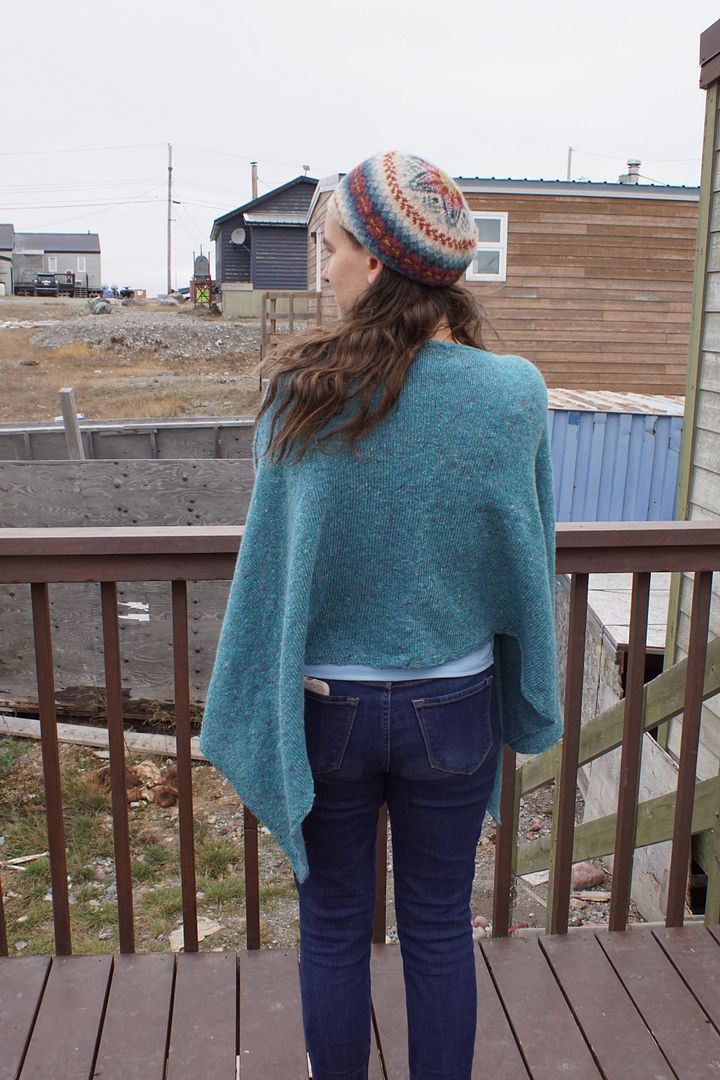
This sweater was a delightful exercise in exploring an idea that interested me, but applying it in my own way. I’m still super-curious about Norah Gaughan’s work, and the possibilities of manipulating excess fabric to make interesting garments. Everyone’s idea of flattering and comfortable clothing is different, so I make no assumptions, but there are a lot of ideas in that book I personally want to work with!
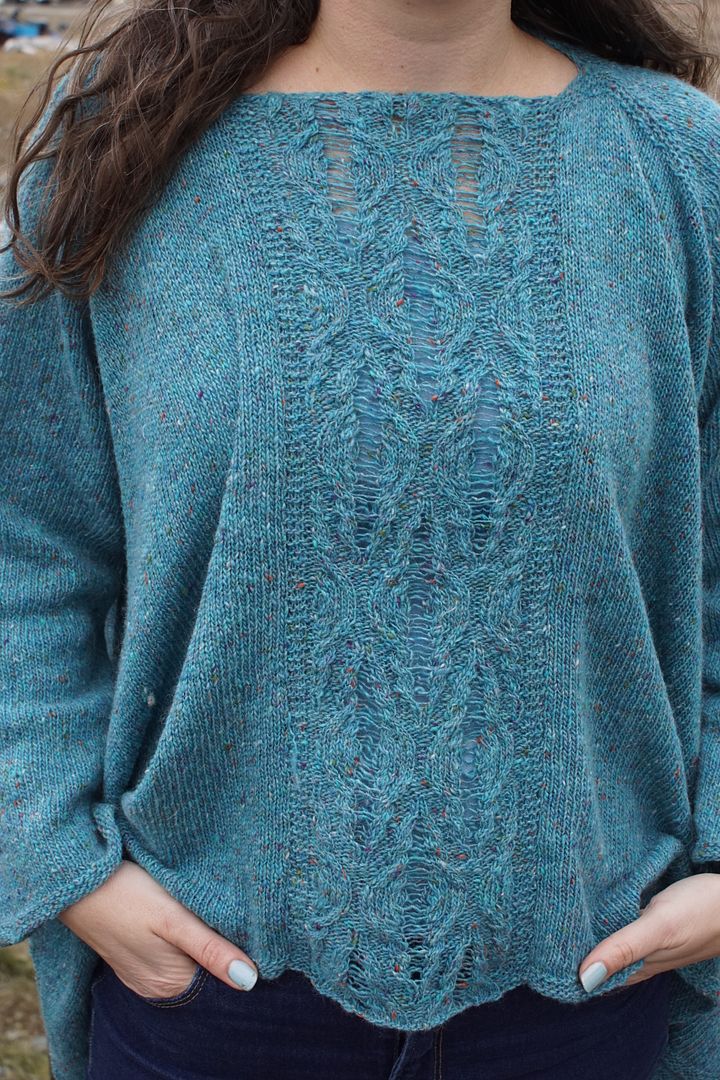
Here’s to extra fabric on a windy day!
 Osborn Fiber Studio
Ooh, that looks so cosy!
LikeLike
Haha thanks!
LikeLike