Happy Weekending, everyone! It’s an exciting time: early orders of Migraineur have arrived in knitters’ hands, the KAL in my Ravelry group is slowly building steam, and we even have our first FO! (Well done Maria!) In a few days, I should finally have my author copies in hand too. I finished the handspun main colour of my WAVES and should be ready to cast on soon.
I’d like to take a little time to talk about the yarn I used for this book. As you know, I’m big into handspinning, to the point that I barely use commercial yarn anymore. So I why did I choose to use commercial yarn for my first book? And why this yarn?
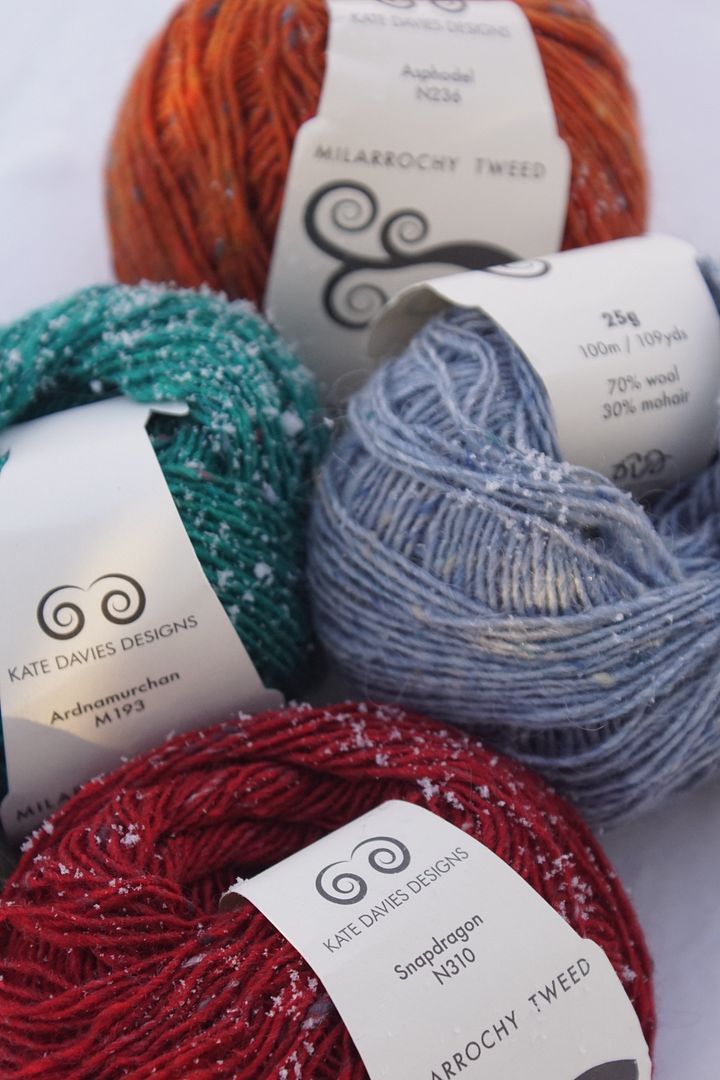
The yarn in question is Milarrochy Tweed from Kate Davies Designs. I’ve mentioned many times that I love it, that it’s my if-I-were-stuck-on-a-desert-island-and-could-only-have-one-yarn yarn, but I’ve never gone in depth as to why. As a spinner, expect things to get nerdy.
First, let’s get into the structure. This is a fingering-weight woolen-spun singles yarn, made with 70% wool and 30% mohair. Let’s break that down:
- Fingering weight yarn is pretty fine. Not as fine as lace, but next to it. It’s a versatile diameter of yarn that can be used for any kind of fabric, from socks to lightweight sweaters to shawls. It makes fabric that’s light, but depending on how densely you knit it, it could be gauzy or substantive.
- Woolen-spun yarn is made in such a way as to retain a certain amount of air in the final yarn. The wool is carded into fine fluffy sheets, the individual fibers still going every which-way, then divided into tiny slivers that are twisted into yarn. The every-which-way of the fibers means they push against each other, trapping air. This makes the yarn light, a little uneven, a little fragile, and very warm.
- Singles yarn means that just one strand of yarn is used. One strip of fluff is twisted, and that’s it. Plied yarns go through extra steps of those singles being twisted together in the other direction, but not this yarn.
Now, being a woolen-spun singles yarn means it’s very light, and could be quite prone to wear and breakage. If you go to break this yarn with your hands, it will come apart without too much resistance. Some knitters have even complained of this yarn coming apart in their hands as they knit, though I have never had this problem and I’ve knit literal thousands of yards of this stuff. Durability is a real issue in yarn, and it’s something we spinners think about a great deal. But there’s something about this yarn that makes all the difference from being a fragile yarn that makes fragile fabric, and it’s that 30% mohair.
The mohair content in this yarn is, in my mind, what makes it universally useful. Mohair, which comes from goats, tends to be longer and more wiry than wool. The pointy tips create an almost invisible halo that shields the wool from wear. Can you see in this picture how the snowflakes seem to hover over the yarn, rather than really sitting on it? That’s because they are being caught by that halo.
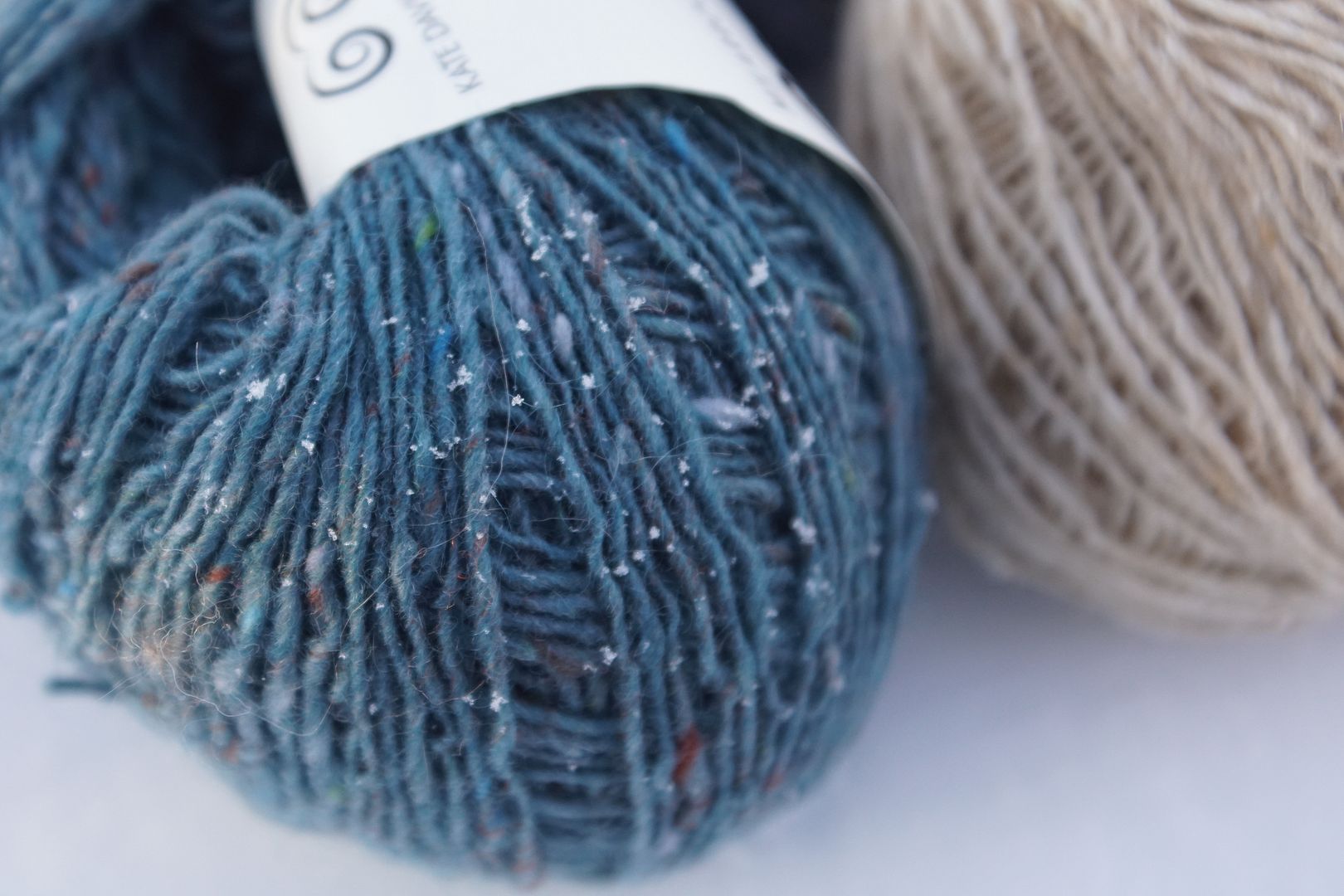
This is how Milarrochy Tweed gets all the benefits of being an incredibly light fingering-weight singles yarn, while making a surprisingly durable fabric. The woolen singles are so light that they nestle together perfectly when used alone or together in colourwork, making a truly integrated fabric. Then that mohair halo rises to the top, protecting it from pills and holes for years to come.
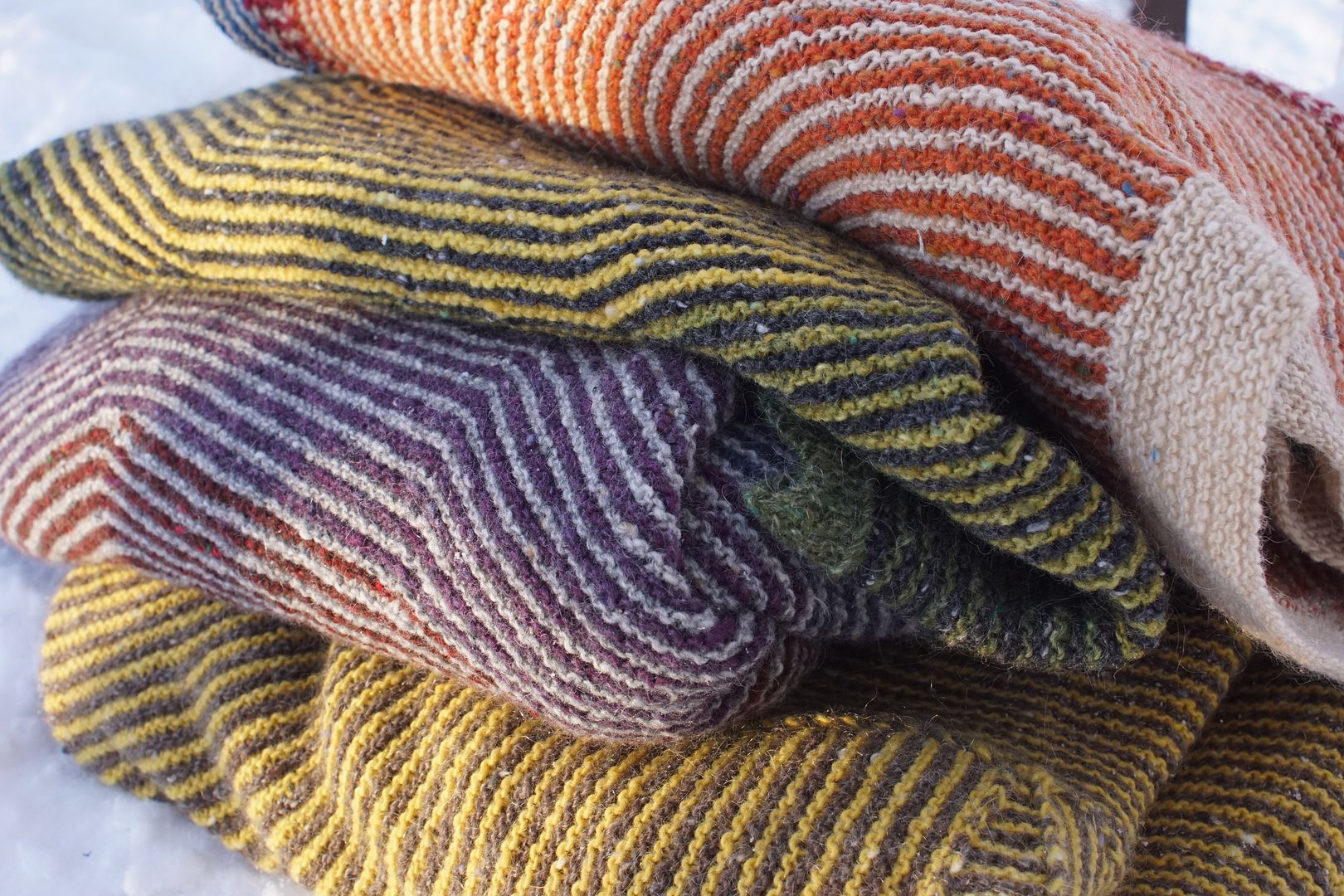
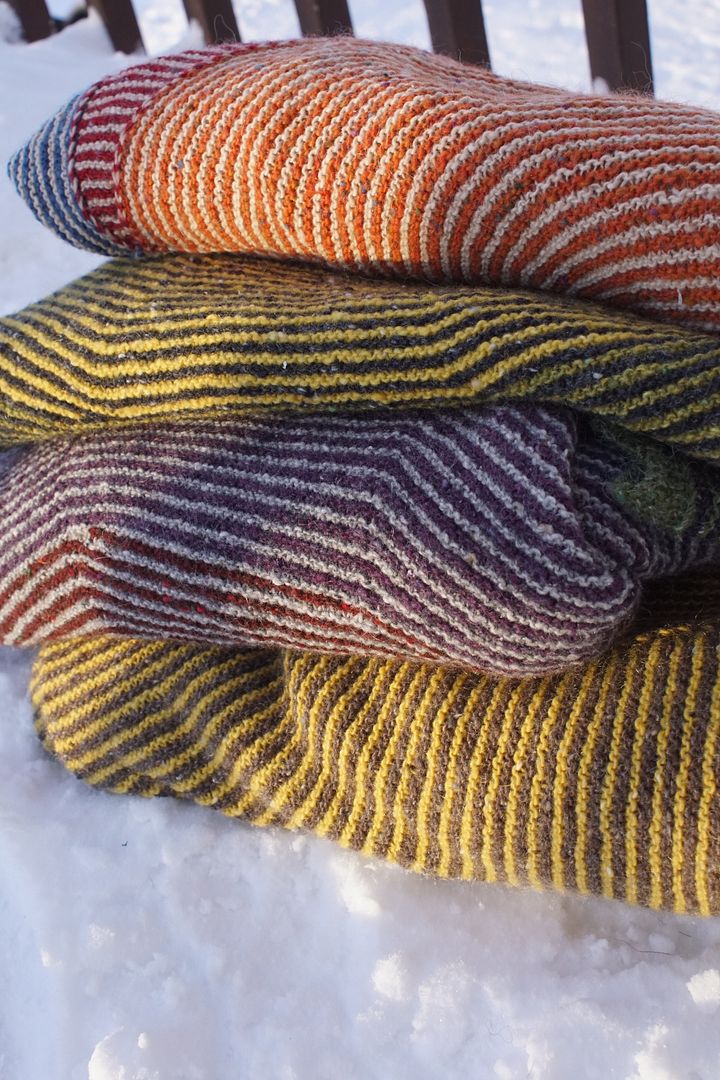
You might think that the woolen nature of the yarn made it less capable of showing surface texture. Unlike with other woolen-spun yarns, textured knitting like the garter stitch in these shawls doesn’t flatten. It holds up against itself in knits and purls.
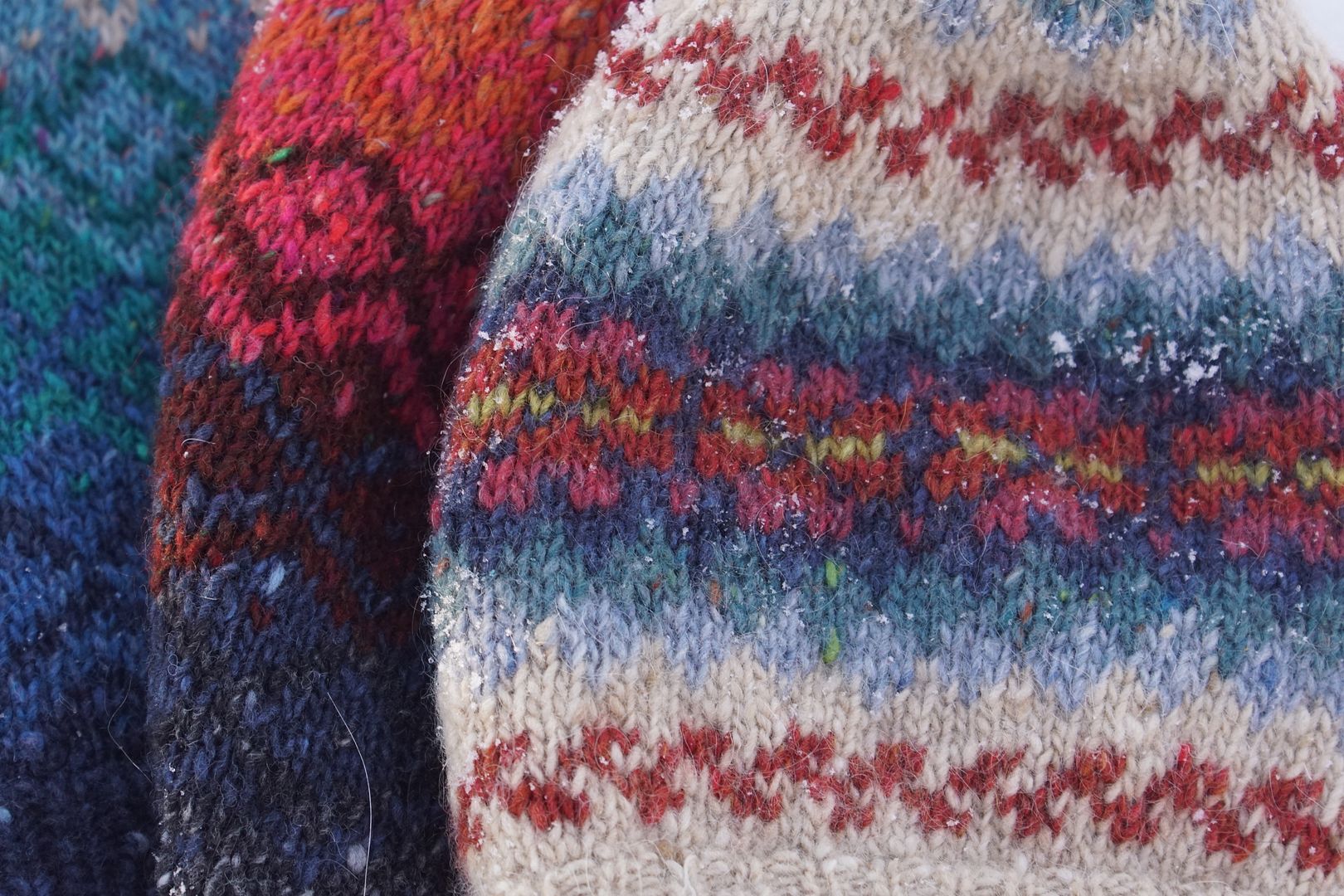
The wool itself, by the way, is largely Australian Merino, with some more local british and irish breeds mixed in. The Merino is part of what makes this yarn next-to-skin soft for me, though I recognize it won’t be for everyone.
So that’s why, as a spinner, I love this yarn. But I haven’t even started talking about the colour!
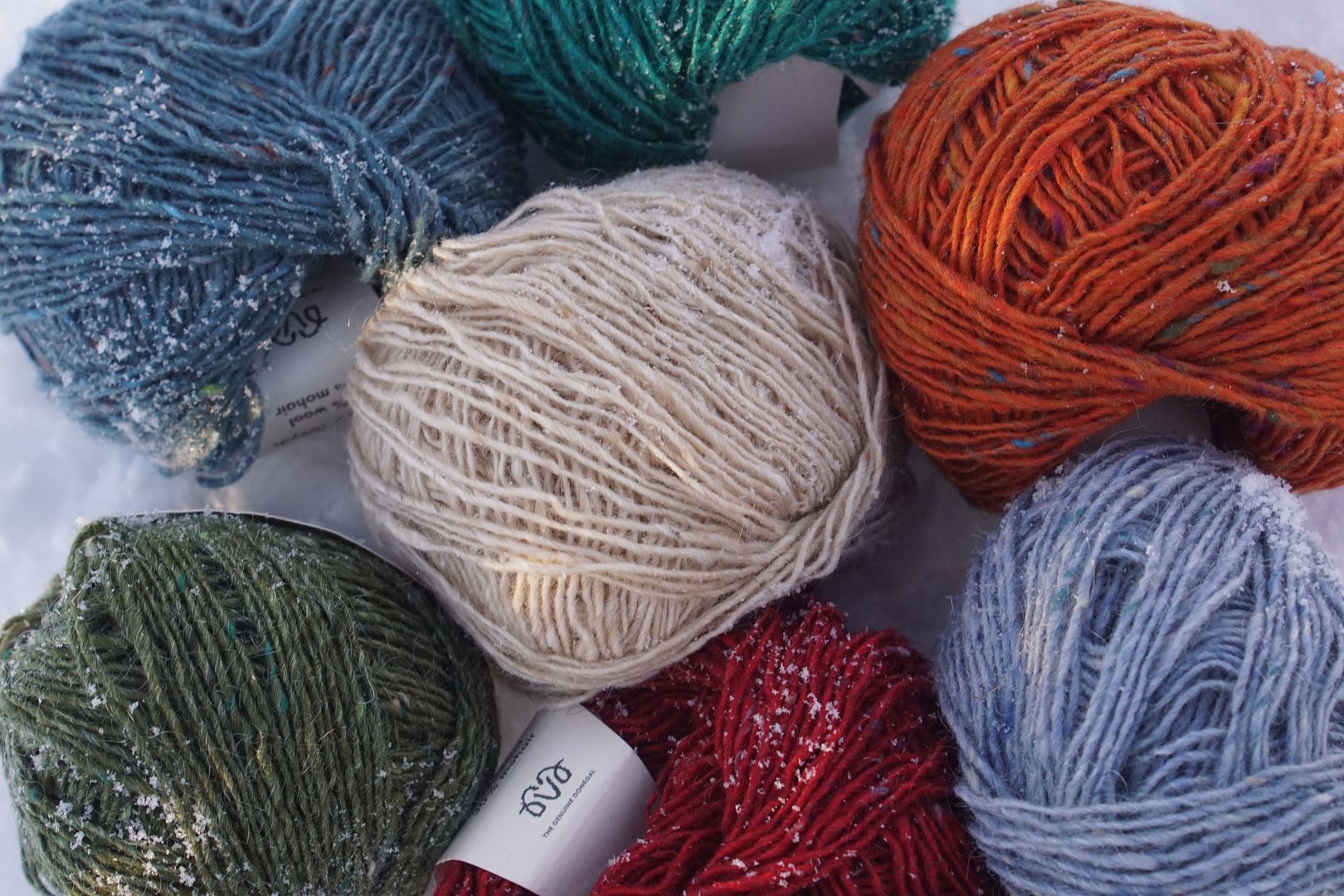
Milarrochy Tweed comes in 24 shades that truly offers the gamut of choices between hue, saturation, and temperature. This is a tweed yarn, meaning any colour has flecks in it – some with more contrast than others. Hirst, in the center above, has flecks of pure white and light brown that don’t stand out, making it much more heathered. The same could be said of Smirr, the greyish blue in the bottom right corner. Other shades, like the bright orange of Asphodel, have bright flecks of aqua and fuschia that tie it directly to other colours in the line, like Ardnamurchan at the top of the picture above.
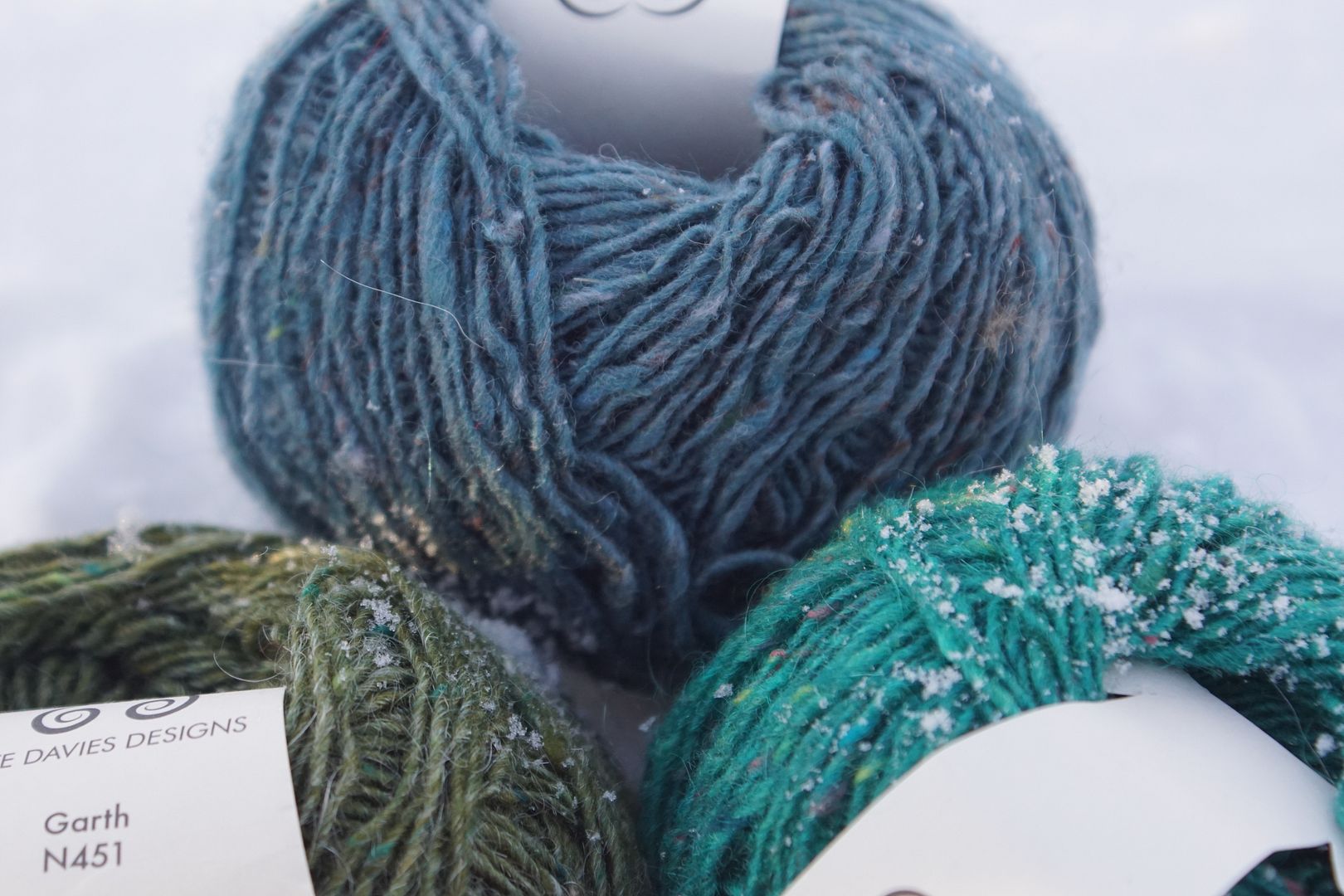
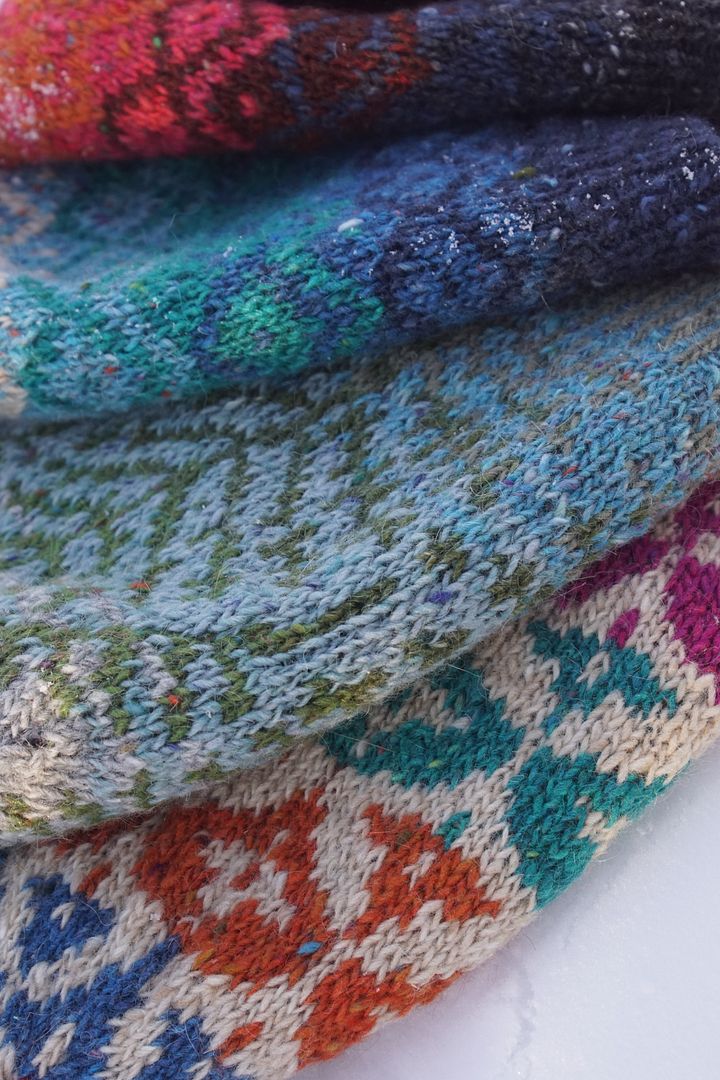
The range of blues and greens is stunning, from moody desaturated Ardlui (my secret favourite) to the blazingly bright teal Ardnamurchan, to the subtly different forest greens of Garth and Gaskin (not pictured) to the chimerical chartreuse of Stockiemuir. There are enough shades to easily arrange gradients, or to make high-contrast graphics. Across the spectrum of hats I made for this project, I did both. This broad scope of colour means that it’s literally impossible to run out of fresh design ideas using all these colours.
If this all reads as extended advertising copy, I’m not sorry! It’s both a disclaimer and an expression of gratitude and pride to share that I received all the yarn to make all the samples in this book – both myself and my test knitters – provided generously by KDD & co. They offered to do that because they like my work, and I asked because I like their work. I hope you have found the integrity in this space to trust my recommendation anyway. As a spinner, a spinning instructor of source, and a knitter, I really love this yarn, and I hope you do too!
By the way, I’d be remiss not to mention that Milarrochy Tweed is made at Donegal Yarns in Ireland. If you’d like to see more from Donegal Yarns, Kate and Tom made a truly glorious photo essay about it. If you’re a member of The Wool Circle, you can see my little video tour of the mill from 2024. Happy knitting!
 Osborn Fiber Studio
This yarn is one of my favourites. I hadn’t thought about a desert-island yarn, but I’d choose it too. You are so lucky to have had to opportunity to knit so much with it and use it for your book.
LikeLike
love hearing that other spinners love Milarchy yarn. 🧶 I am finishing up a sweater and my Tonach is so light and colorful. Love your book btw and hope to start those fern mittens as we winter through to spring.
LikeLike