This post is going to be an absolute potpourri of events and vibes. About the only thing these subheads have in common is that that they all happened in the same week. When you get to the end of this post, will you find common threads? The most distinct description of this week was that it included all the time we spent in the Republic of Ireland, but I’m going to start by talking about about the most non-Republic-of-Ireland topic I can think of: Orangeism. And it’s going to end with the best thing: new friends.
Interlude: Orangeman’s Day
As you may know, the whole island of Ireland is not all one country. Northern Ireland is a part of the UK, and takes up about a quarter of its land mass, and contains six of the island’s 32 counties. It’s historically Protestant, although there are Catholics and Protestants throughout the island.
Ireland has experienced plenty of conflict throughout its history, especially between Catholic and Protestant, which for many years has been rather tangled up with Irish independence vs. union with the UK. None of this was very long ago. There’s a real commitment to peace and nonviolence today, but the divisions are still there. And we got to see an interesting specimen of this ongoing, living history when we attended an Orangeman’s Day parade in Ballynahinch (pronounced “ball-na-hinch”), in Co. Down.
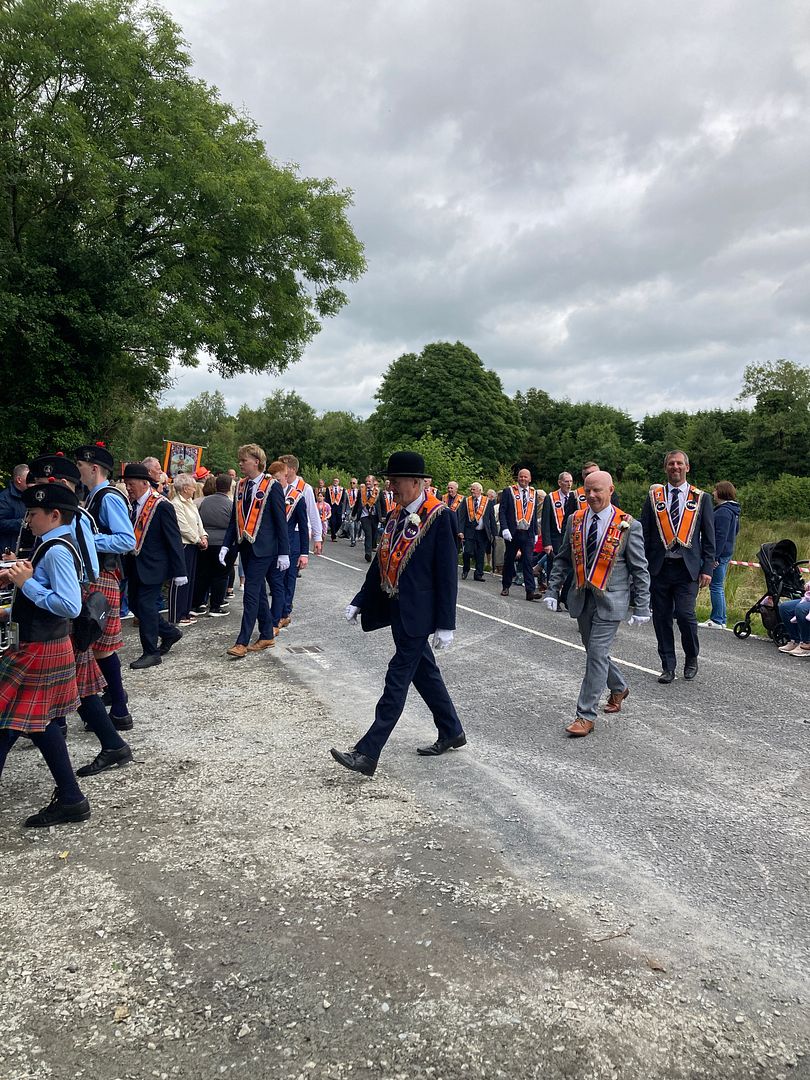
Orangeman’s Leagues are rather like many of the old “brotherhood” societies you can still find in the US. Rotary clubs, Masons, Eagles, that sort of thing. There were about twenty in Ambridge PA, where we lived for five years, and many of them are for Veterans or ethnic groups. I have never – ever – had any close friend or family member involved in any such brotherhood, so they are all equally foreign to me. But they’re still rather a big deal, and in Northern Ireland, the Orangeman’s Leagues are an especially big deal. And on July 12th, Orangeman’s day, they get together in a few places and have a truly epic parade. There were fife bands, brass bands, bagpipe teams, always drums, uniforms in all colours, kilts, etc. Most of the groups were playing hymns.

After the parade there were bouncy castles and rides on one side of the lawn, and a service complete with gospel sermon on the other side. It was a public celebration of Protestantism like nothing I’ve ever seen.
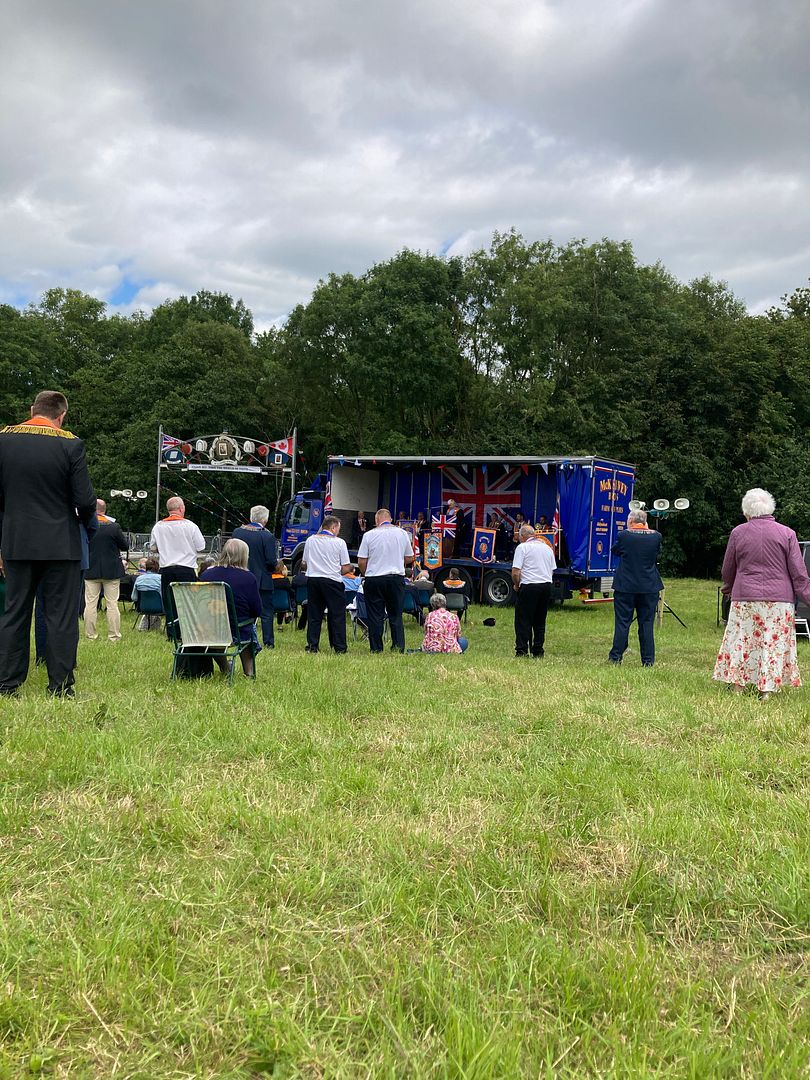
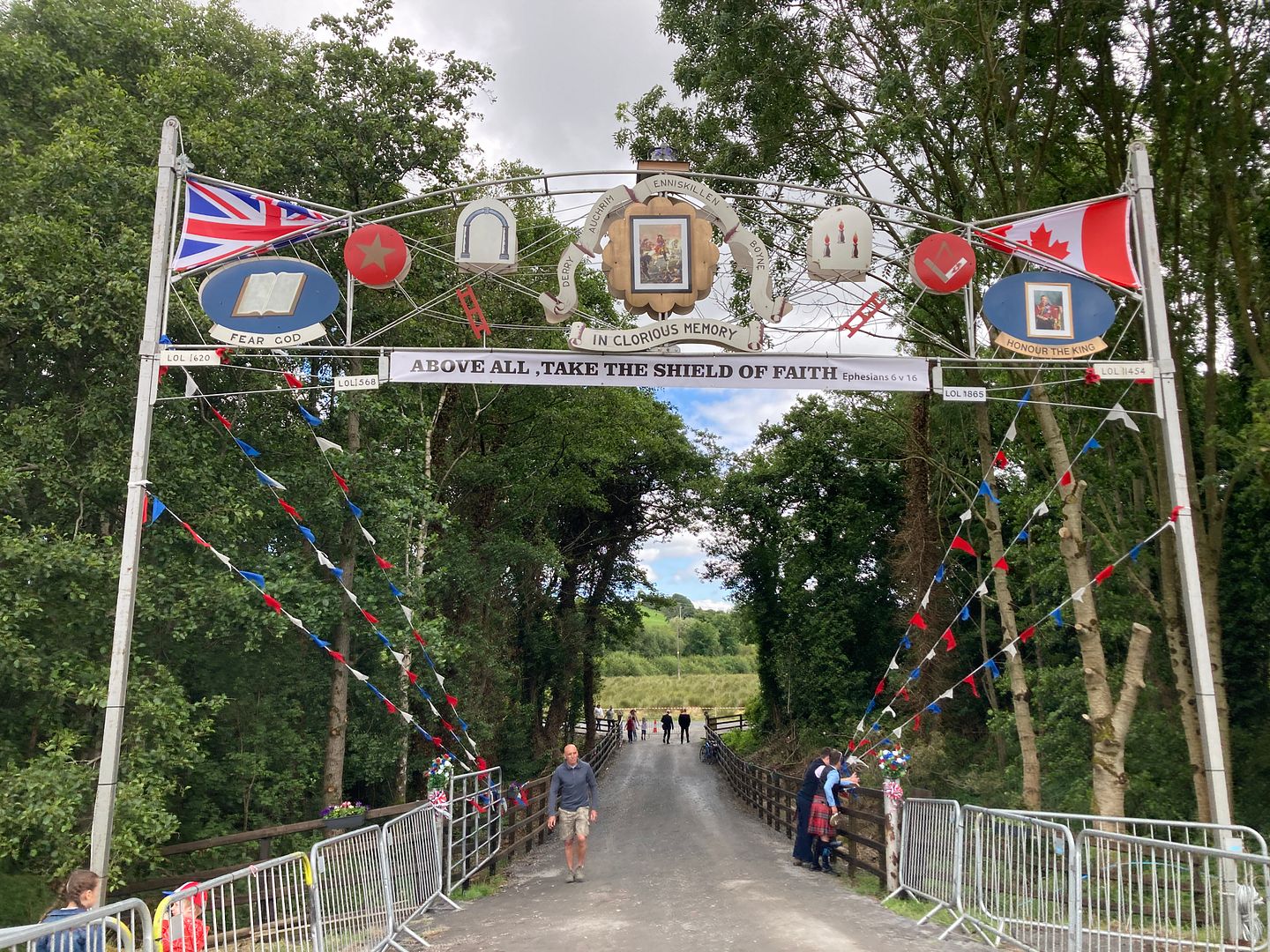
I have no judgment to make about Orangeman’s Day, but I have a few observations. I observed that, as someone whose closest family has been deeply divided by Protestantism and Catholicism at key formative points in my life, I was deeply uncomfortable. I observed that it was the whitest religious gathering I have ever attended. I observed the Canadian flag on the park entrance, as well as a masonic emblem.
And I noted that on the last day of the conference we attended the following week (which is the next thing I’m going to discuss in this jumble sale of a post), there was a deeply moving sermon against Christian nationalism, with the speaker well aware that he was probably upsetting many people in his audience.
That is all I can say – Orangeism is a deeply cultural phenomenon, as much as it is political and religious, so as an outsider I have very little footing for judgement. If you are Irish, I’m quite sure you have plenty of thoughts about it, which I would be happy to listen to. I am glad to have witnessed it, as part of learning about the complex and ongoing history of Ireland, and the many aspects of Irish identity.
New Wine Sligo 2024
Now that that interlude is done, I’m going to get into the meat of this post, which was our brief excursion into the northwestern counties of the Republic of Ireland.
The next day after the above parade, we drove from Lisburn, in the Eastern half of Northern Ireland, over to Sligo. County Sligo is on the west coast, and is part of the Republic of Ireland. Even though you cross into a properly different country when you go from NI to the Republic, there are no border crossings. The driving units change between miles and kilometers, you switch between euros and pounds, and Northern Ireland went through Brexit like the rest of the UK, but you can freely pass between them without so much as a toll both.
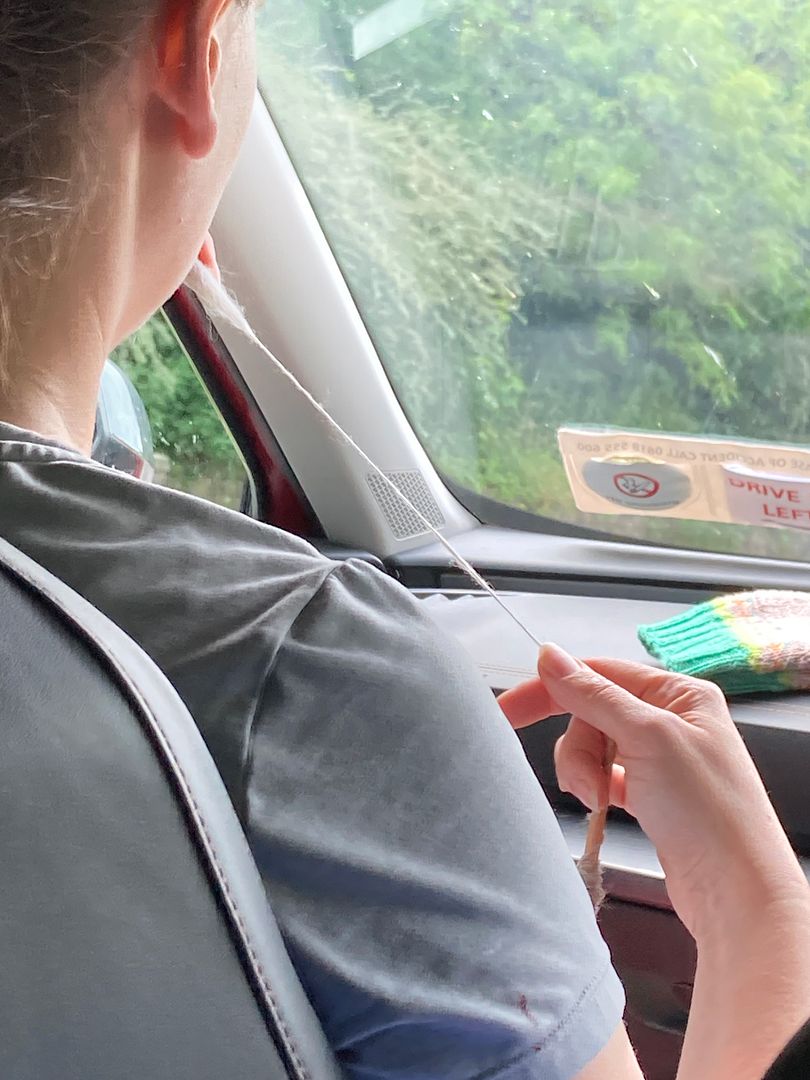
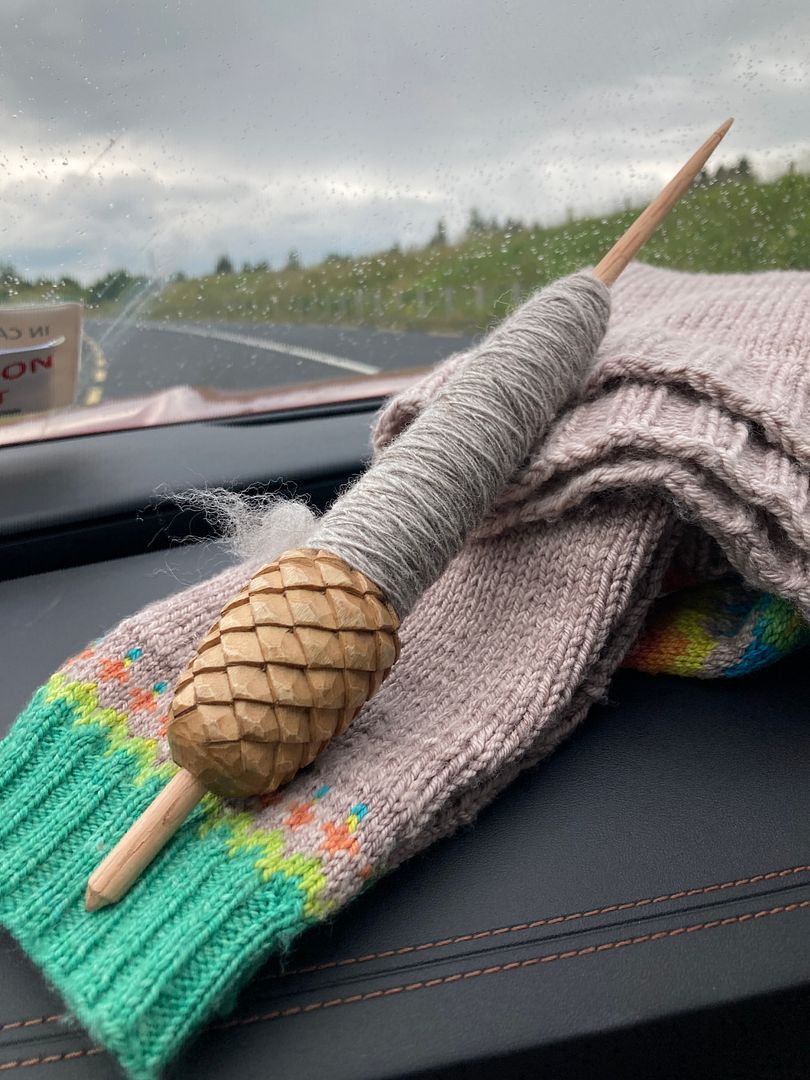
Here I am spinning on the the rainy drive.
We went to Sligo not to experience its many beautiful beaches, its rugged scenery, or its many tributes to W. B. Yeats. We spent almost the whole time on the campus of a technical university, attending a conference called New Wine Ireland. As a specimen of tourism, this is doubtless disappointing, but it might also have been the best part of our entire trip, in the opinion of all five members of our family.
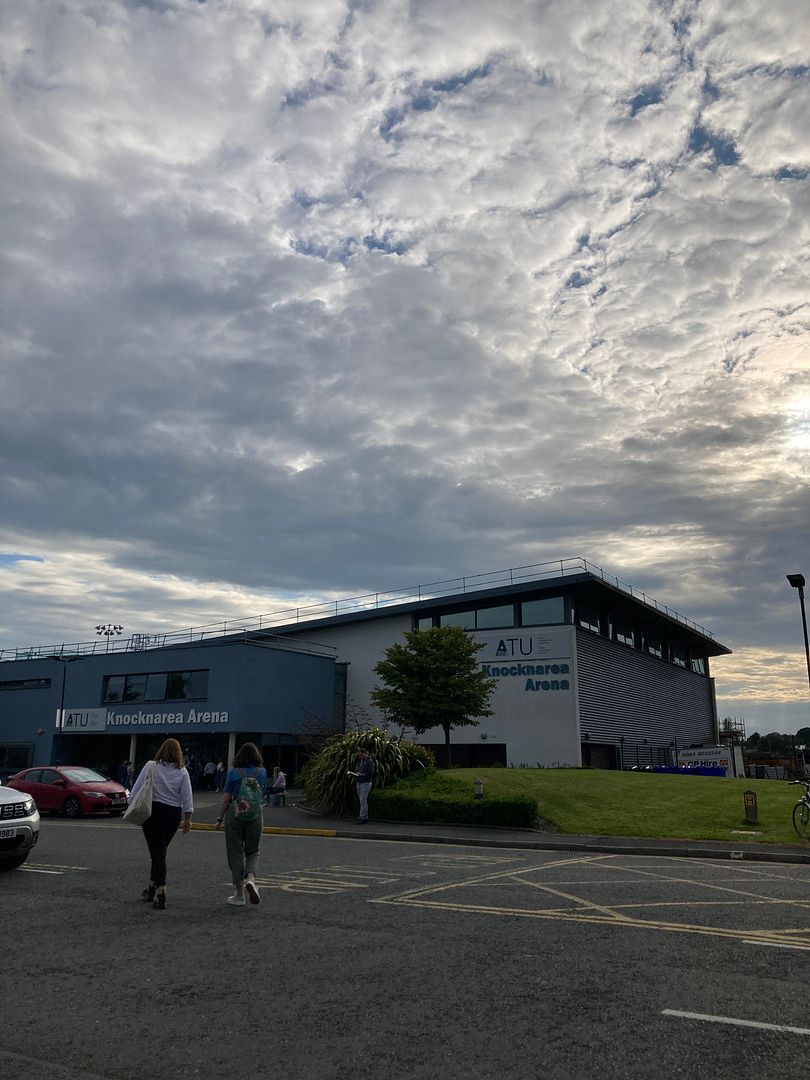
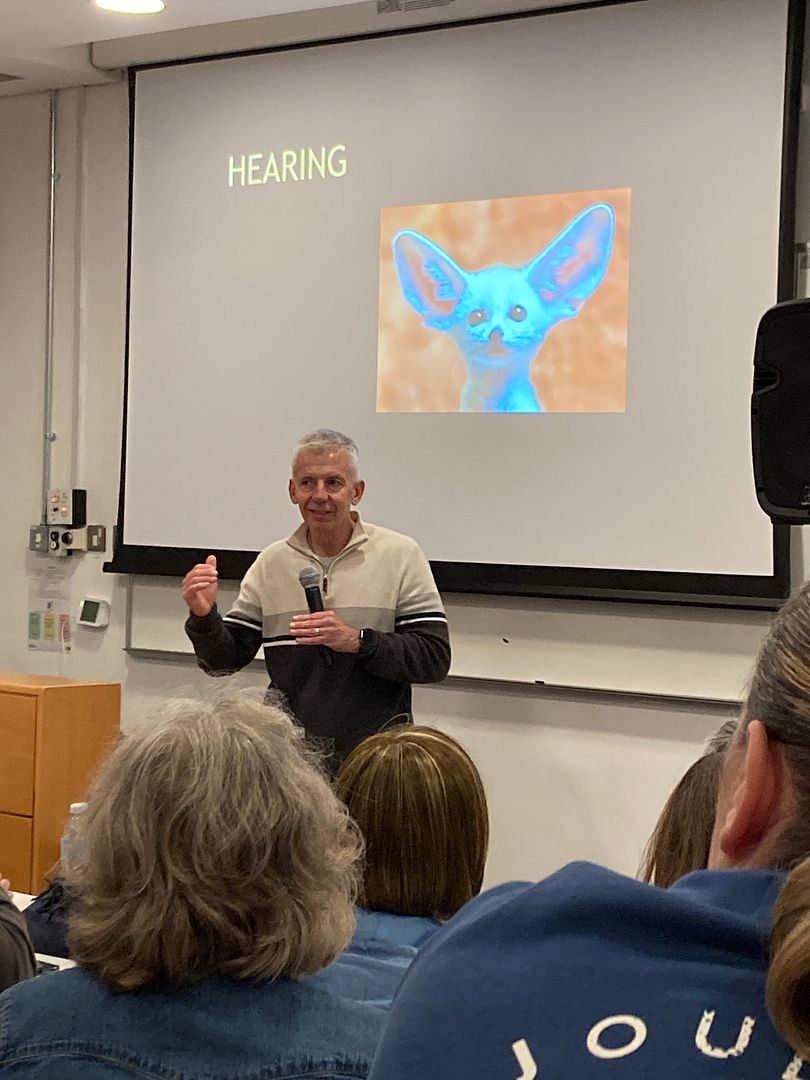
New Wine conferences have been going on in England for quite a long time, but the Irish version has been going on for about eighteen years, and was started by a Church of Ireland bishop and his wife. (Church of Ireland = Protestant, specifically Anglican; in communion with the Church of Canada where Jared and I serve). So there’s a strong Church of Ireland presence, but not exclusively – some of the speakers were Baptist, Pentecostal, etc. It’s a conference focused in on the person and work of the Holy Spirit. There were lots of pastors’ families there, like us, but most of the folks there were ordinary Christians, looking for a retreat and to get spiritually fed.

It was really, amazingly, deeply spiritually refreshing to be there. It was focused on the Holy Spirit, and the spiritual gifts, but in a way that felt safe. There was a whack ton of prayer ministry that spoke to us several times. There was teaching on how to encourage spiritual gifts in your congregation, but in a way that was rational, with Biblical safety rails on.
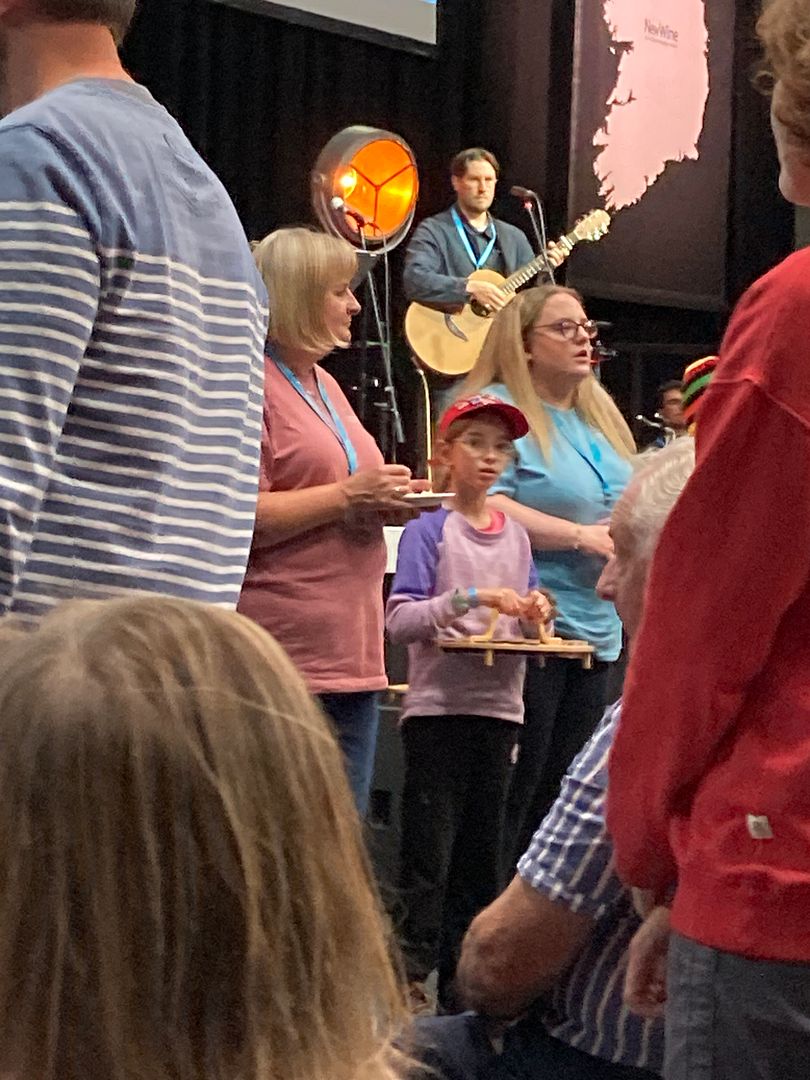
There were also all-day programs for the kids, which were really special. Dooner and MiniMighty were in the younger groups, where they made friends, learned songs, made crafts, and just had fun. Stringbean was just old enough to be with the teen groups, where her faith was challenged, and she discovered that church and Bible reading could be, you know … interesting.
It was a turning point in our trip in many ways. Weirdly, watching Inside Out 2 before we went was about the most helpful thing that could have happened.; When my anxiety or envy or (ahem) associations were triggered by something that was said, I could process it, set it aside, and listen to what was really happening. Internal Family Systems therapy on the go. God spoke to me in safe, confirming ways, helped me to process some stuff I was carrying that I don’t need to carry anymore, and did lots more that I am not going to go into publicly. We are so thankful we were able to go, and thankful to our diocese for sending us.
Donegal
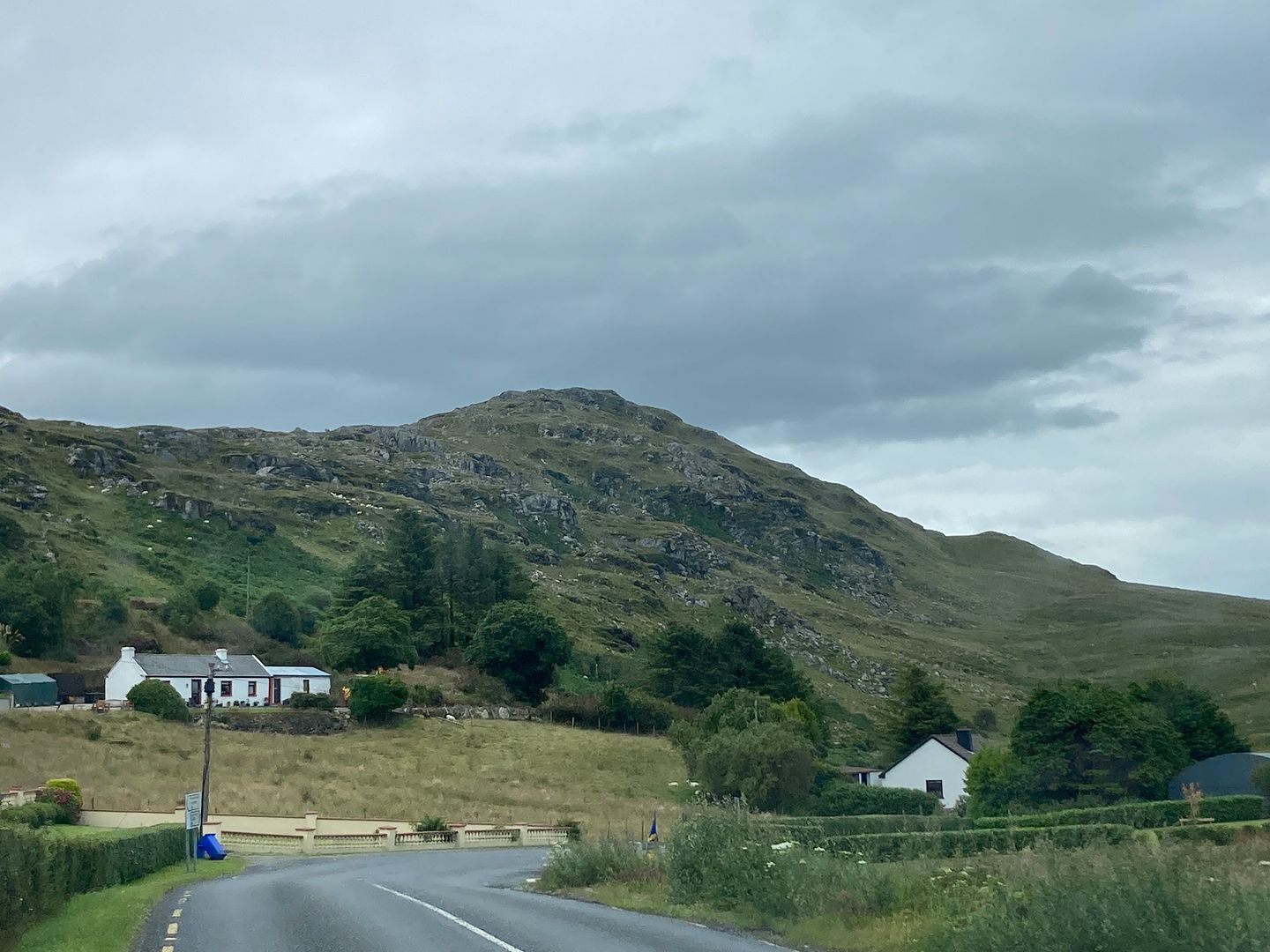
So, we did have one day off in the middle of the conference. And Sligo is just a little bit south of County Donegal, the most north-westerly county in Ireland. Donegal had a special place I was determined to visit, so I dragged my family around the coast to the little town of Kilcar.

Past wild scenery which reminded me a bit of the rugged coast of the west of Scotland, we headed north and then west, a journey that would have been more direct by boat.
Our end goal was Donegal Yarns, the mill where Milarrochy Tweed is made. Milarrochy Tweed is one of the flagship yarns of KDD & Co., and it’s the yarn I’m using exclusively for my first pattern book, coming out early next year. I’ve worked so much with this yarn, and it’s still my desert island yarn. Both for its softness, for the massive range of colours it comes in, and for that little bit of mohair which makes it surprisingly durable.
I got the full tour, which you can see on the latest episode of The Wool Circle: episode 123. This is the last of my video travelogues – you can get a 7-day free trial to the Wool Circle, if you so wish, and watch them all!
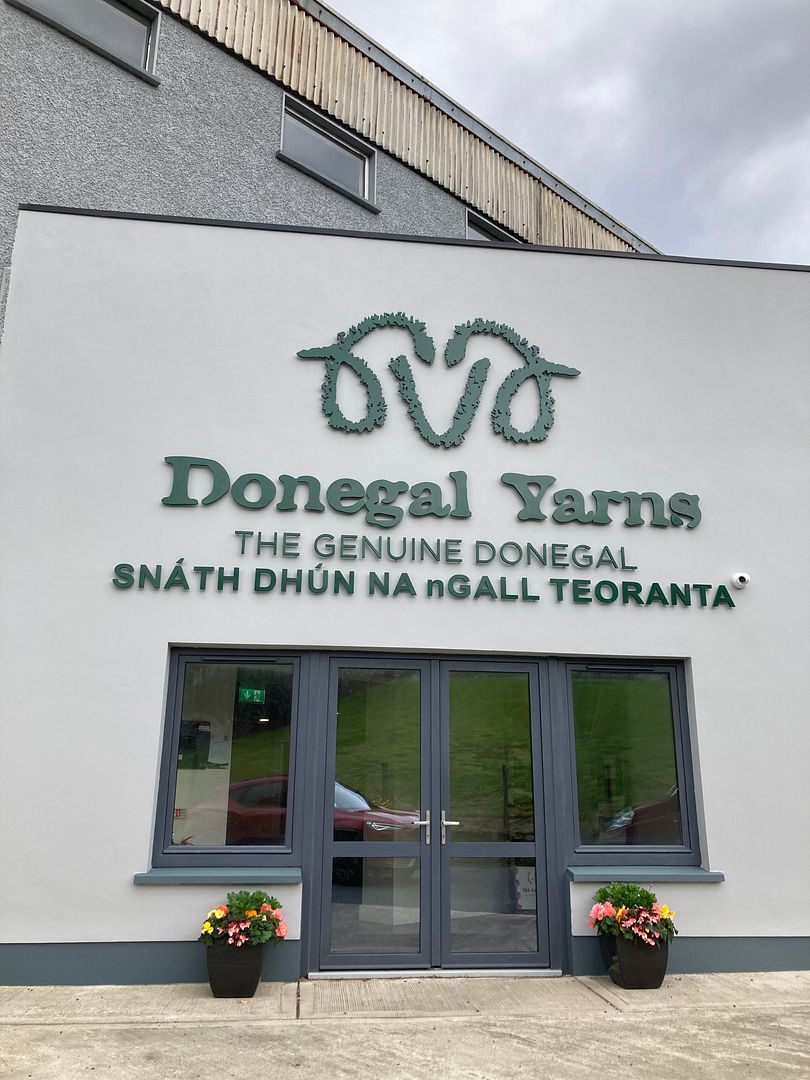
I absolutely loved watching their process, getting to spend some time with the amazing Fiona who designs all their colours, and having some good craig with Maureen who led us around. Of course I bought 3 kilos of yarn as well; there was no way that wasn’t going to happen.
If you’re a Star Wars nerd of any stripe, you probably recognize this:

These traditional stone huts used by monks were reimagined as alien dwellings in Star Wars: Episode VIII (the best of the new ones, in my never-too-humble opinion). The real place to see this is on Skellig Michael, where the movie was filmed, but there were reproductions of them all over the place. We passed some on the highway driving from Sligo to Donegal, and this one was in a nursery garden next to a playground we stopped at.

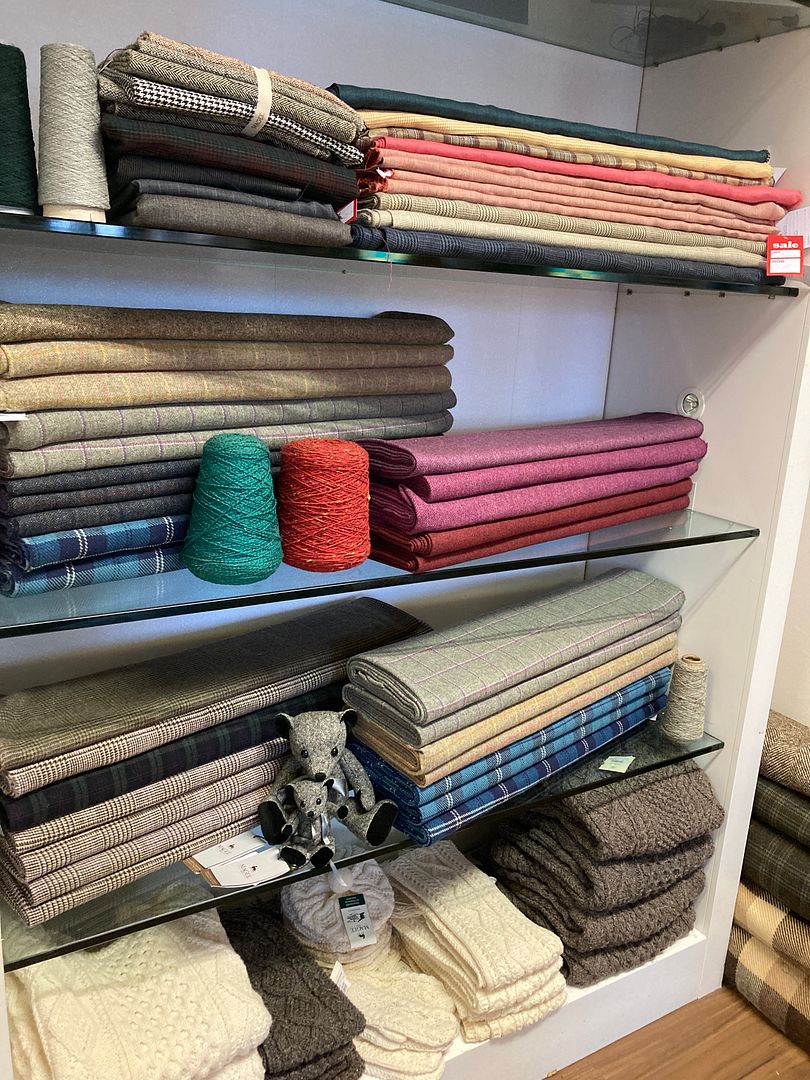
The other place we stopped, briefly, was a Magee’s – a department store where you can buy some of the beautiful tweed fabrics Donegal is also famous for. After having just dropped a big portion of my budget at Donegal Yarns, even the offcuts of Magee’s fabrics were much too dear for me. I’m a largely theoretical seamstress, and while I do have dreams of a me-made wardrobe, the level of being able to invest 100 gbp into two yards of gorgeous wool fabric is many years in my future. The loom they had on display upstairs was way cool, though.
Keshcorran Caves
We left the New Wine conference on a Saturday morning. Fabulously, a blog reader and fellow Kate Davies fan named Caroline had reached out and asked if we could meet, since she lives not too far from this general area. In between leaving Sligo and meeting Caroline at her farm, we had a little time to kill, so we visited the Keshcorran caves.
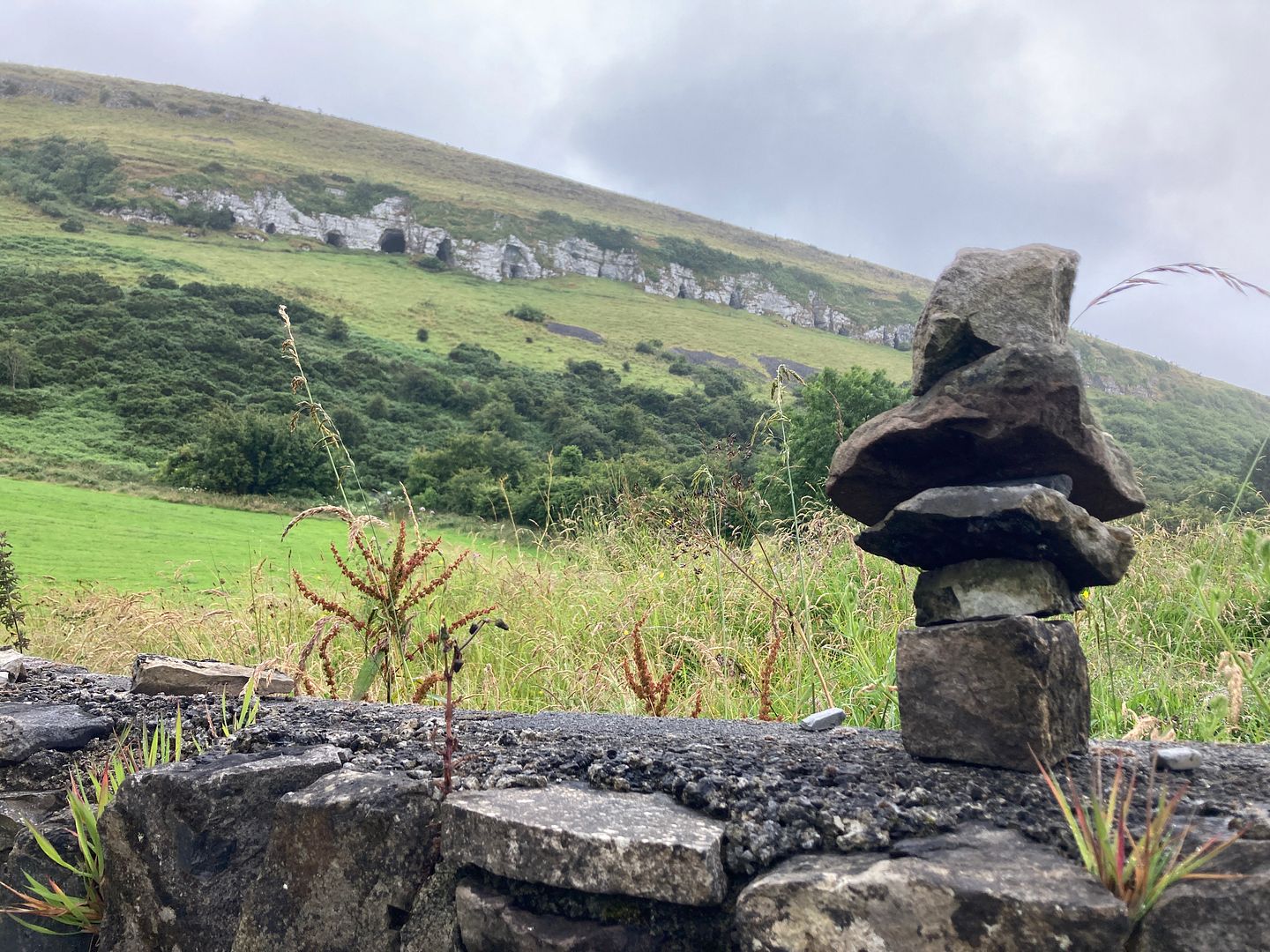
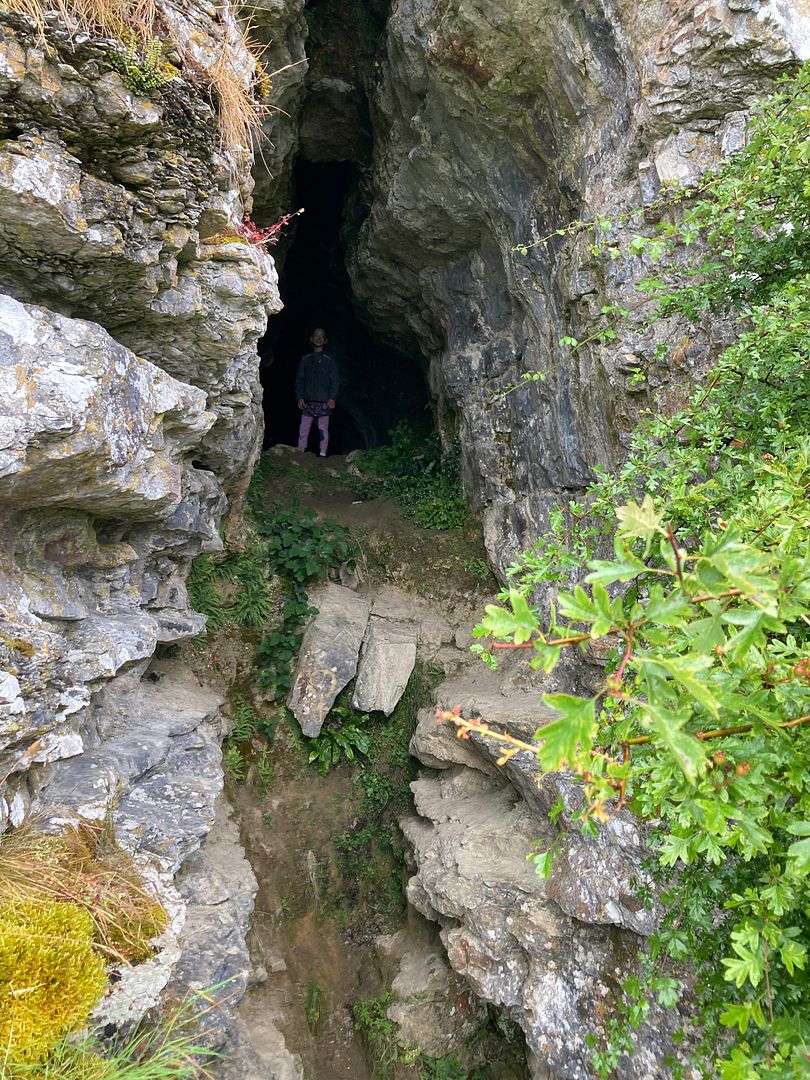
This was an easy walk from a parking lot, straight up a hill for about half a mile, to some truly remarkable limestone caves. The littles were not interested, so we caved and let them watch Bluey in the car, but Stringbean was keen to explore. I think she likes caves.
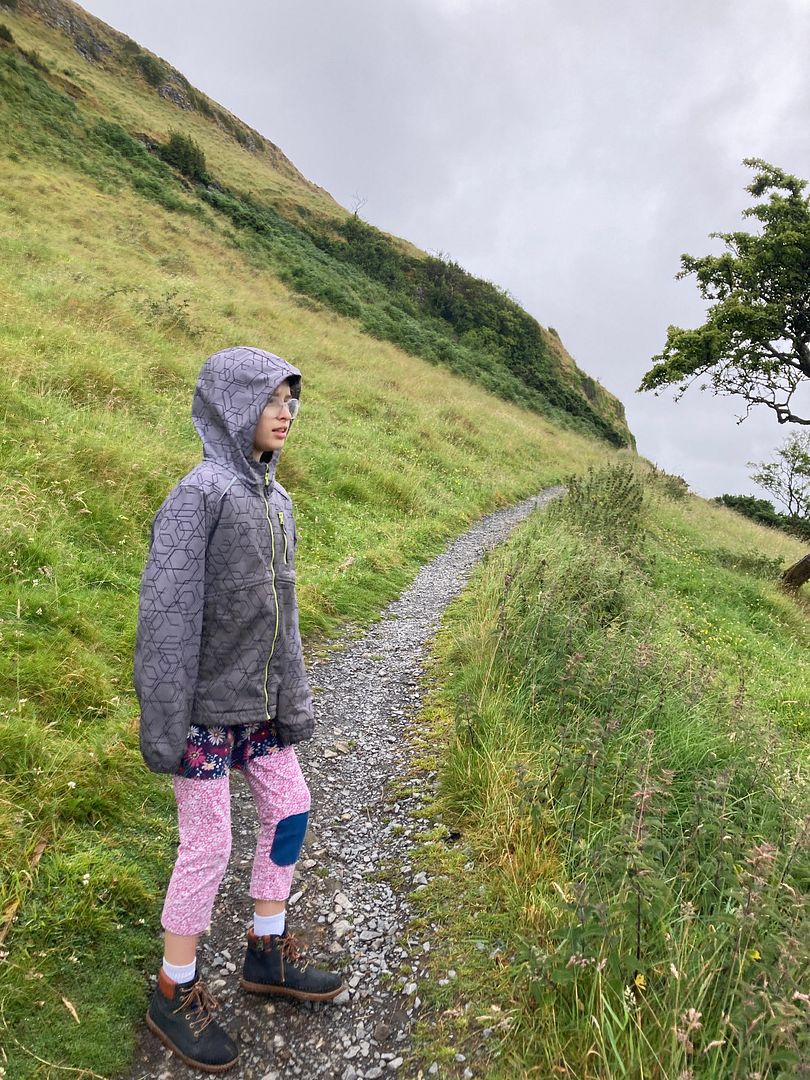
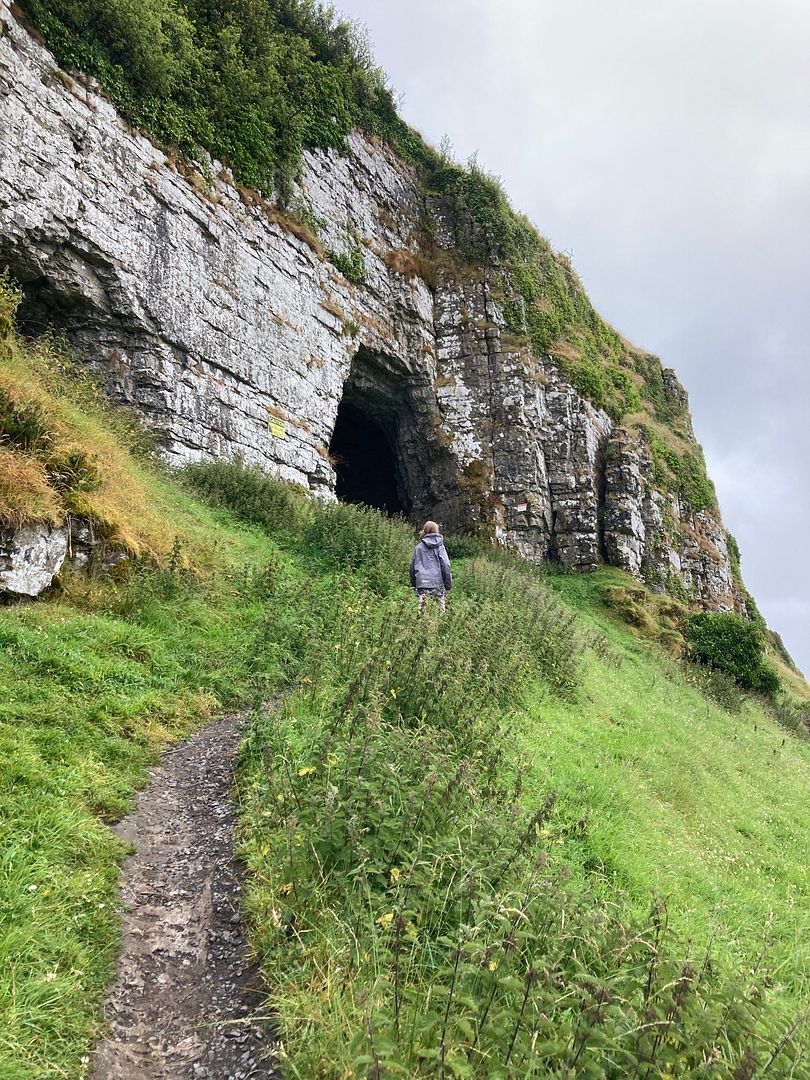
The day was damp, but not pouring.
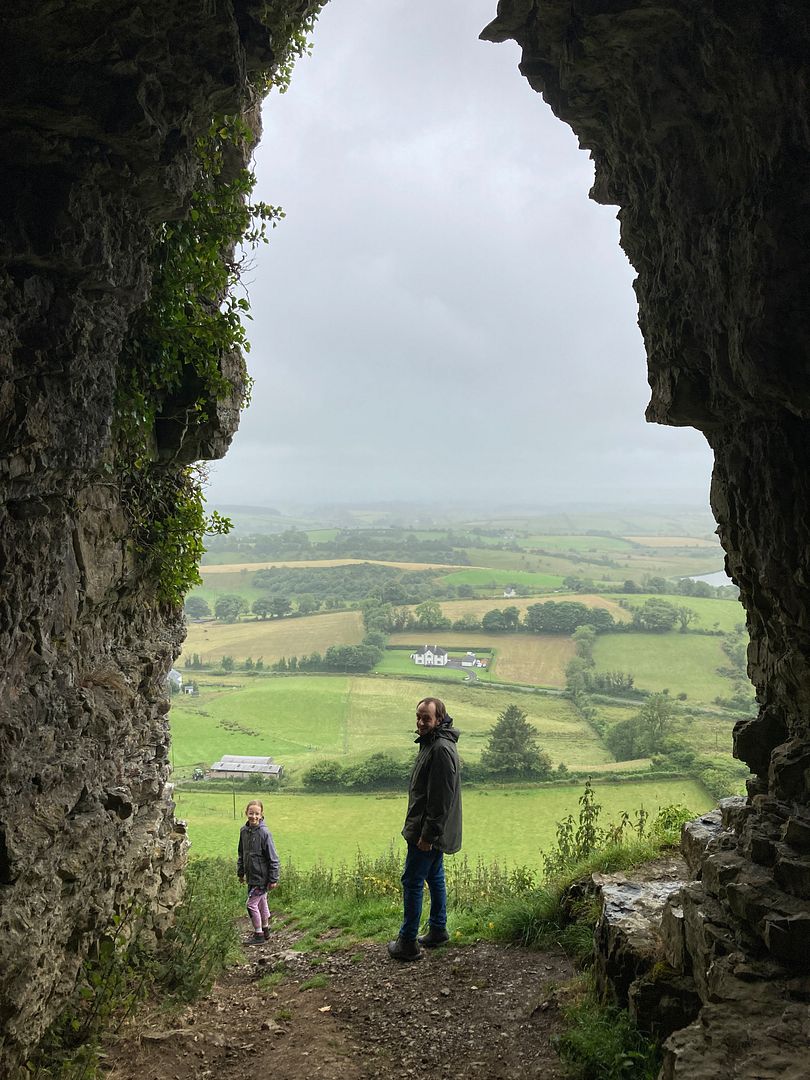
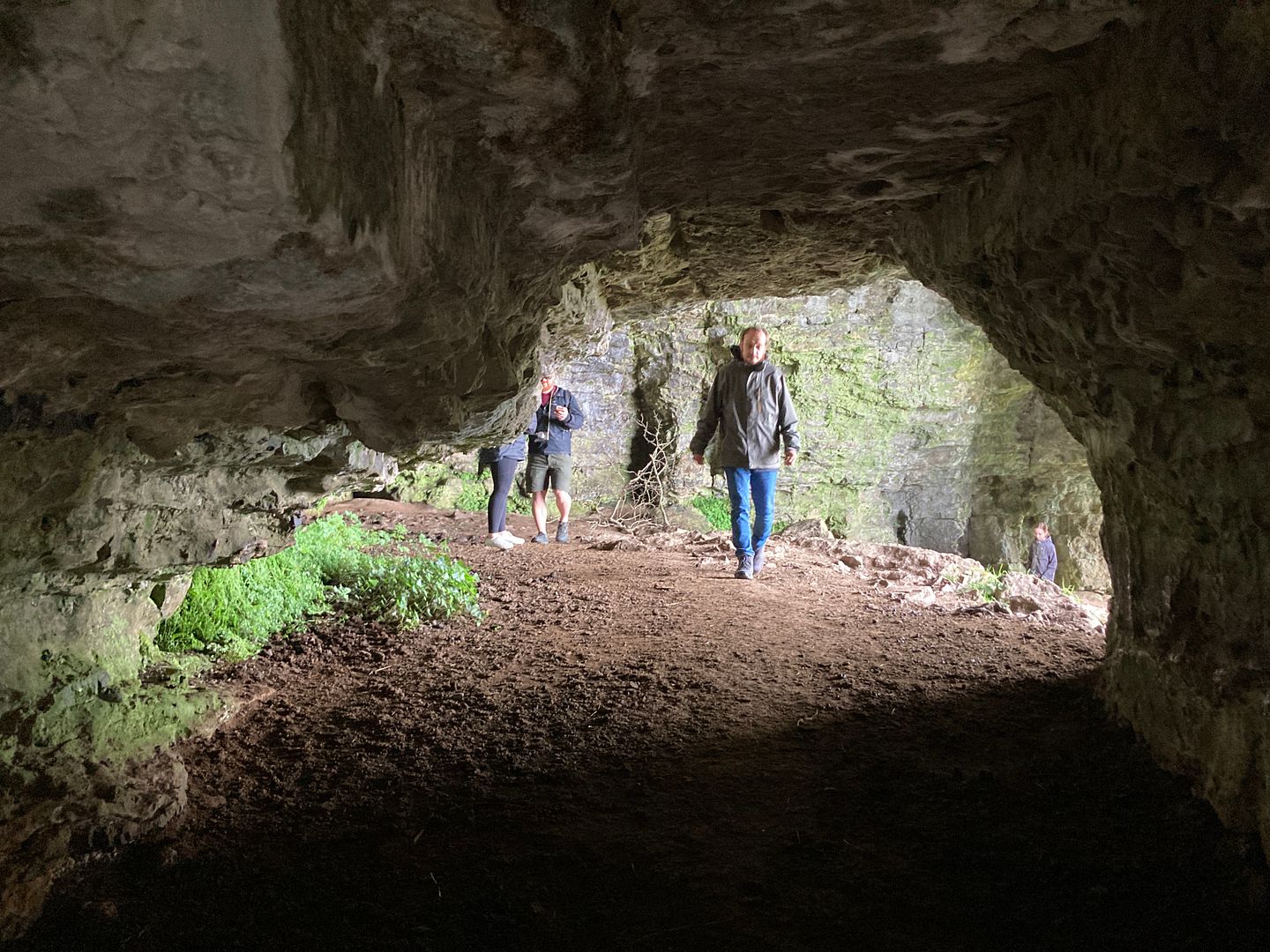
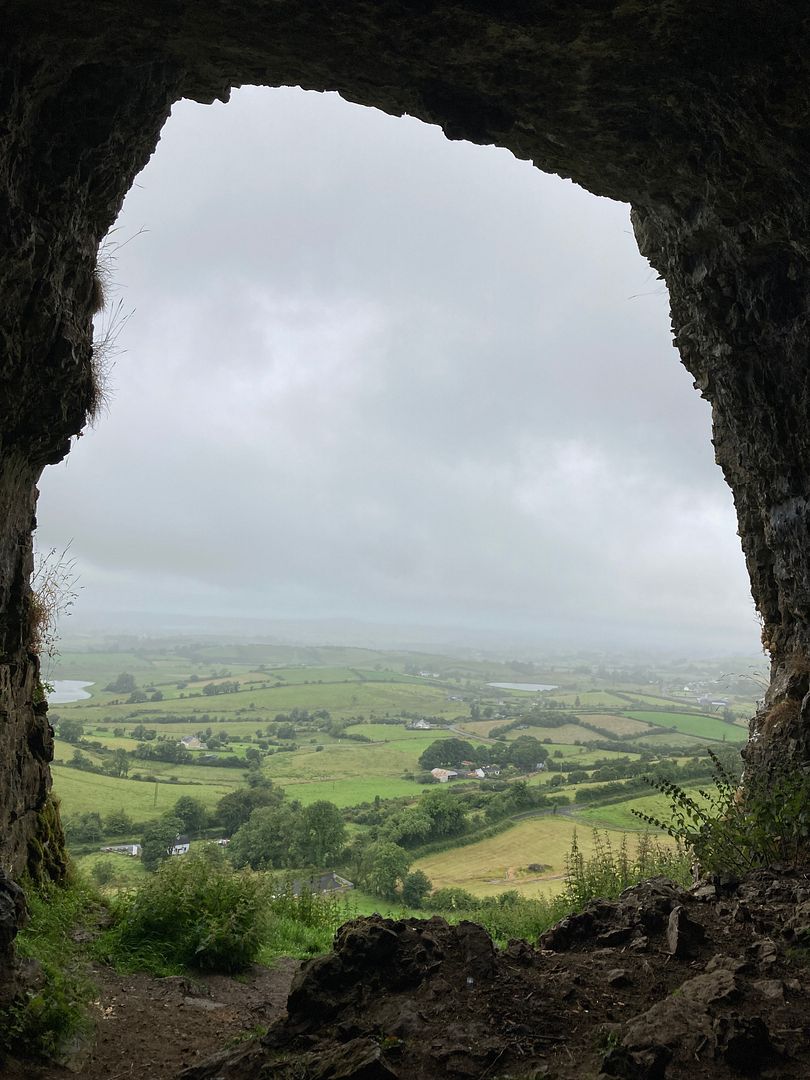
The cave structures went on and on, very complex. Hay in one corner suggested that they’re still in use to some extent as shelter for sheep. Like most of the caves we’ve seen, these are most likely formed by water dripping through the soft rock. And they’re up high enough that they provide lovely views of Co. Sligo.
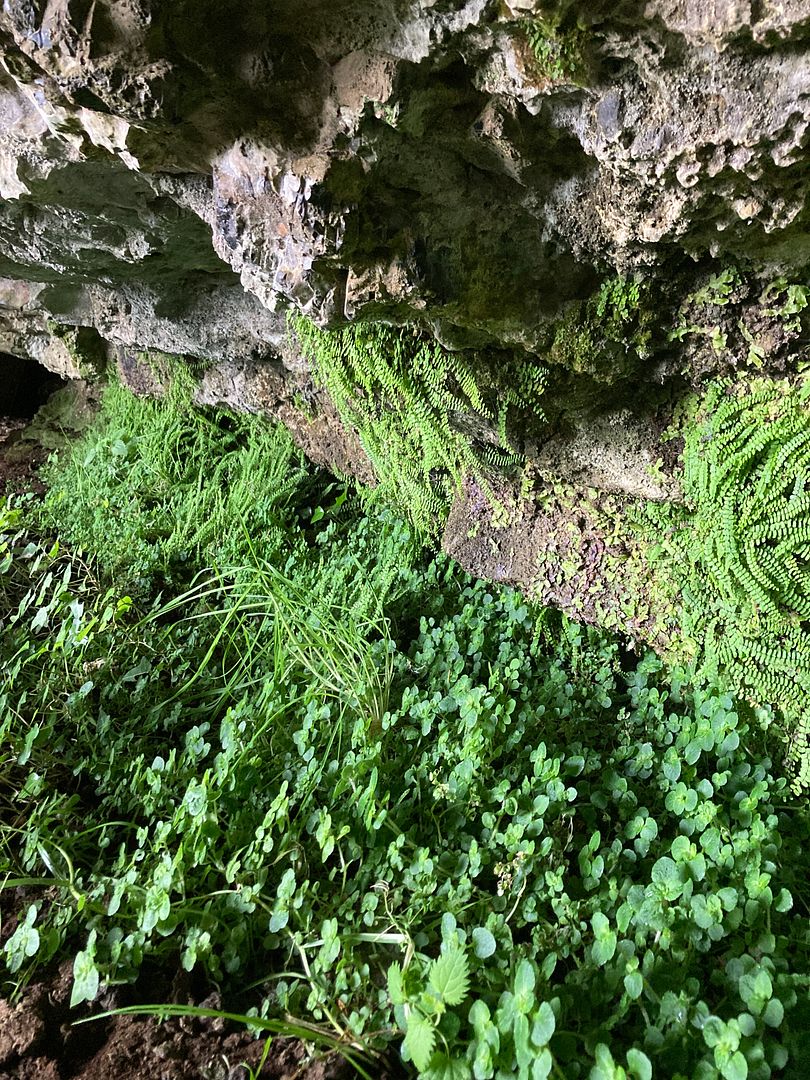
Leave it to Ireland to be so stunningly wet that lush green things grow even deep in a cave.
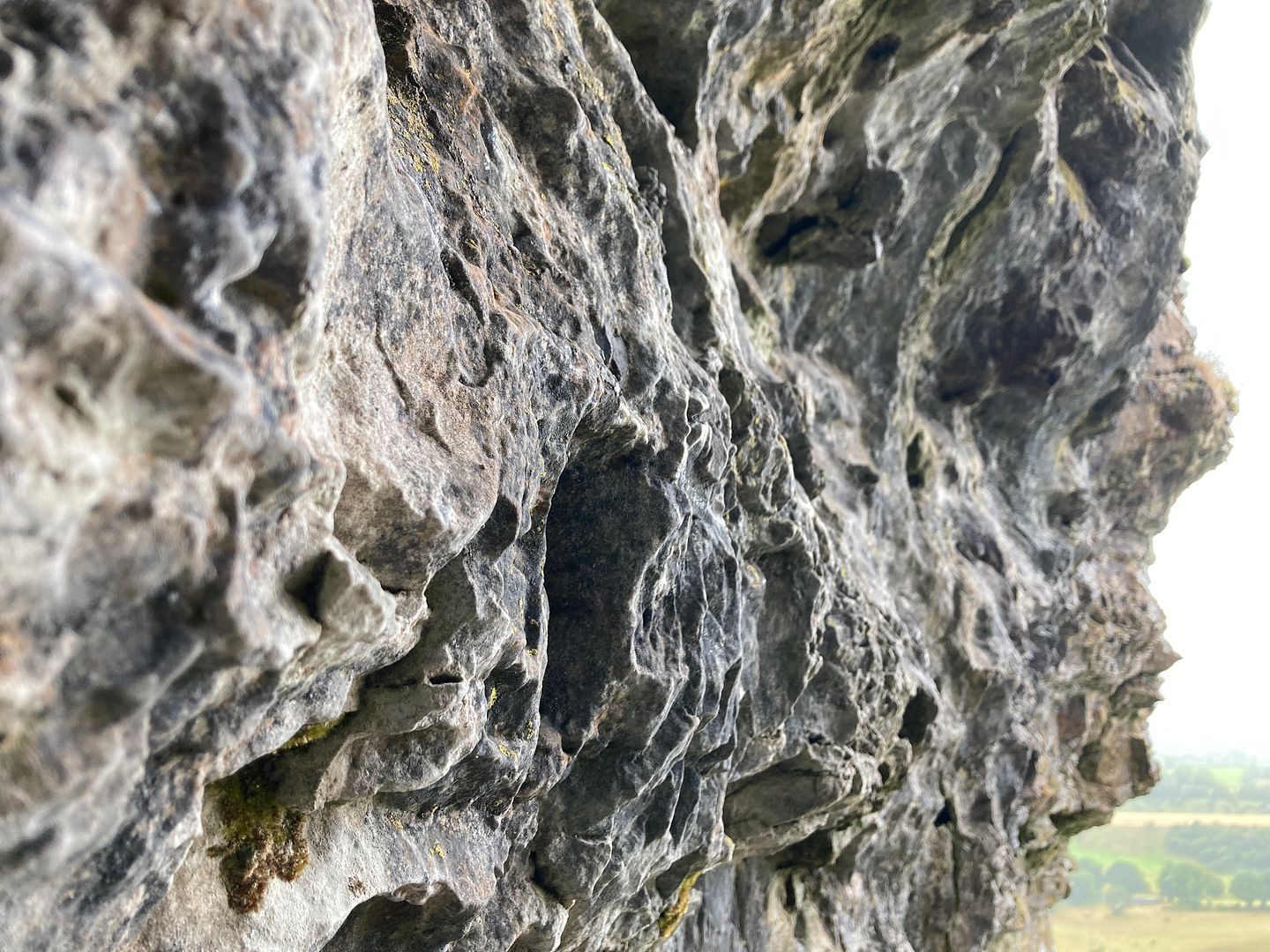
I could not get enough of of the texture of this limestone. This image captures it best for me.
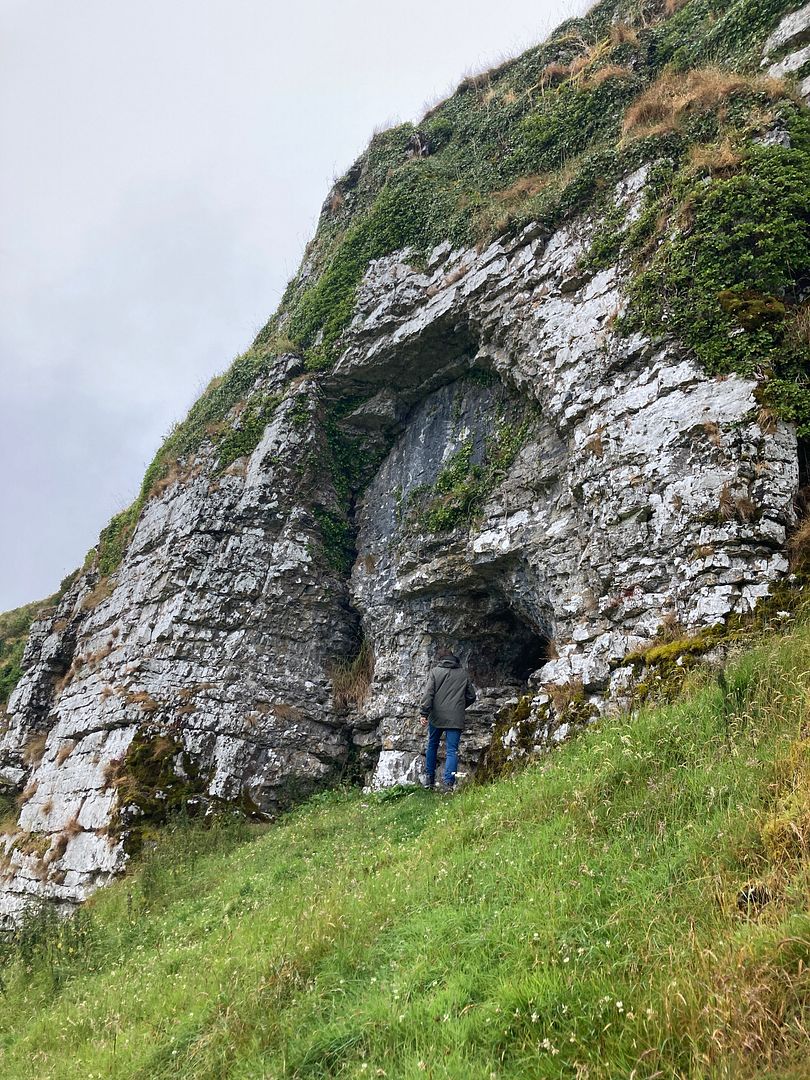
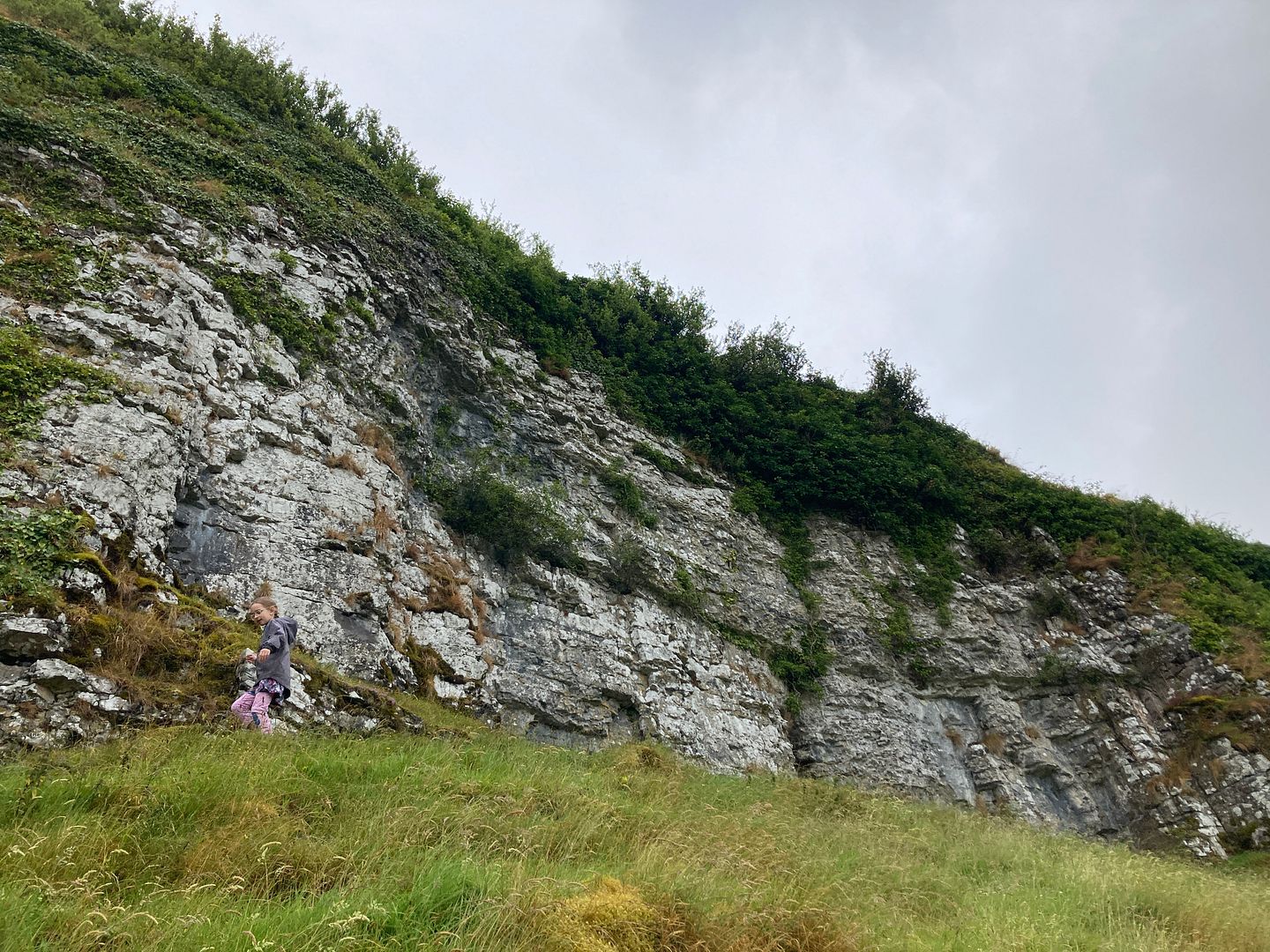
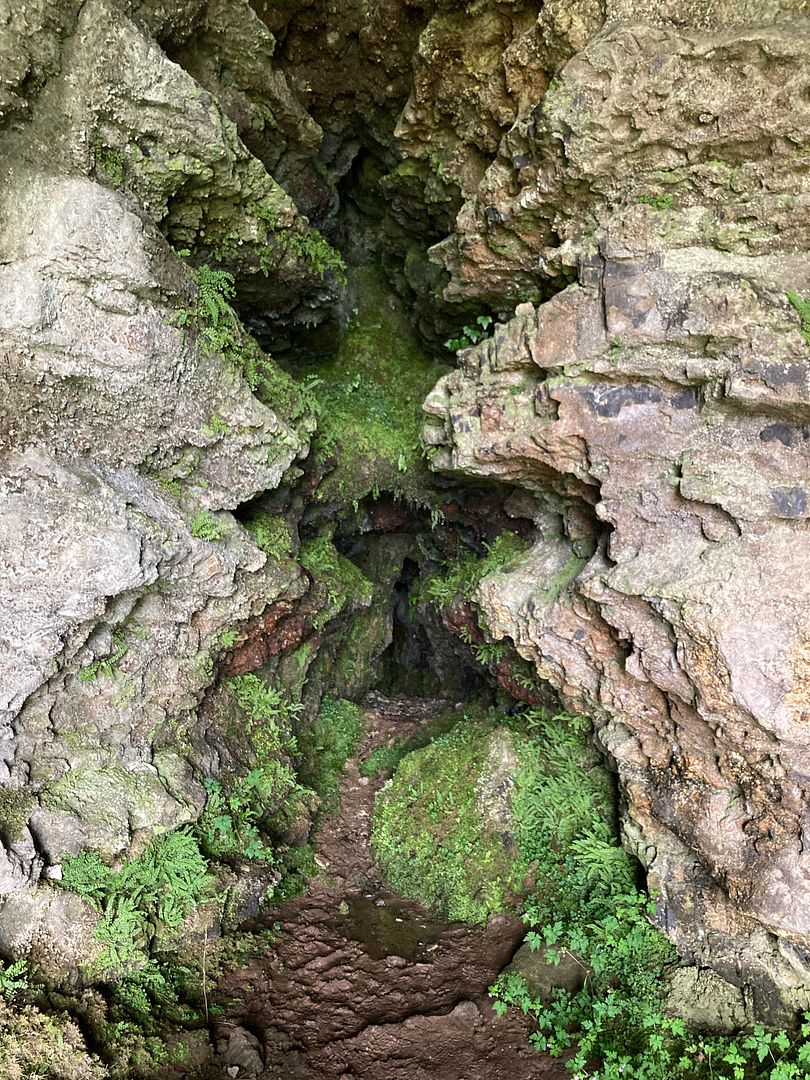
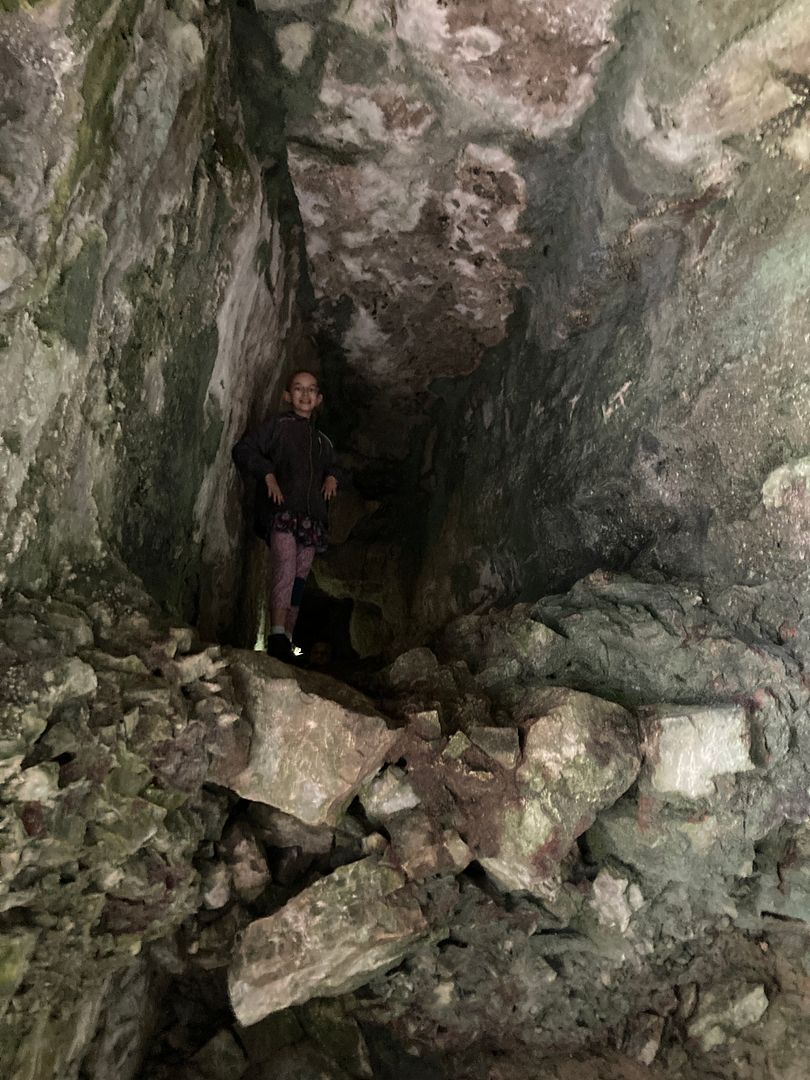
Stringbean found tunnels to crawl through, and of course I had to photograph her on the resulting inaccessible perches.
Co. Roscommon
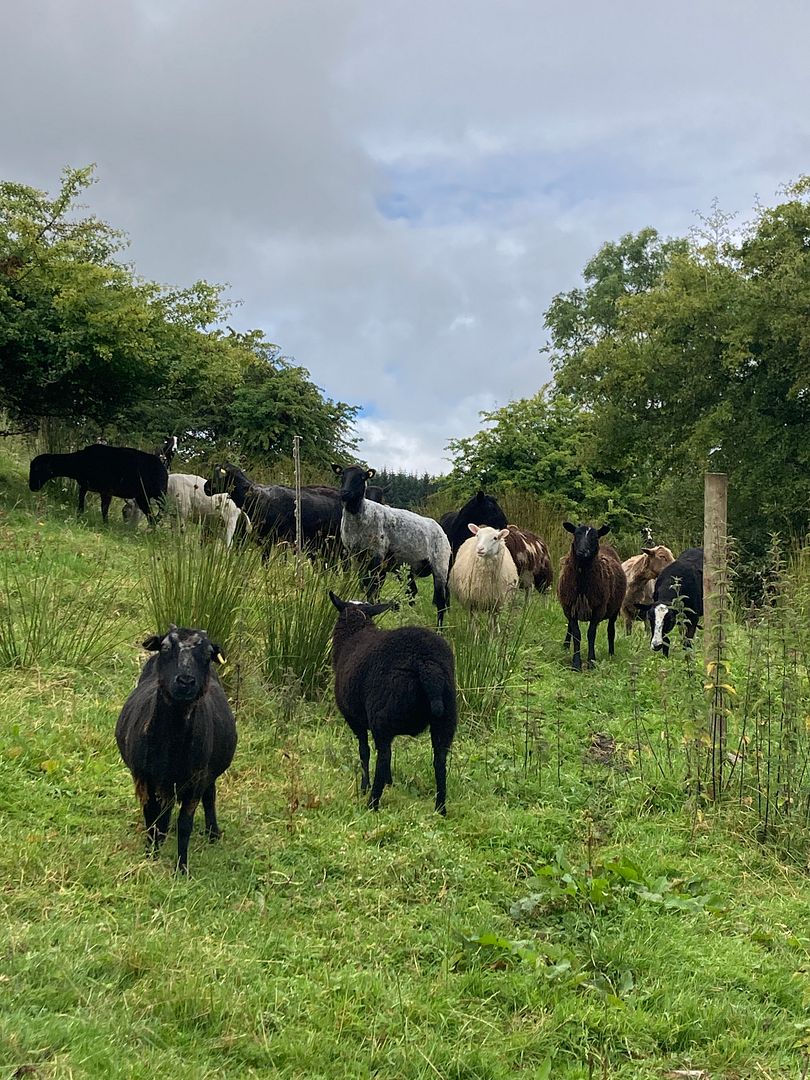
When the time came to visit Caroline, we drove across the border to Co. Roscommon. There, Caroline and Keith and their kids welcomed us to their small working farm. We got to meet their diverse and thoughtfully curated herd of sheep. After seeing hundreds, if not thousands, of Scottish and Irish Blackies and Zwartbles, it was delightful to meet this eclectic group of multicoloured Shetlands and more. These sheep, raised for both wool and absolutely top-end meat, clearly have it made in the shade.


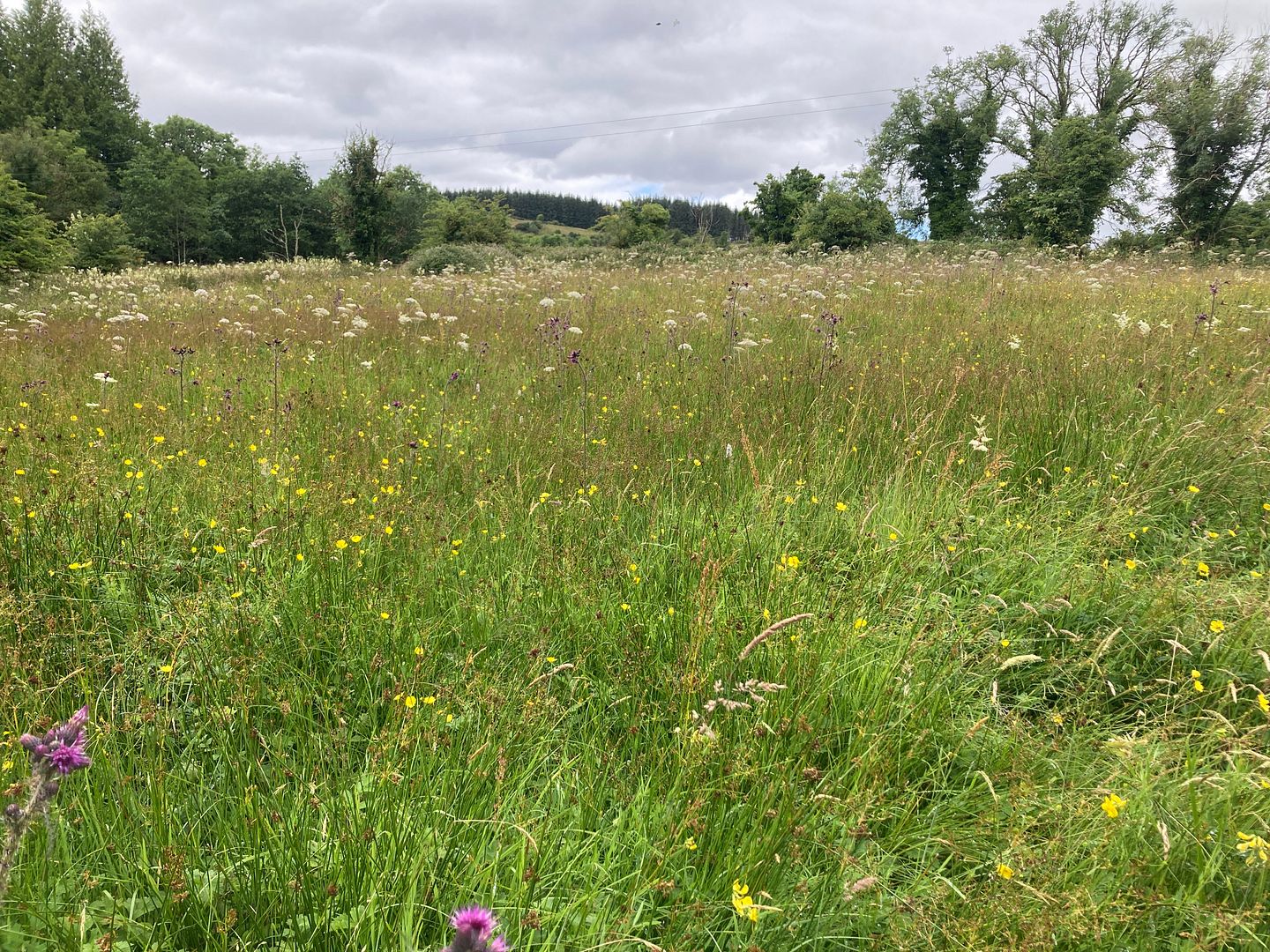
Keith and Caroline shared with us all about this beautiful little parcel of land they’ve made their home. Keith has done the hard work of learning about his environment, growing a hay-meadow in the old fashioned way. We learned about the ecology of reeds and hay growing, both now and in the past. I love learning the names of the plants around me, as it just helps me see everything better. So I thoroughly enjoyed and appreciated Keith sharing about his meadow project, and the beautiful biodiversity that is created and spread and shared by caring for the land and feeding their animals this way.
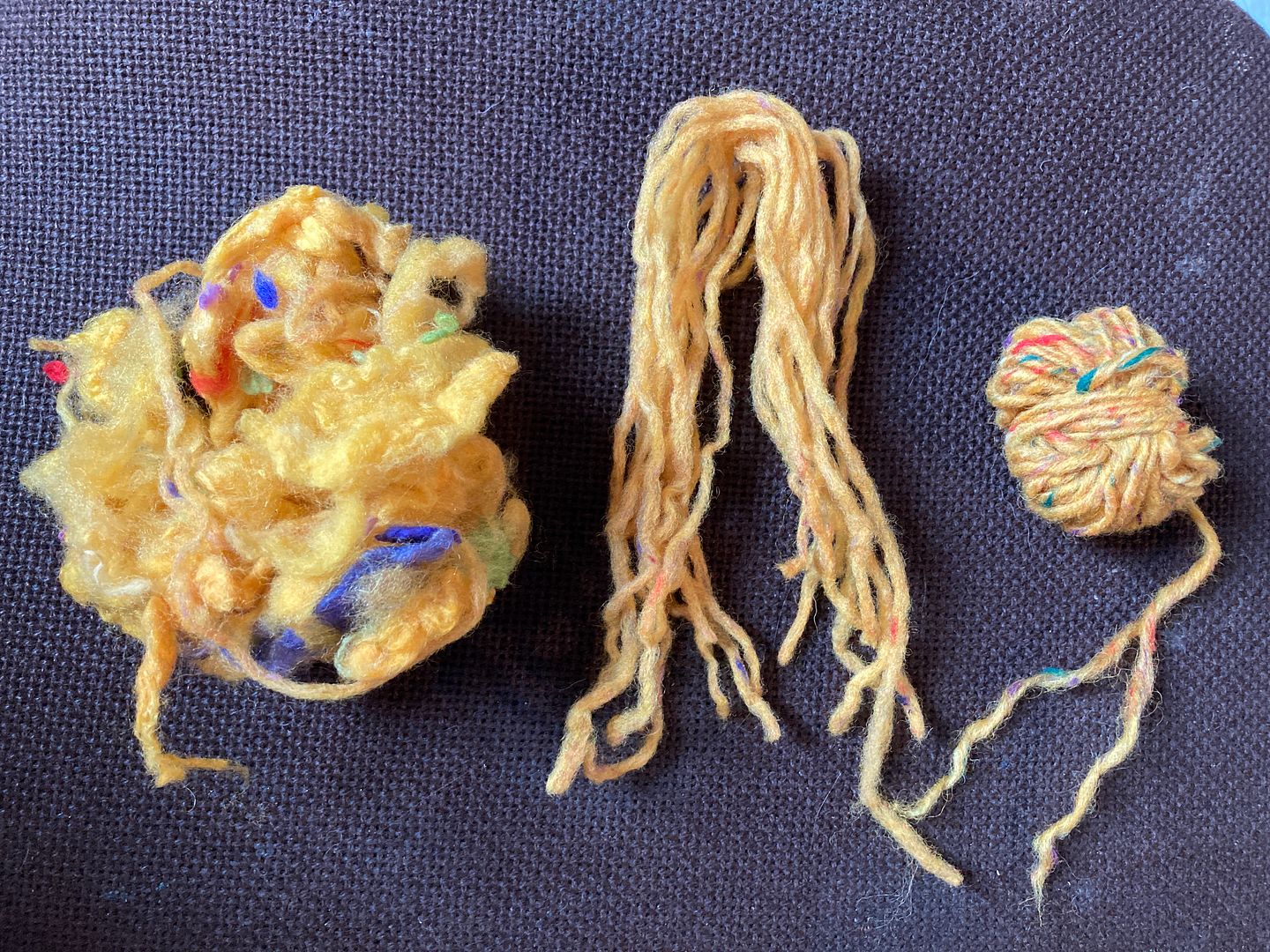
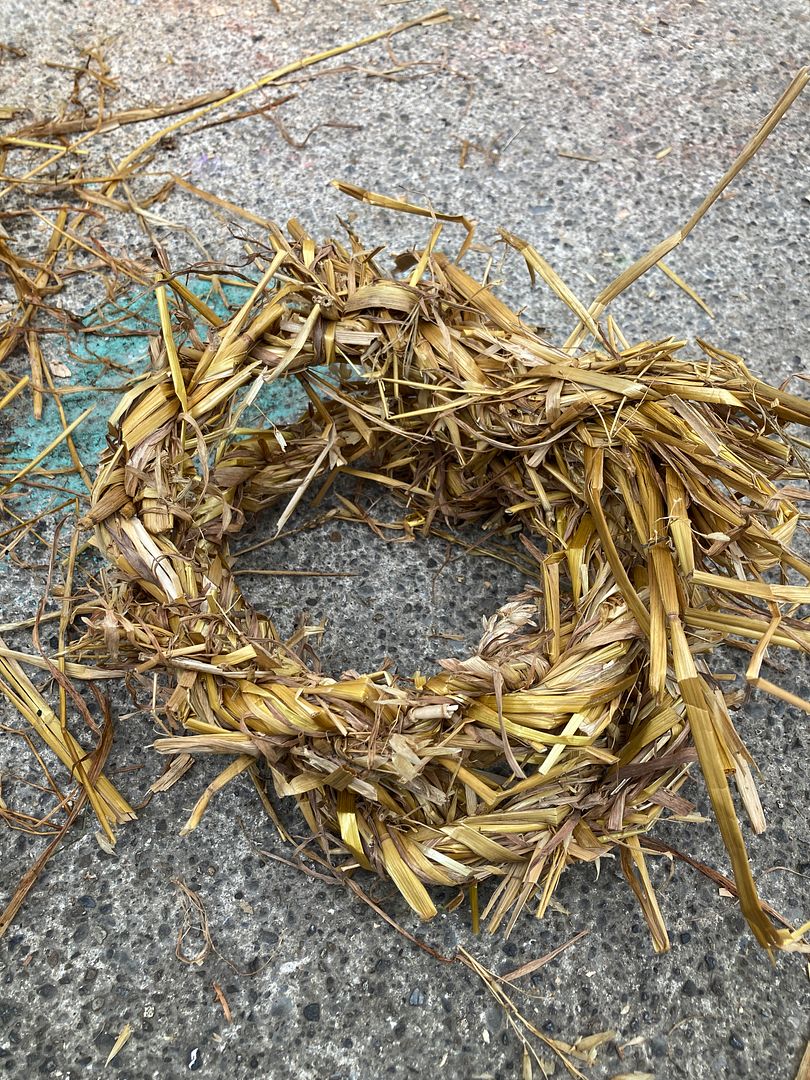
Caroline shared with me a little of her artistic practice, rooted thoroughly in the land around her. She gave me and Jared a lesson in making cordage out of straw – a spinning-adjacent craft to be sure. Our sample doesn’t look that fancy, but it was brilliant to try. We have invasive grasses in the Arctic that I am always itching to make useful in some way. Who knows if I’ll manage it this year, but it was so inspiring to see what Caroline is up to.
Thank you so much, Caroline and Keith, for reaching out and welcoming us into your home, and sharing with us the contagious love of your Place. You can check out Caroline’s art on her website, Maker Magpie, and Keith’s log of their beautiful farm on the Hawthorn Hill Farm website.
So what do you think about that wild collection of topics? Ireland is a beautiful, diverse, complex, welcoming place. It’s the original Further Up and Further In: the more you see, the more there is to see.
 Osborn Fiber Studio
One thought on “Tour de Ireland Part 4: A Bit of the Republic of Ireland”