So for the Spinner’s Book of Yarn Designs book study we’re doing over at Wool n’ Spinning, we’re offering two ways to spin along as we go through the book. You can, of course, go through the book and spin sample by sample. But not everyone is in a sampling place, so we created “Track 2” for the spinner who wants to take a season to do a longer spin that digs deeper into one of the yarns in a certain section of the study. For this first four-month season, I’m doing both! We’re studying the basic basics of yarn construction – drafts, plying basics, consistency. So I’m making lots of small samples for Track 1 – maybe I’ll post of those at the end of the season in April – and here’s what I’m doing for Track 2! (If you’re following along, here’s the syllabus that explains both tracks for January-April!)
I explained this all on the Wool Circle 109 back in January, but at least one viewer asked for more detail and still pictures in written form. I like to document my work this way anyway, so a month later, here I am.
This is a double-dip: This will also function as a capstone (well, a second capstone really) for the Year of Colour work we did last year. I have blog posts all drafted up to tell you about Skep (the hexie blanket), but I’m not ready to share those yet.
For this project, my starting point was the two exercise prompts that I did not cover in Skep, because the resulting yarns would not be well presented in small swatches. I quote Deb Menz:
11. Add Continuity. For a series of yarns, include strips from one roving in all the skeins but vary all the other strips. This gives all the skeins a common element.
Color in Spinning, p. 110
12. Make progressions. For a series of yarns, make subtle color or value progressions by changing one roving at a time.
I decided to make four series of yarns, all sort of progressions in their own way. Two would be from groups of fiber that all had one handpainted colourway in common; two would be true progressions in a series. For each, I ended up with a red-themed one and a teal-themed one.
11a. Common Element: Reds. You’ll see this is a pretty wild mix, with lots of greens in there as well.
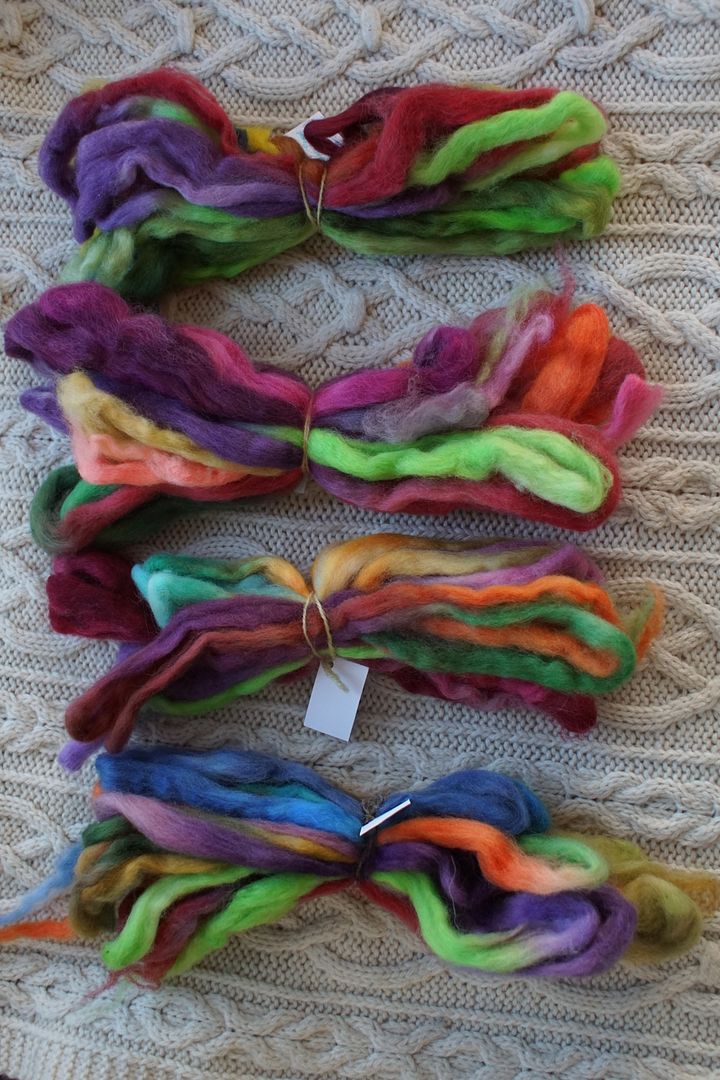
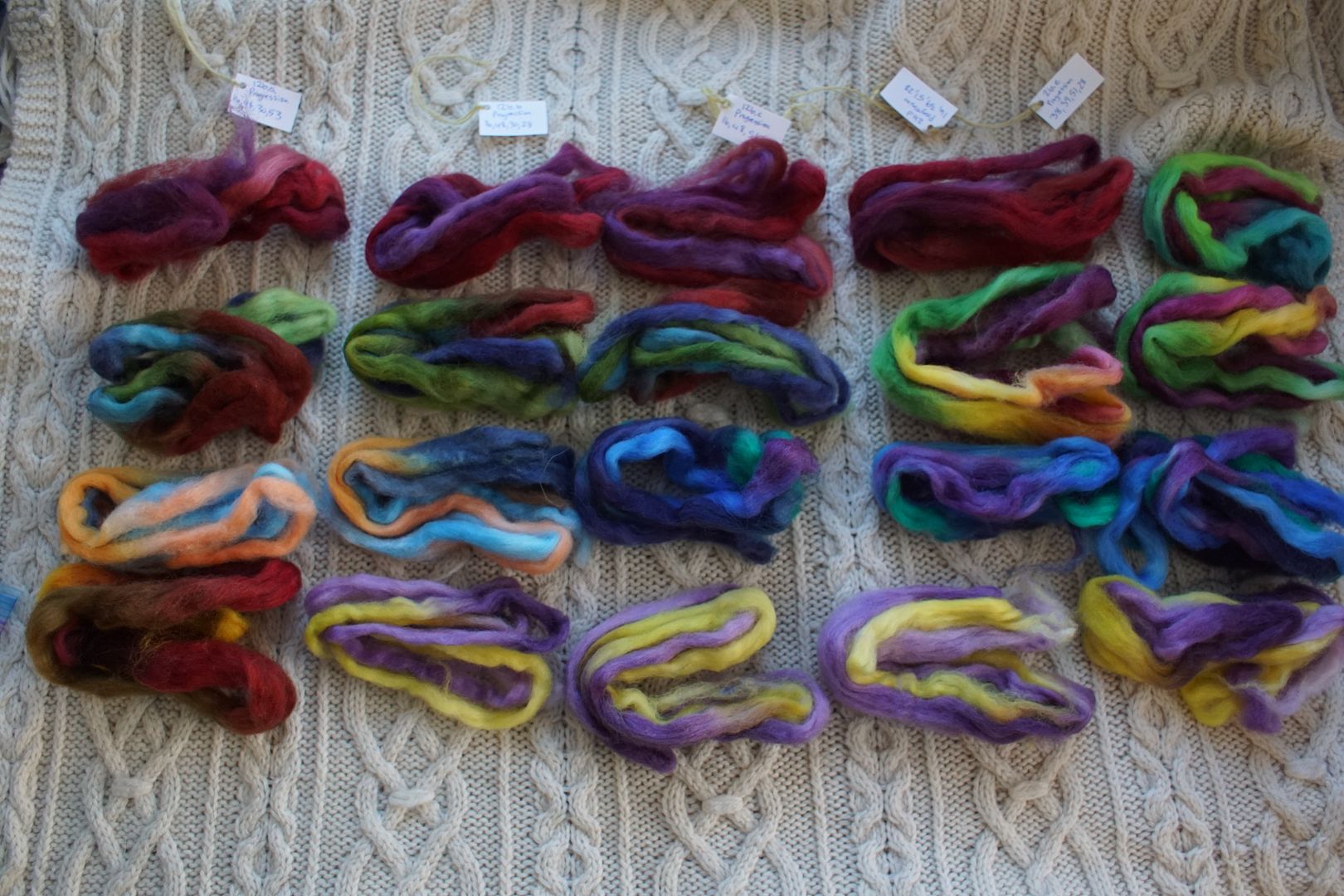
Here are each of the groups broken down. You can see they are all quite different from each other, but there are elements of the whole colour wheel throughout. I especially see a lot of red, green, and purple, and expect red to come out as the overall hue.

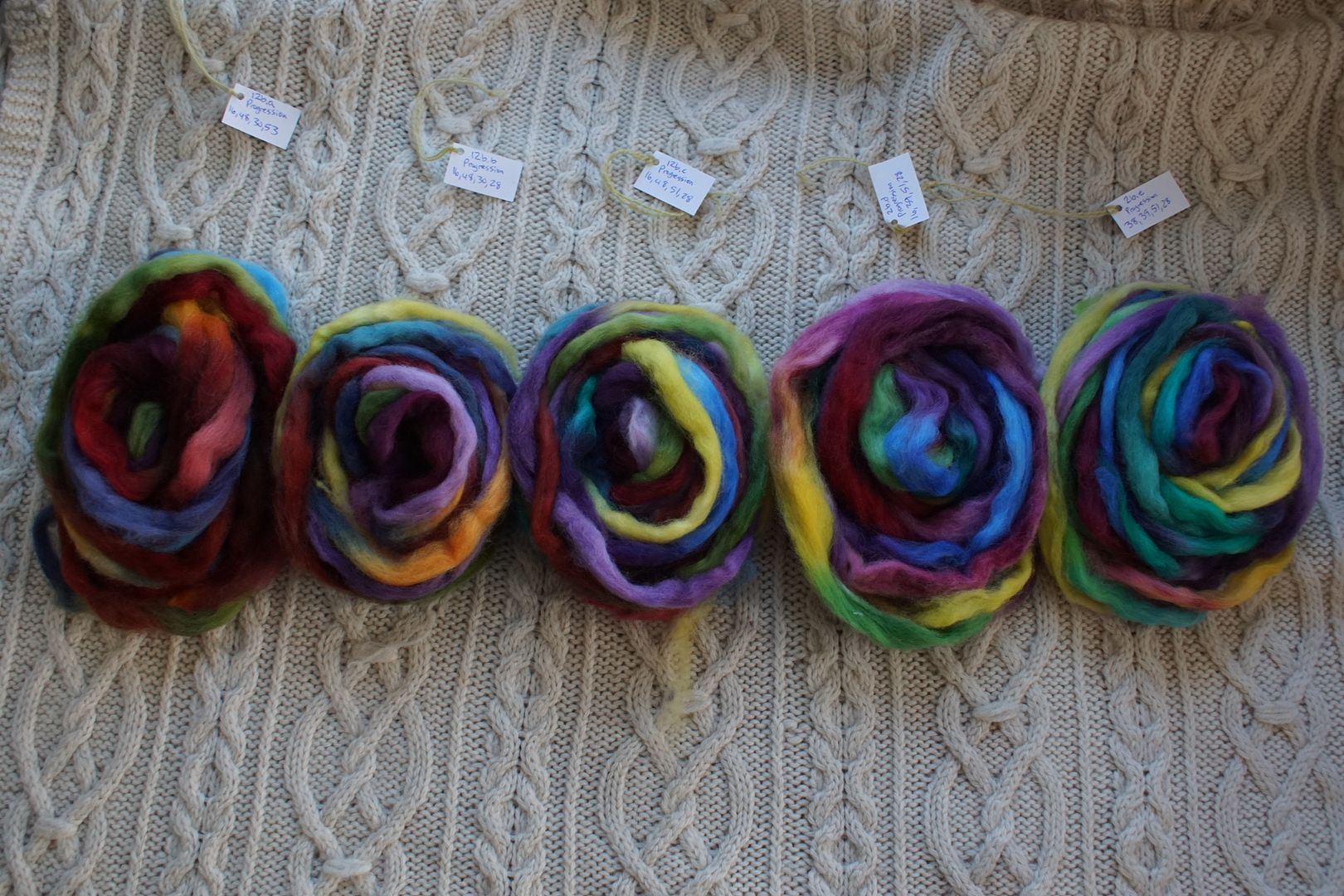
Winding them up like this gives you the vaguest approximation of how the final yarns twist up.
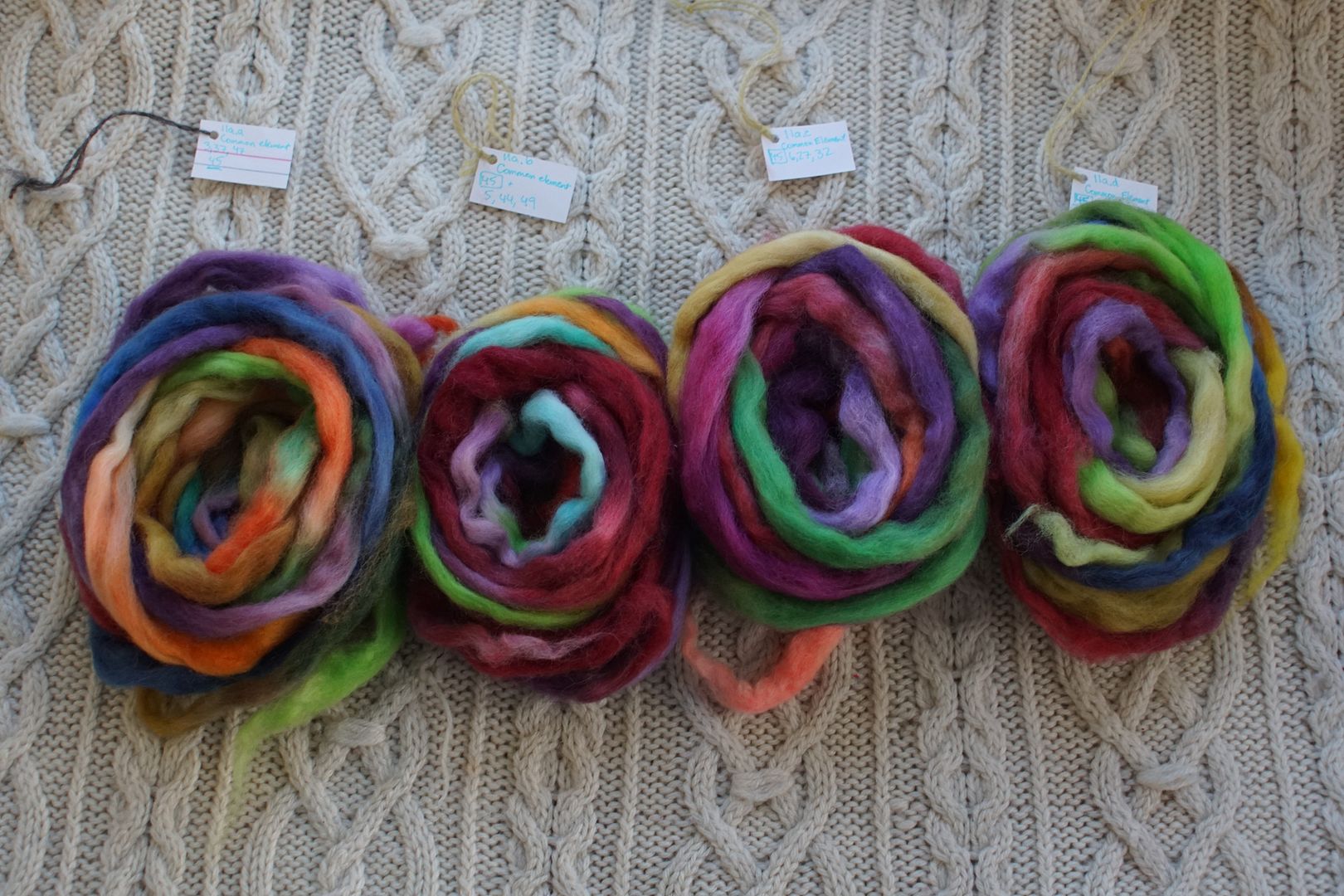
The singles ended up less red than I expected. I can see how why they are so desaturated. All complementary pairs desaturate each other, but red and green are most likely to do so, since they are most likely to be close in value. These reds are quite dark, though, and many of the greens are bright, so I wasn’t sure how that would come out. I don’t mind how subdued they look.
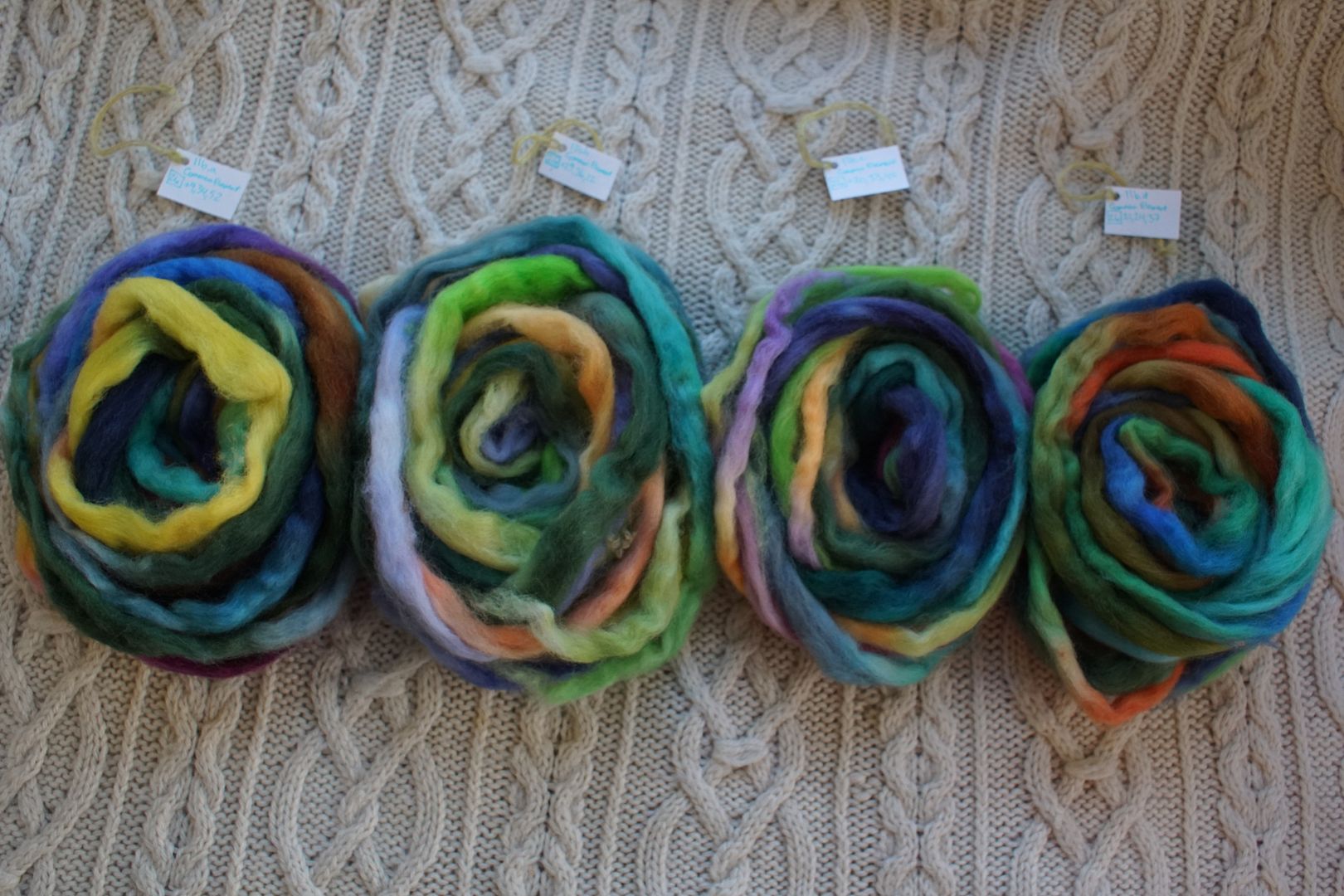
11b: Common Element: Teals
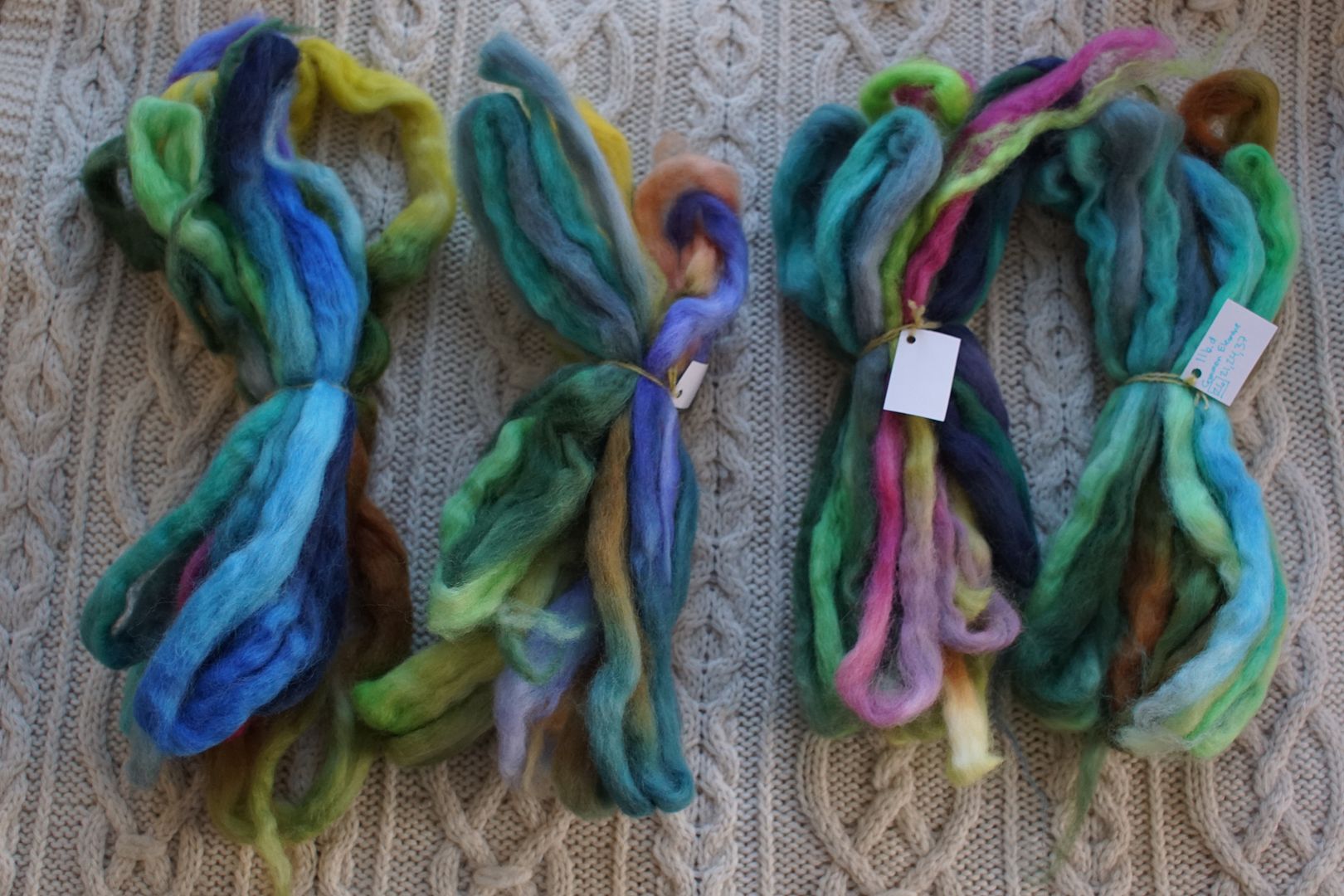
Here the common element is a very chill blue-to-green analogous colour, fairly desaturated. All the rest of the colourways are different, but I made sure to include at least one monochrome or analogous blue or green, and everything else has some element of blue or green in it.
I expect this yarn to have more cohesion, with the dominant teal and overall feel looking different depending on the colours pairing with it – analogous buddies shifting one way or another – or bouncing off it, in a complementary fashion.
12a. Progression: Teals
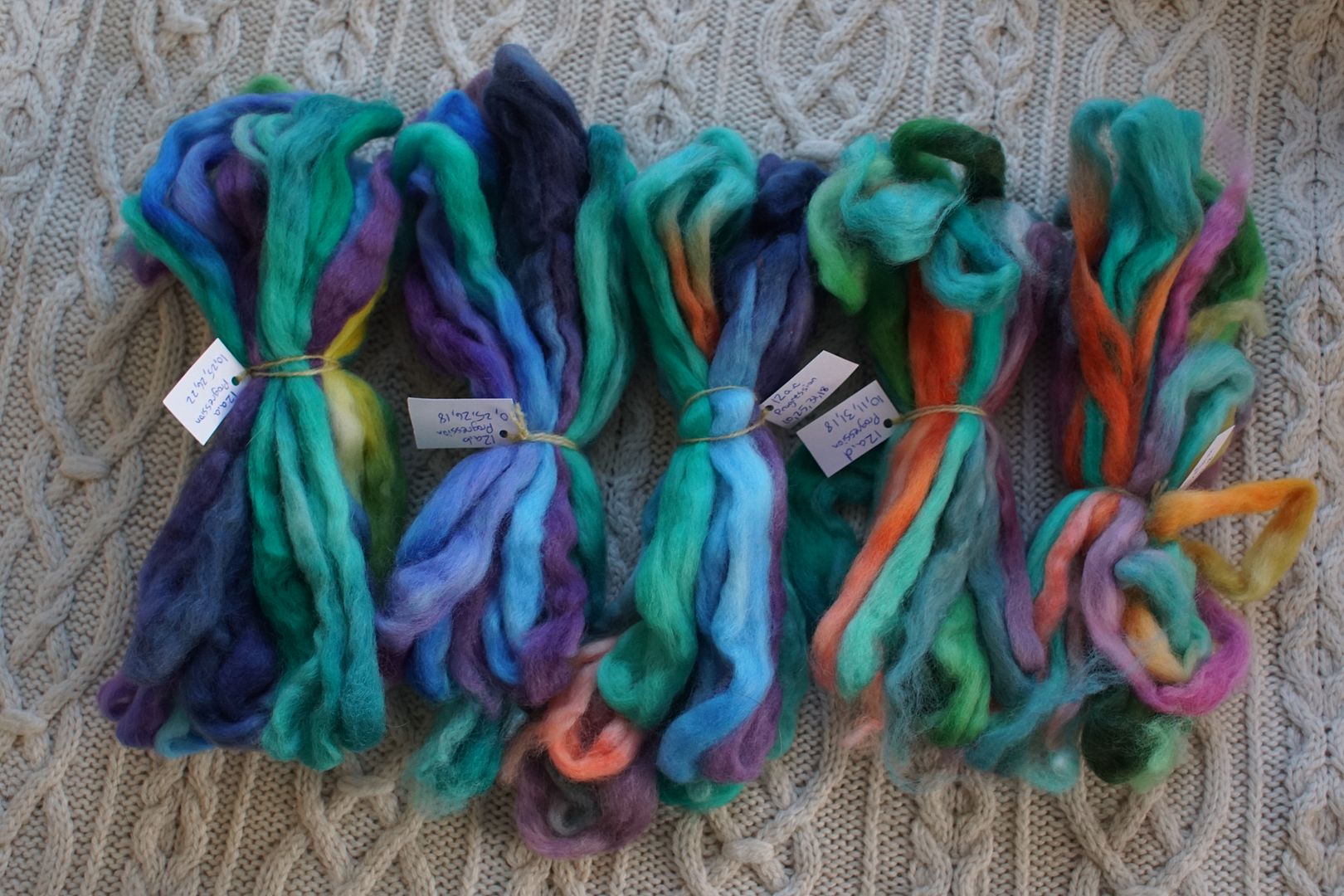
Below you can see there’s a much more intentional gradation, with only one colour changing in each grouping. The colours that there are the most of are the monochrome blue-green and a dull analogous violet-to-blue. Everything in between has at least some and often a lot of blue, green, and violet, so there should be a lot of cohesion here.
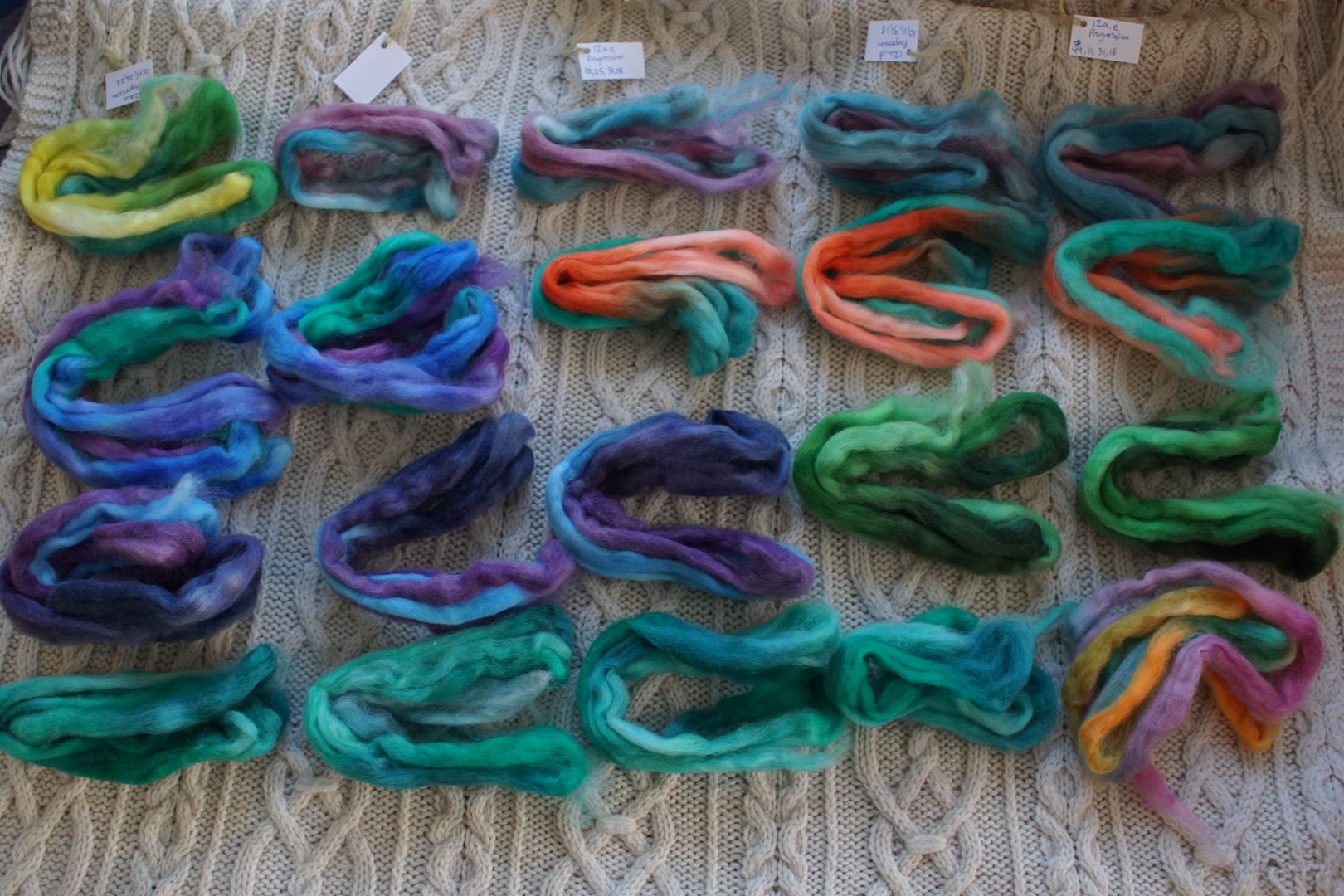
Looking at them wound up like this, I can see more clearly a shift from more blue to more green in the dominant colours, and a shift from more yellow to more orange in the contrasting bits.
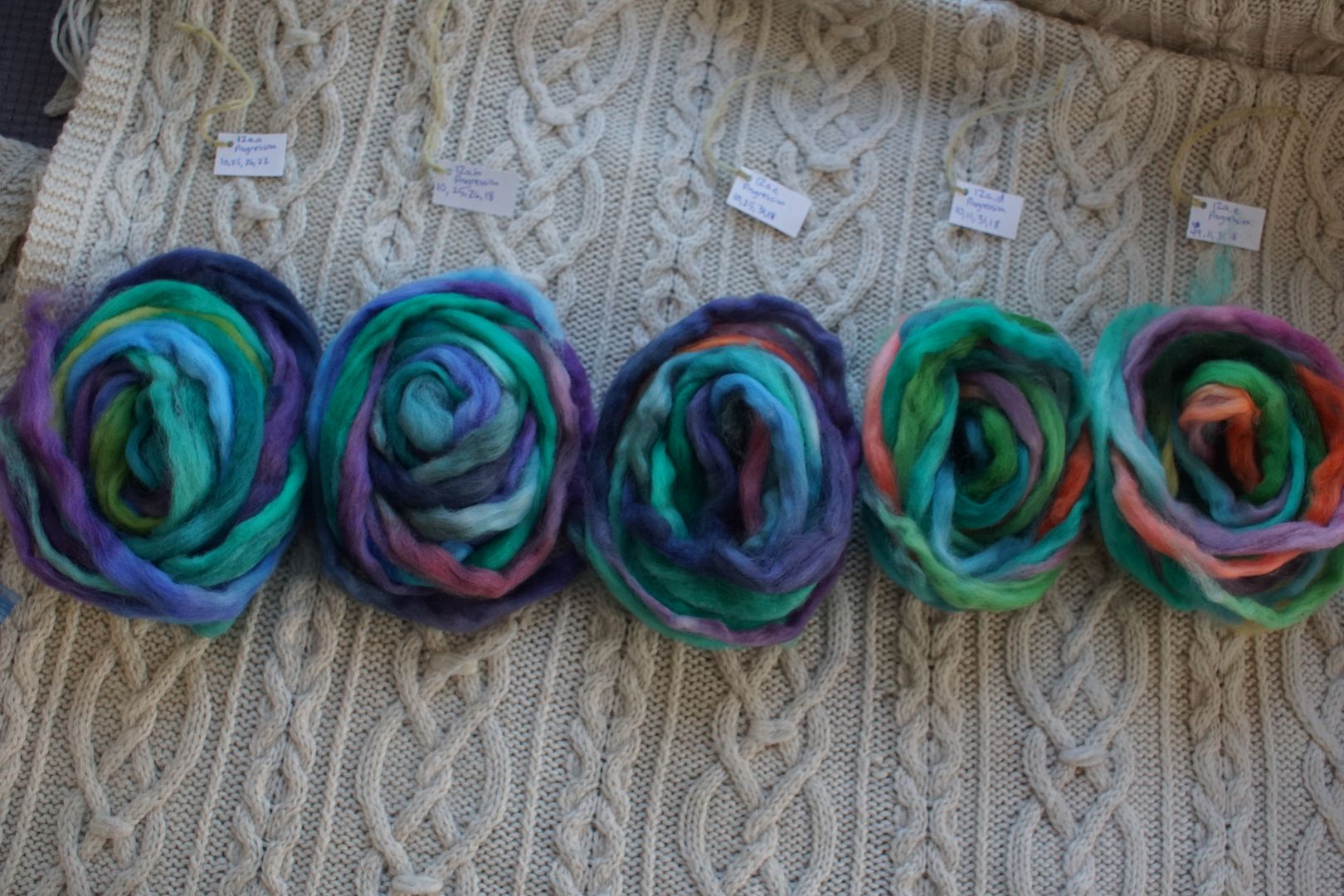
12b. Progression: Reds
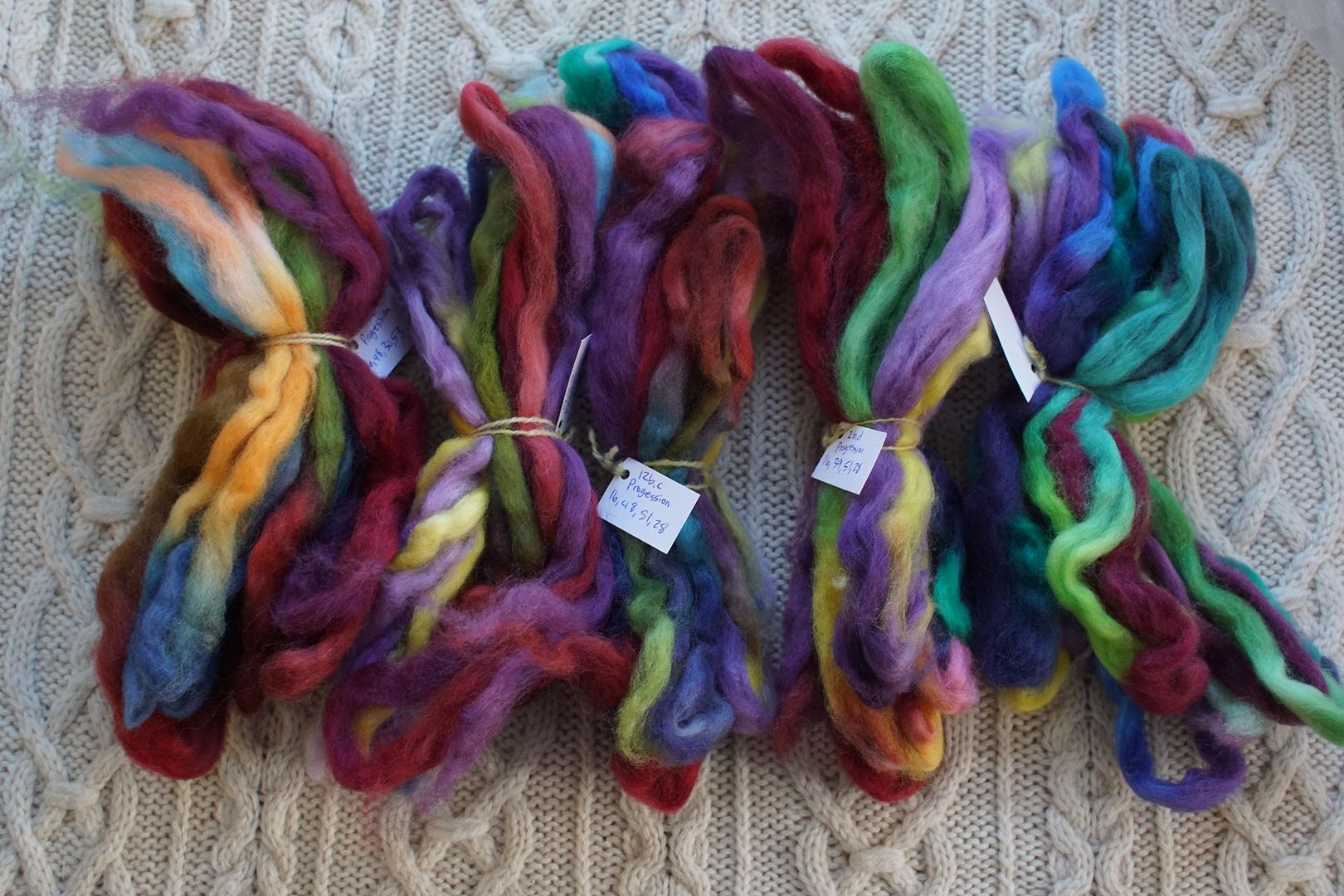
The two colours that there’s most of here are a dark analogous red-to-violet, and a complementary violet and yellow. Everything else has some aspect of violet, blue, or red. The whole colour wheel is more present throughout here, though.
The red is what stands out to me, but I’m not sure whether violet will be the overall feel or not, or how desaturated or speckly they will be.
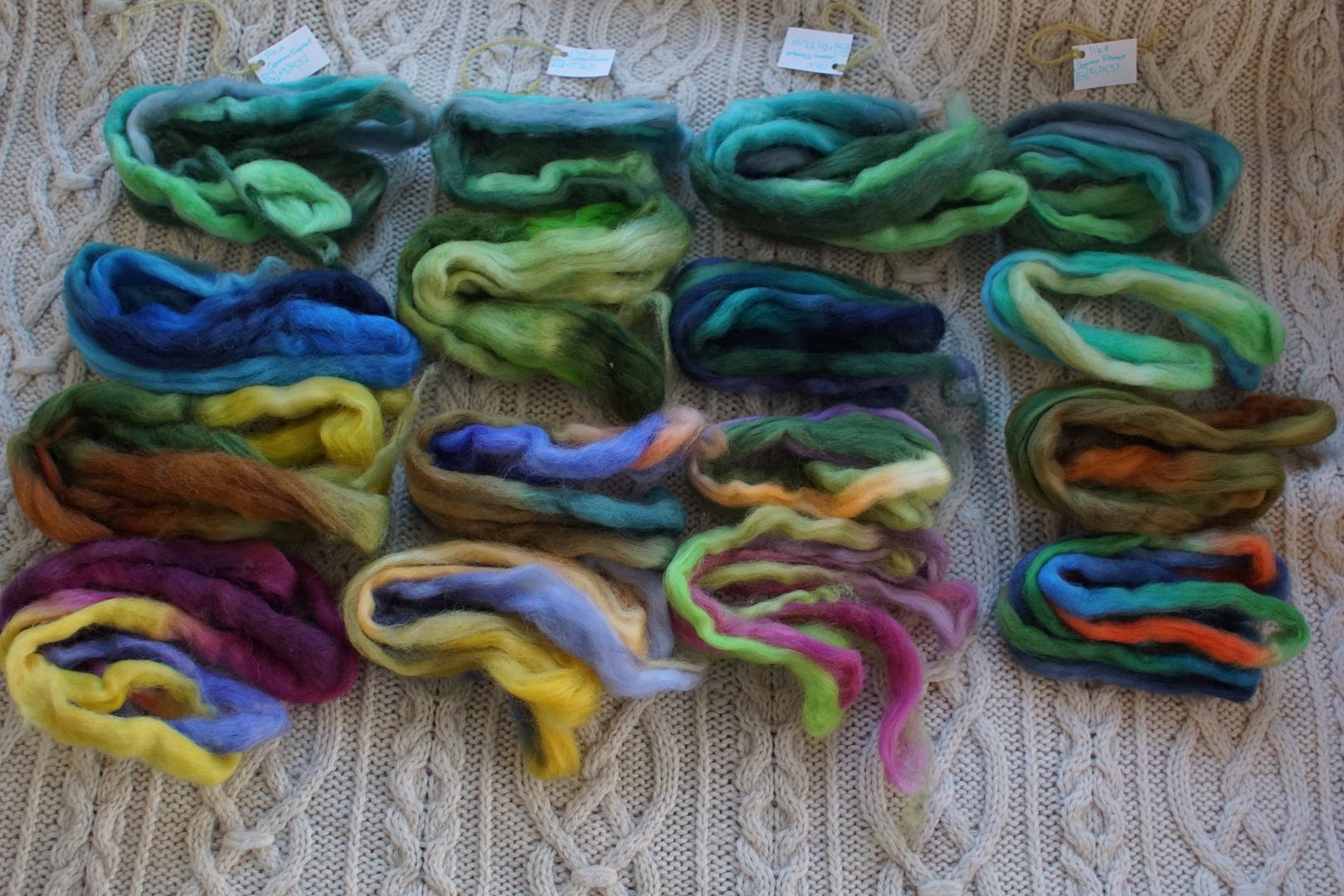
To prep these, I borrowed Alide’s drum carder to make batts. I wanted to make two plies with everything represented, so the groupings of fibers line up in plying, but still give me one large skein at the end. I go through this whole process on the Wool Circle, episode 110, but I did take pictures of the finished batts!
11a:
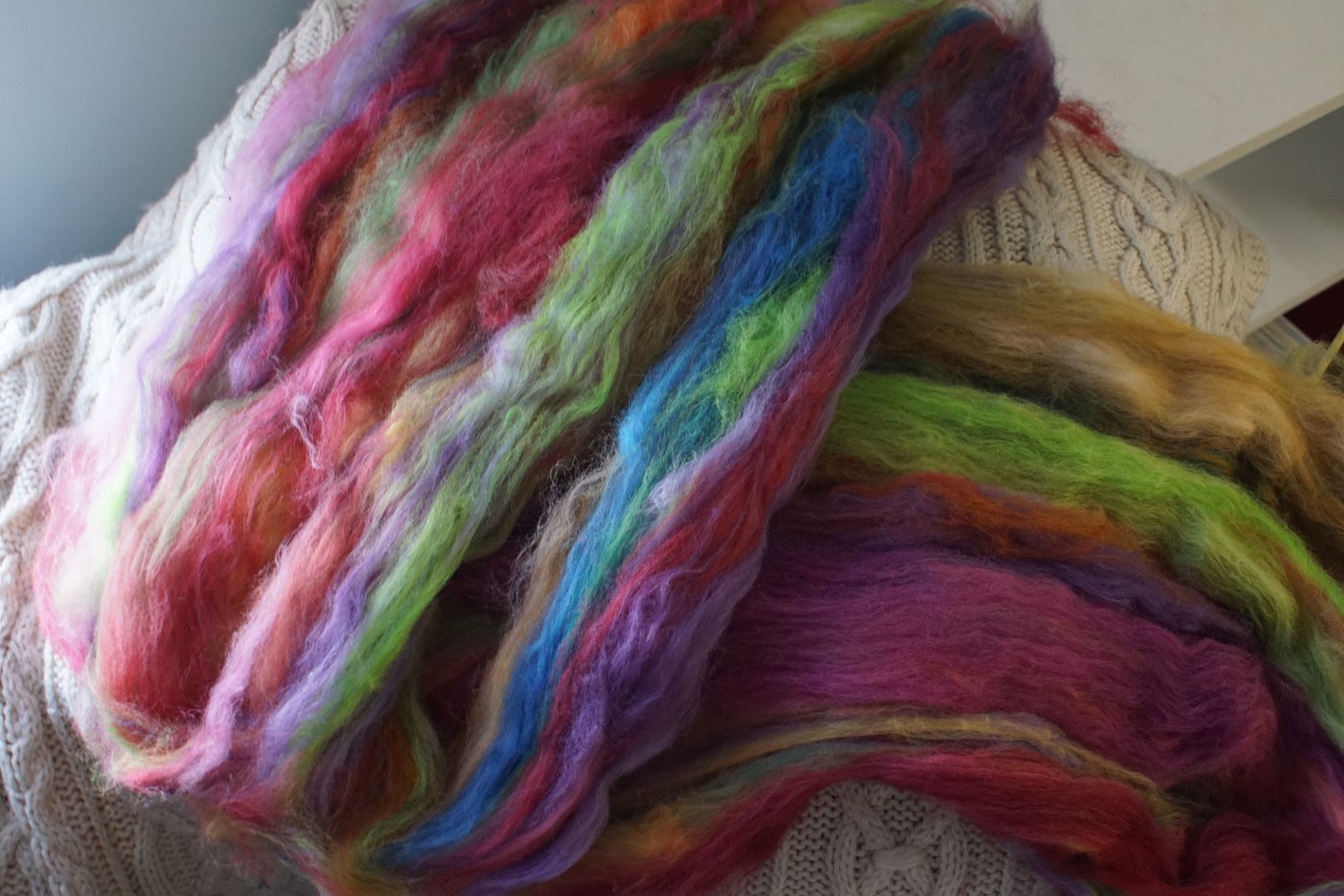
11b:
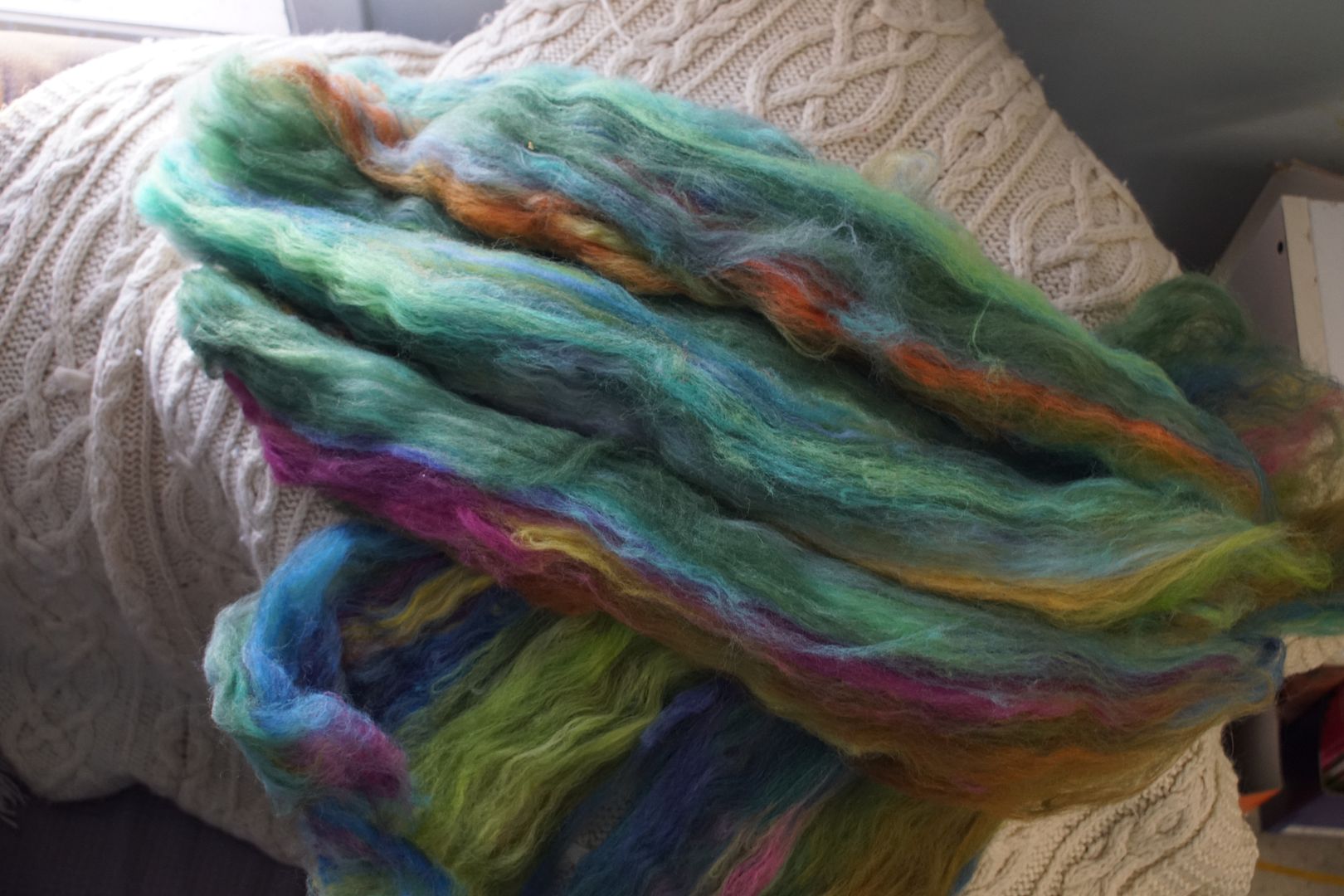
12a:
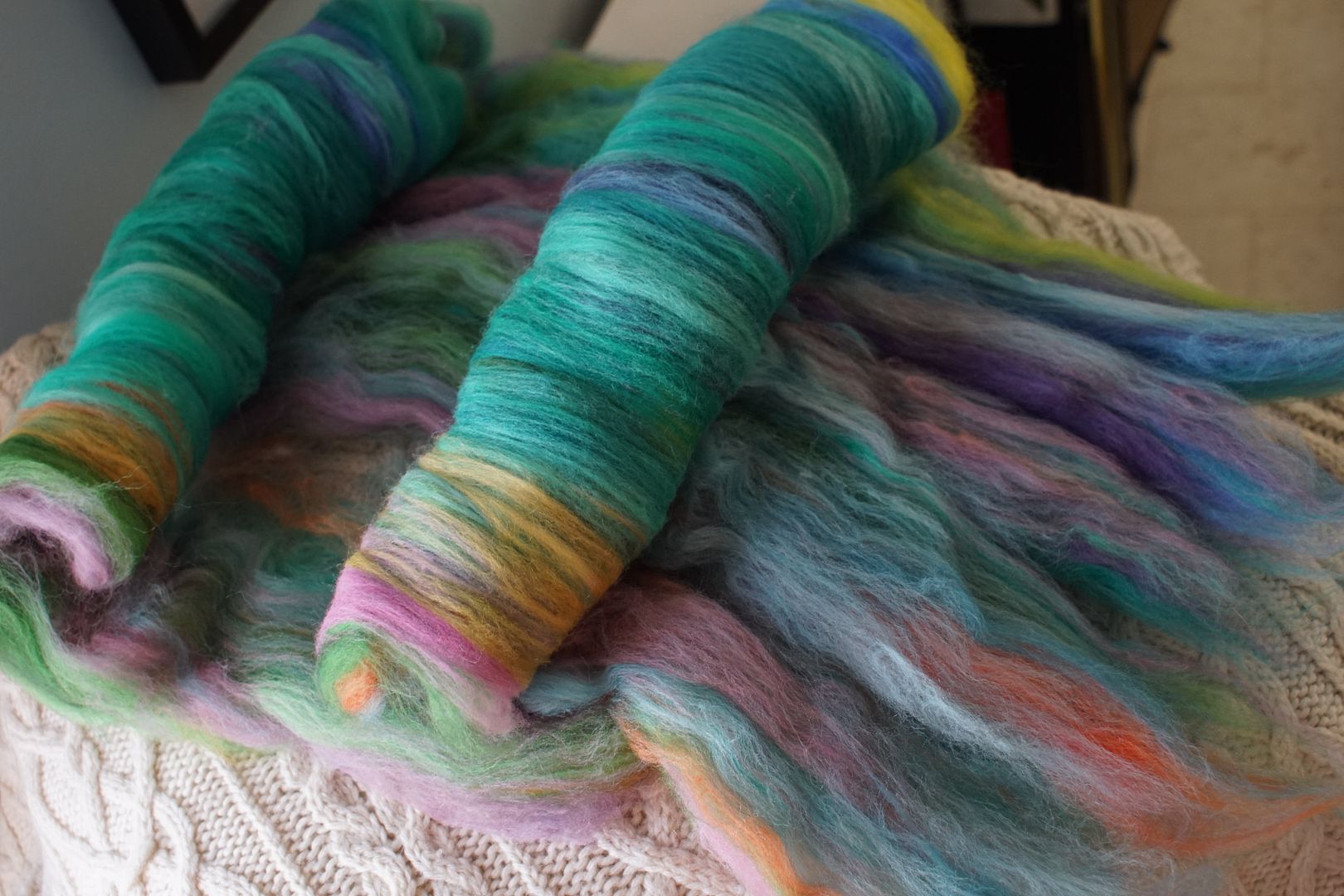
12b:
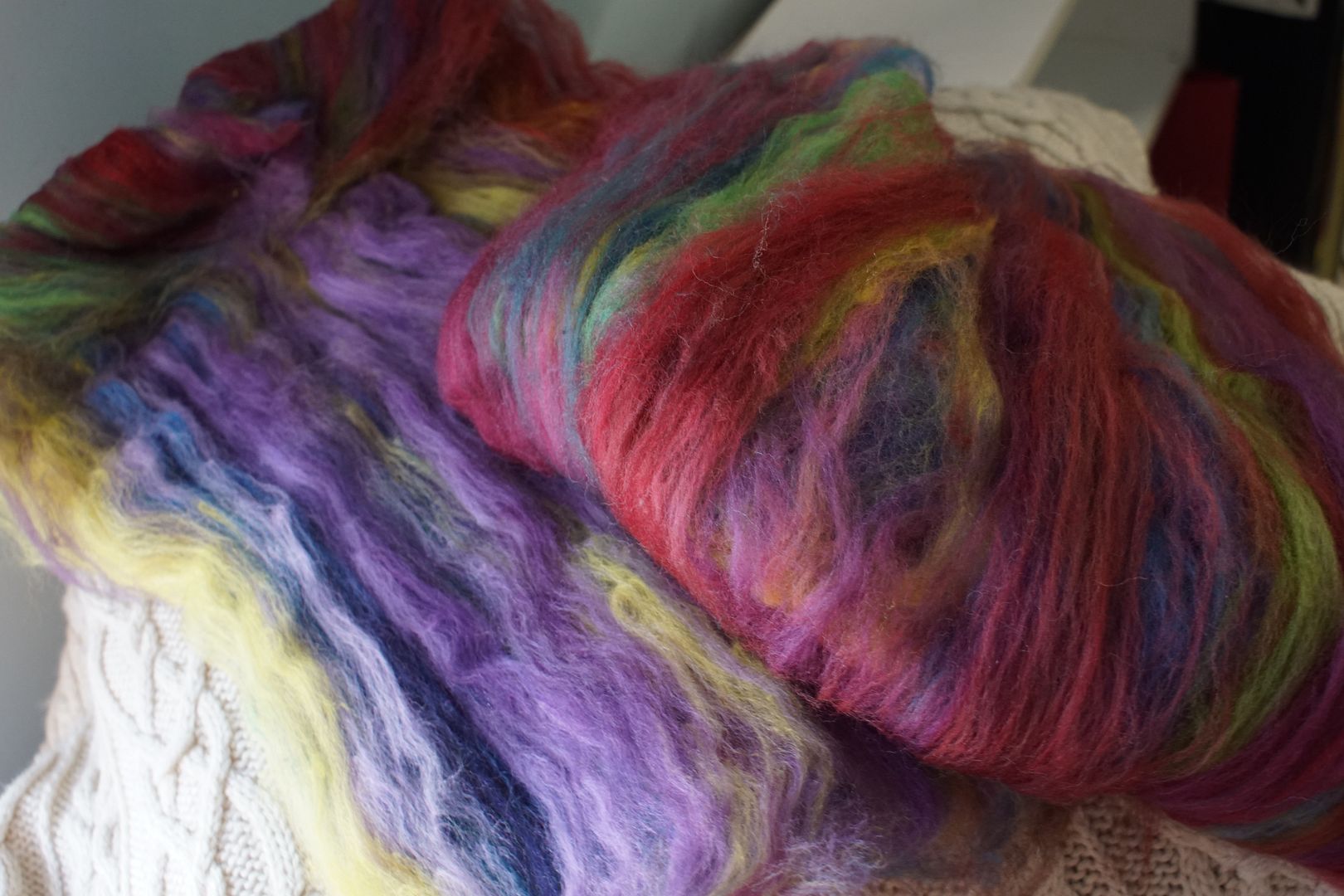
I’ve been spinning away for 15-30 minutes a day on these since the beginning of January, and I’m actually only a few days away from finishing the singles. It’ll take me another week or so to ply and finish them, and then I’m excited to see the results and start using them. I have grand plans for making a Party Mix-inspired sweater, but it might have to be quite cropped depending on how much yarn I get. We’ll see, won’t we?
Have a happy Valentine’s Day, and a blessed beginning to your Lent, folks.
 Osborn Fiber Studio
One thought on “Capstone Sweater: Fiber and Prep”