Part 1: DOS Testing
Part 2: Carded Approximations of Dye Formulas
Part 3: Dye Formulas
Part 4: Monochrome colourways
Part 5: Analogous colourways
Part 6: Warms, Cools, & Narrower Analogous colourways
Part 7: Complements & Split Complements
Addendum: Knitted samples
I’ll close out this review of my dyeing experiments with these triads. At this point, I knew I wasn’t going to run out of dyes, so I went back to Deb Menz’s recommended DOS: Pale .5% DOS, Dull 1% DOS, Intense 2% DOS, Dark 3% DOS. The difference really shows, I think, especially with the depth of the dark colours. All were dyed on 100% Polwarth wool.
Primaries: Red, Yellow, Blue
Colours used: Intense Yellow, Dark Yellow, Intense Red, Dark Red, Intense Blue, Dark Blue.
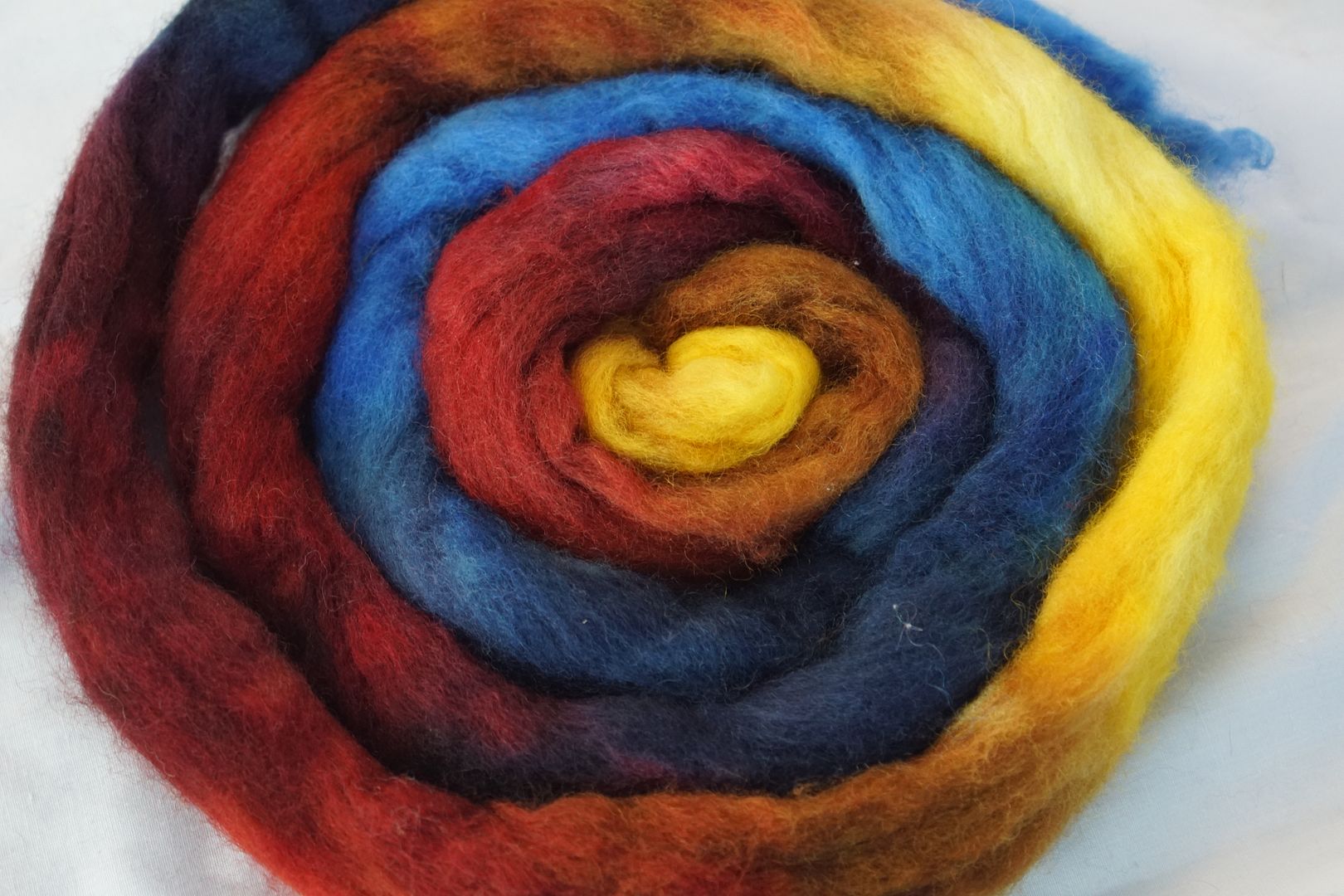
I chose the dark and intense colours from each colour family here, and it definitely has a modern superhero vibe. Like it’s all those comic book colours, but with the moody depths the costumers use these days to make them look cool and conflicted. I wonder if when this is spun up, the value contrast will take over and it’ll just look like yellow-with-other-stuff.
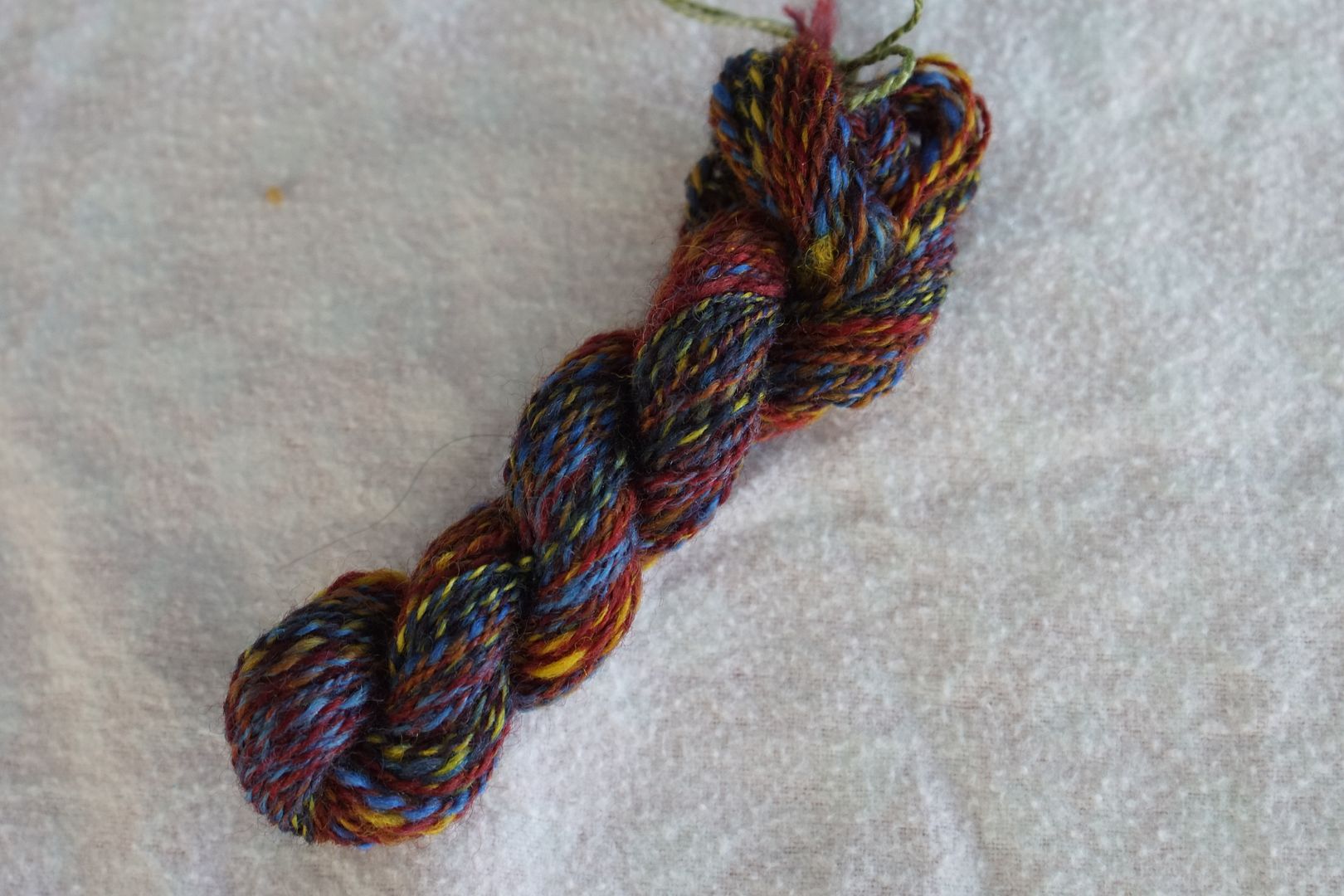
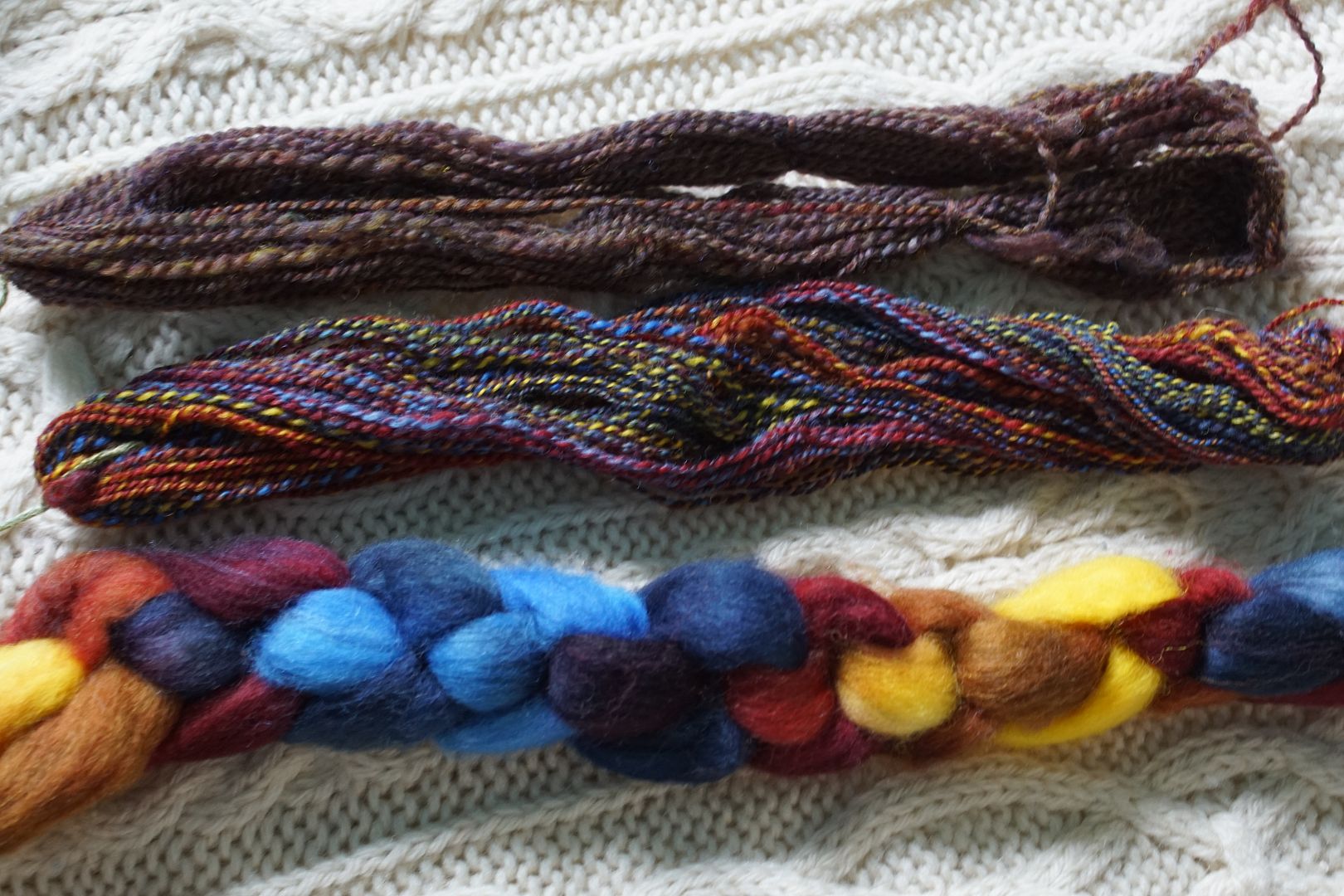
Secondaries: Orange, Purple, Green
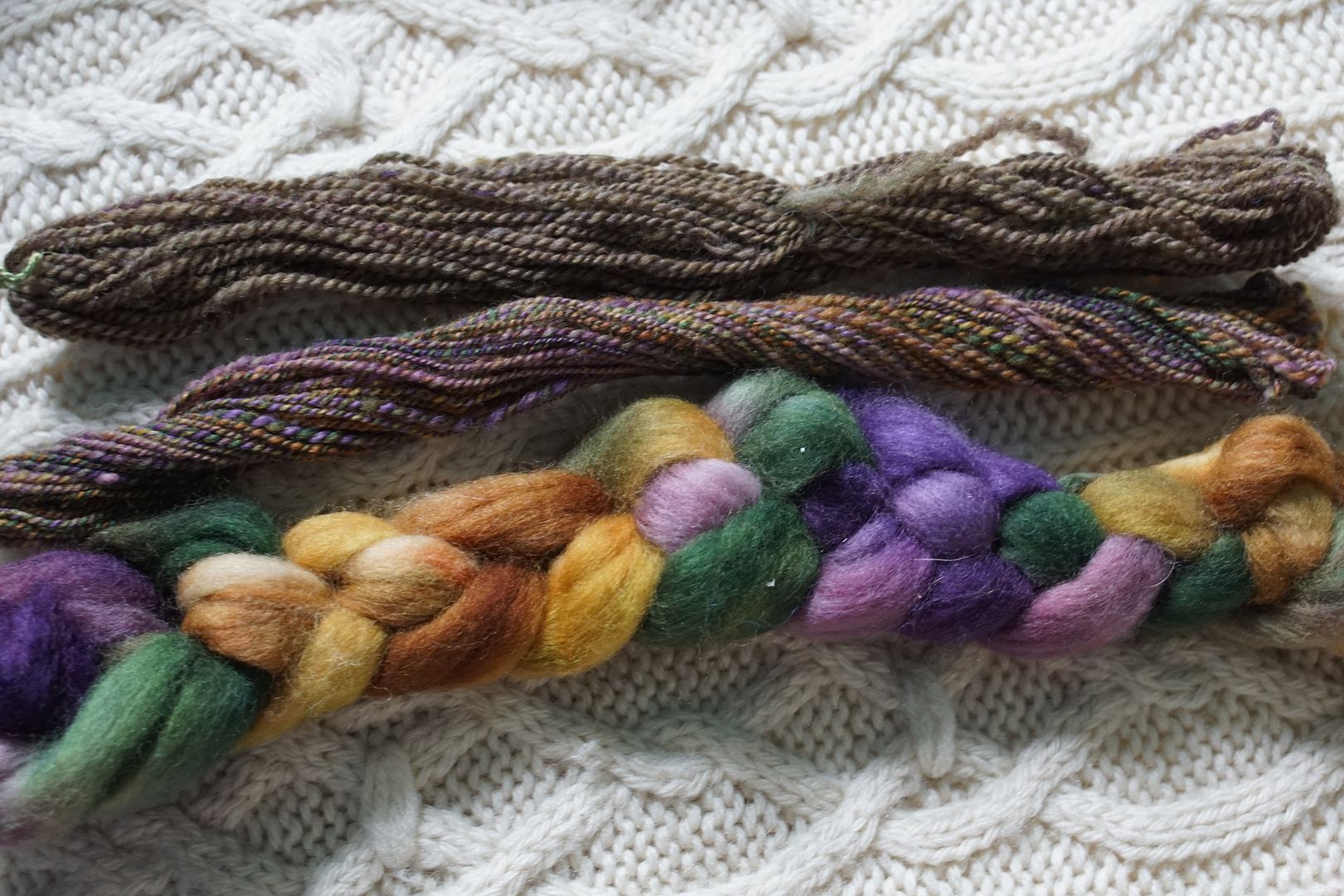
Colours Used: Dark Violet, Dull Violet, Dark Green, Dull Green, Dark Orange, Dull Orange. I went for the darks and dulls this time, making a very desaturated triad. I love this. It’s that garden feel again, but this time, the garden is fading toward the fall. Very warm overall.
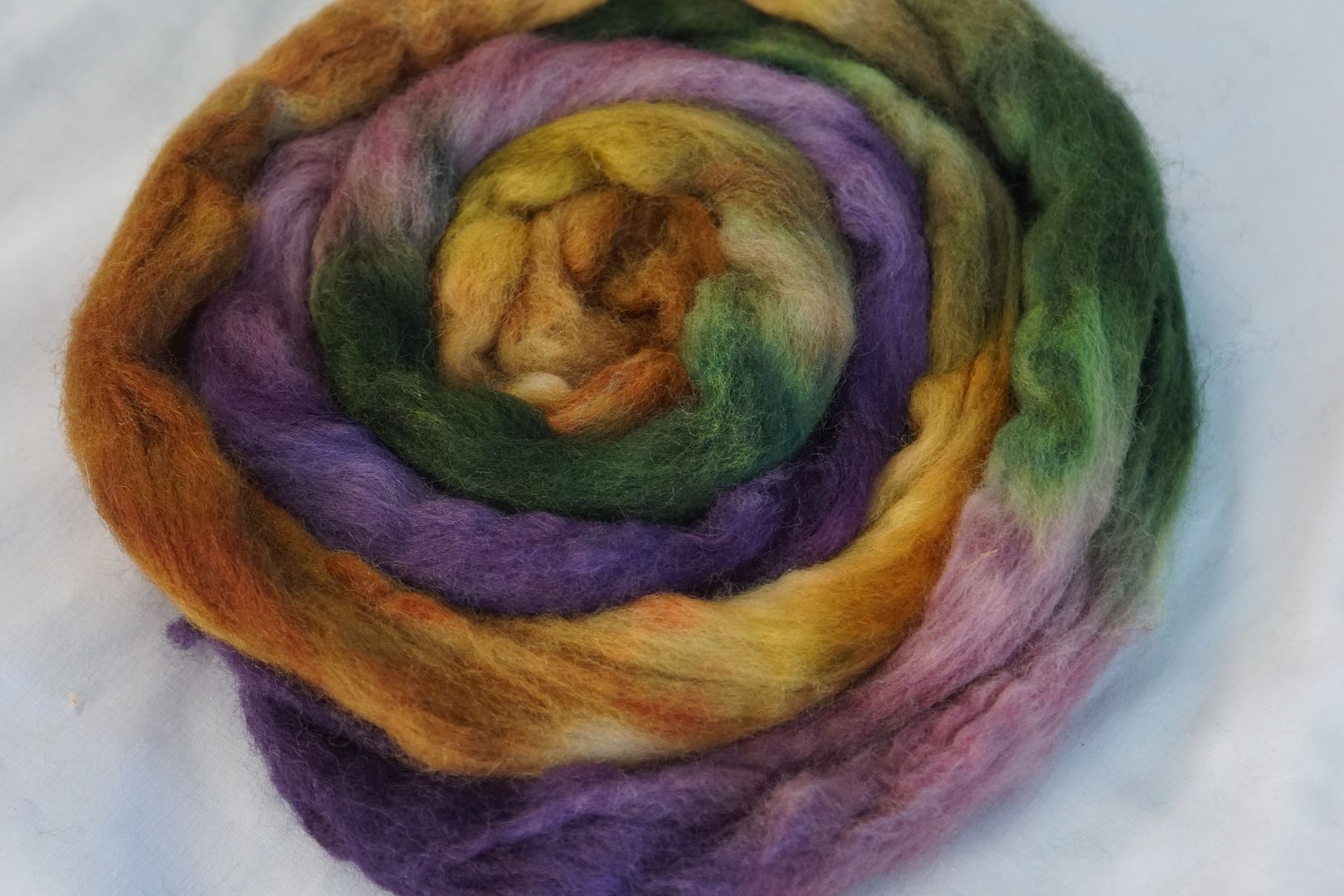
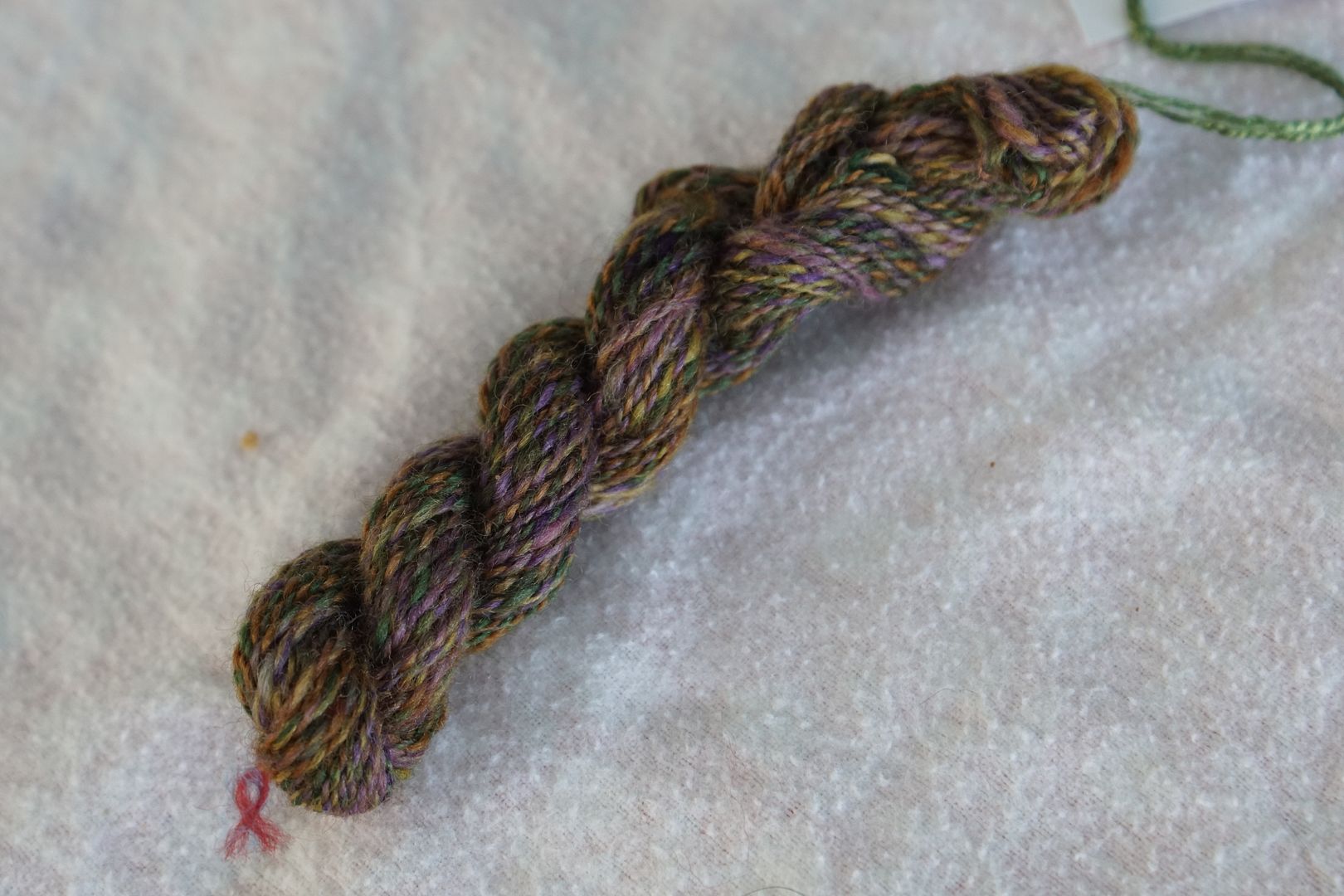
Here, the values are very close. I love the combo-drafted sample, and how it looks brown from any distance, but these rich earthy tones come through. The carded sample is so desaturated, a very grey brown.
Tertiaries: Blue-Violet, Yellow-Green, Red-Orange
Colours used: Dull Blue-Violet, Dark Blue-Violet, Dull Yellow-Green, Dark Yellow-Green, Dull Red-Orange, Dark Red-Orange. I went for darks and dulls again. The dark and dull red-oranges are very similar, and look pretty burgundy or maroon, without a lot of discernable orange. I don’t love these colours together, I’ll be honest.
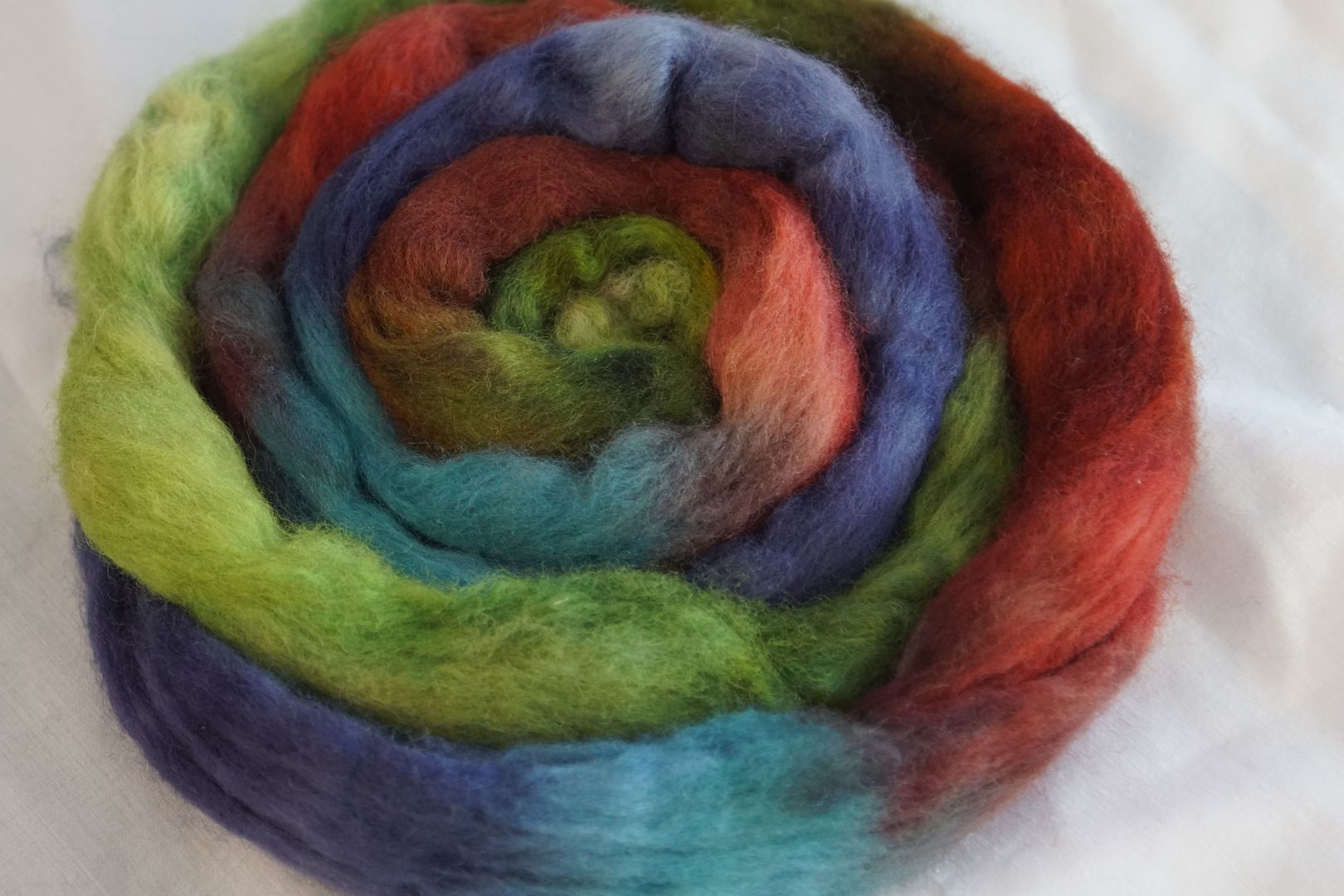
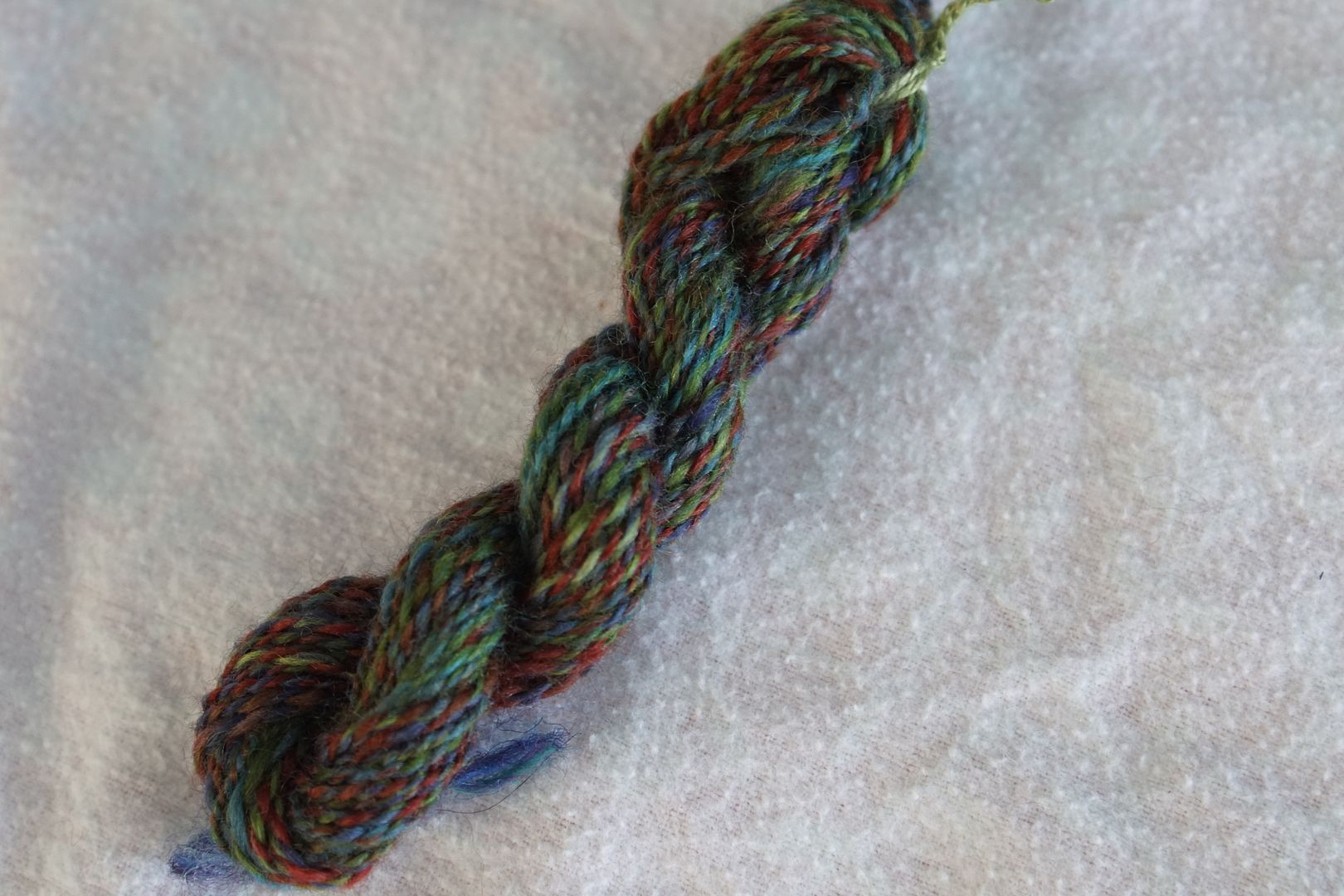
Spun up, things calm down a bit, but still not my favorite. This colourway can’t quite decide if it’s warm or cool. The combed mixture is very grey.
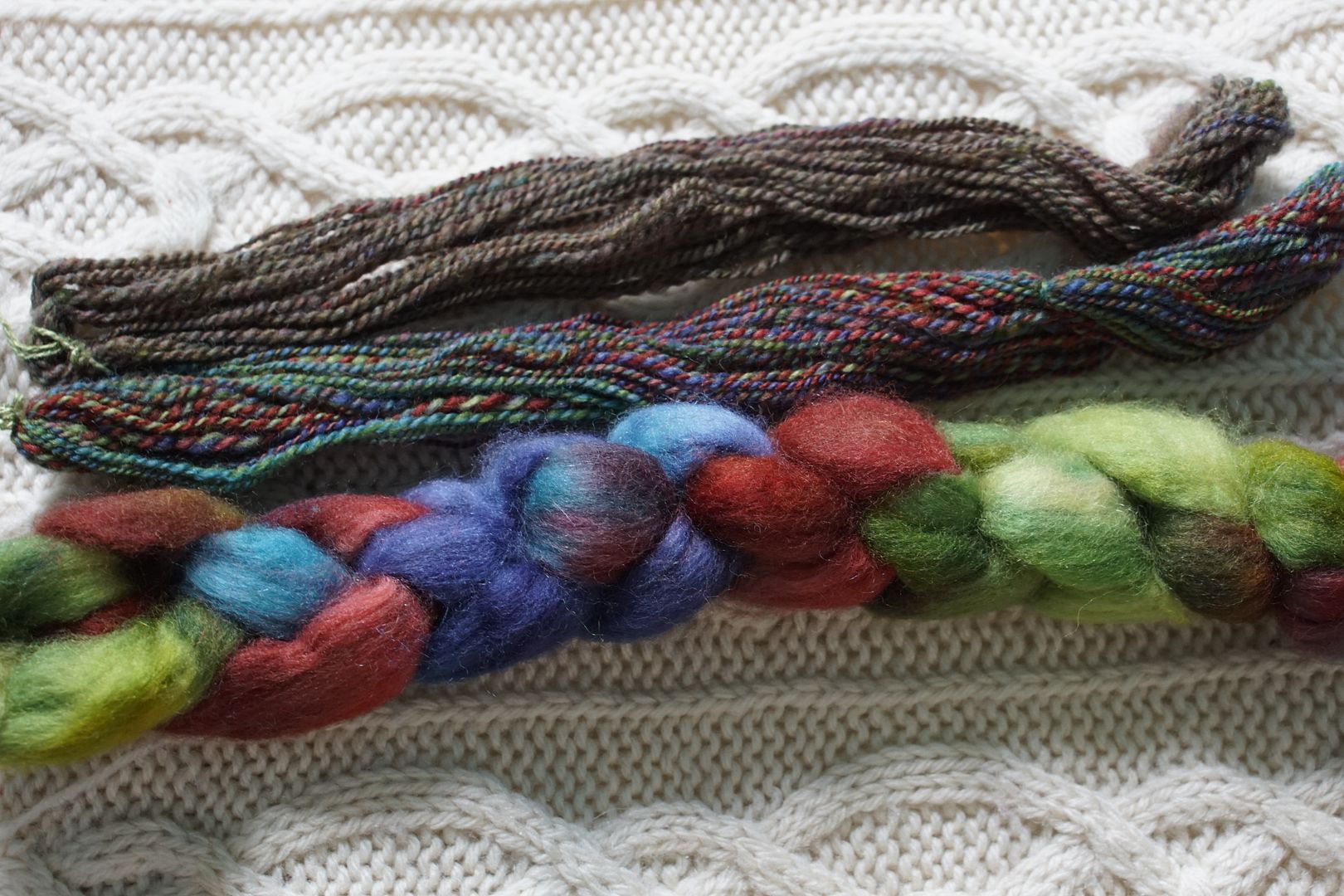
Tertiaries: Red-Violet, Blue-Green, Yellow-Orange
Colours used: Pale Red-Violet, Dull Red-Violet, Pale Blue-Green, Dull Blue-Green, Pale Yellow-Orange, Dull Yellow-Orange. Putting the pales and dulls together made for a rather sweet, inoffensive colourway. You can actually see the hues fairly true, but the dull versions quiet things down. Still very floral-feeling.
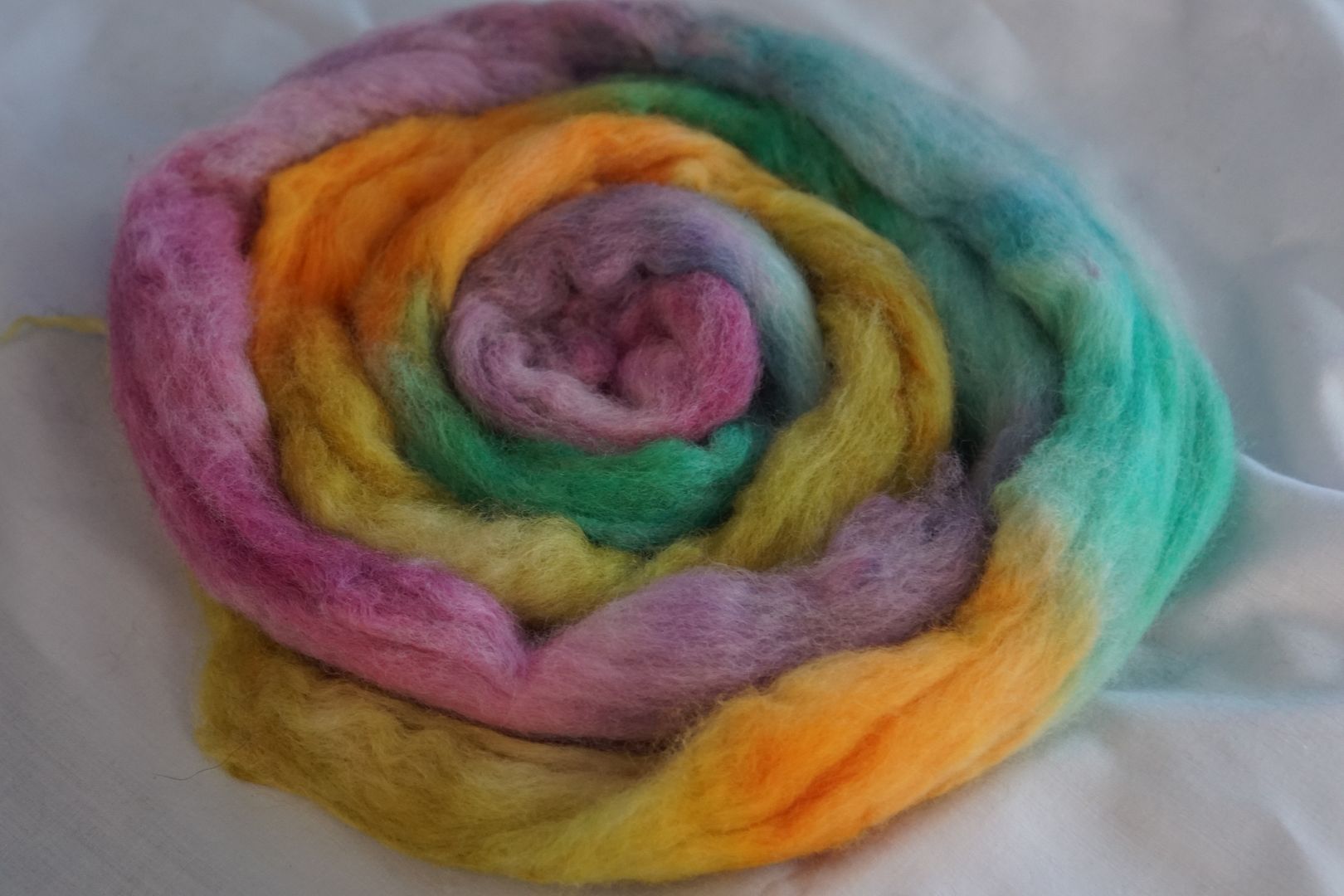
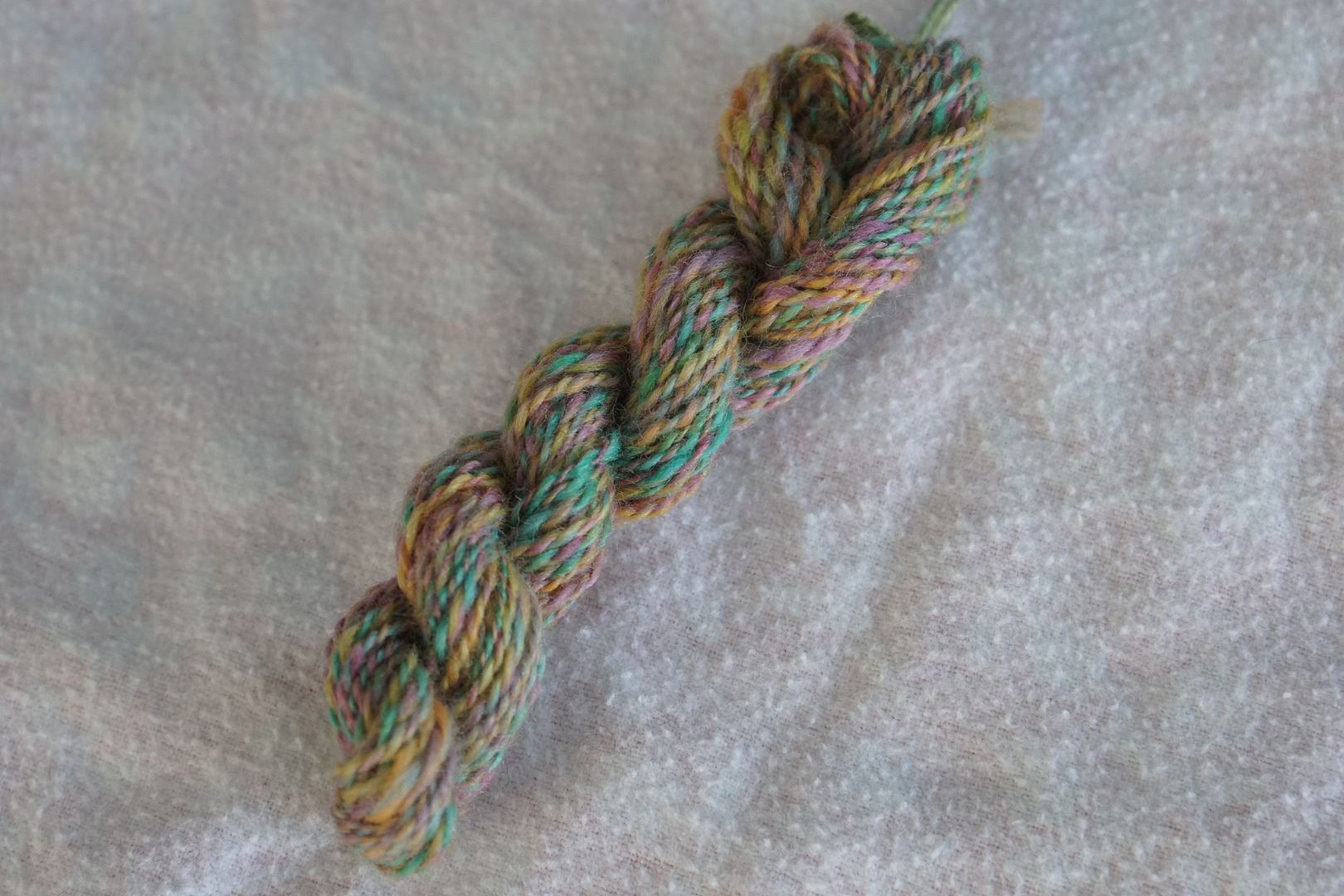
The brownish cream combed sample has some hints of blue-green coming through, which is interesting. The already light colours really mute each other, even in the combo-drafted sample.
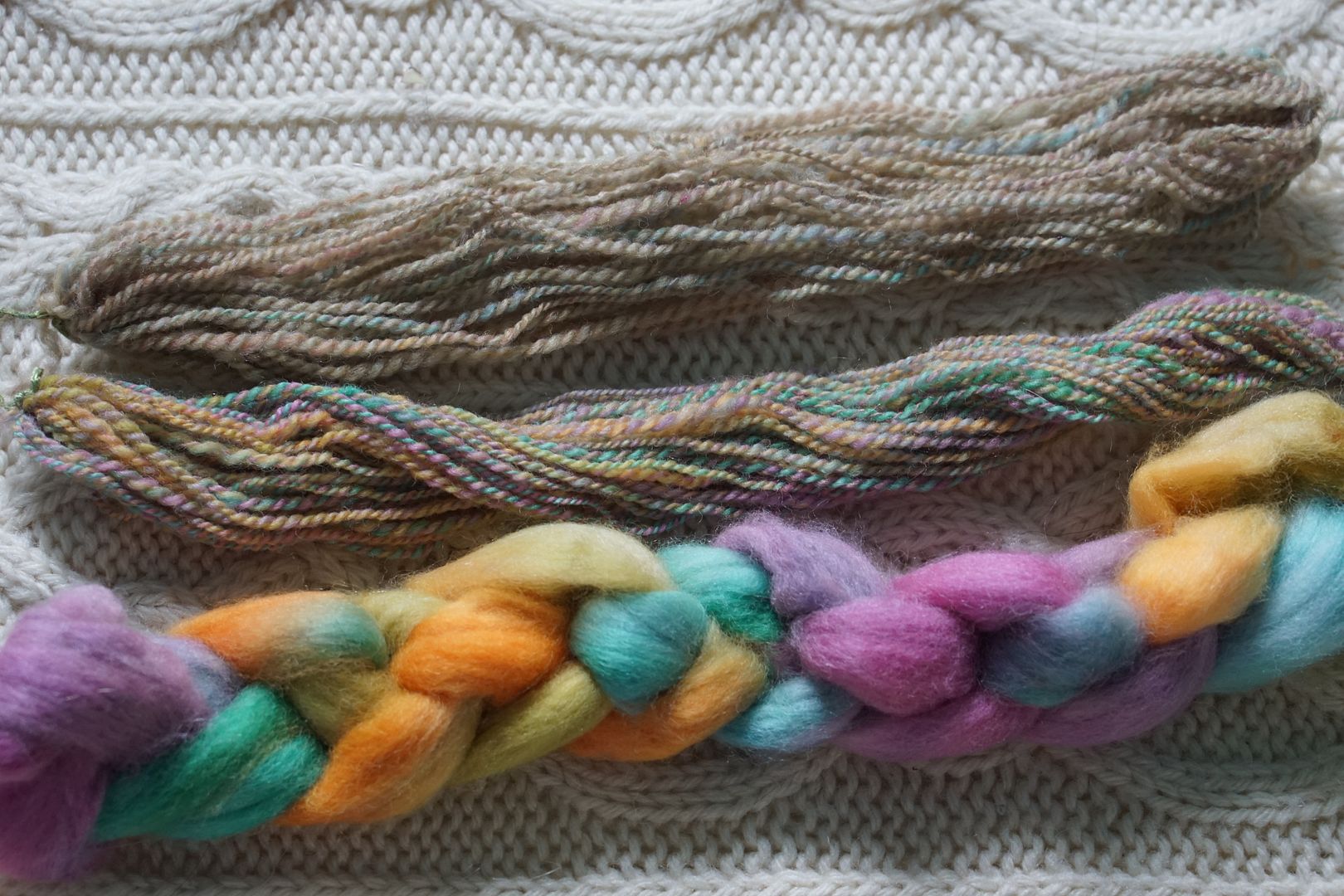
This was the only series of experiments to call for six different dyes to go on the same 1 oz of top. With all of these experiments, I was usually ending up with stretches of colour that are probably shorter than the staple length of the fiber, meaning the colours blended together as I spin. This was very true of these colourways. As with all the other experiments, I arranged the colours in the manner that I thought would result in the least jarring transitions.
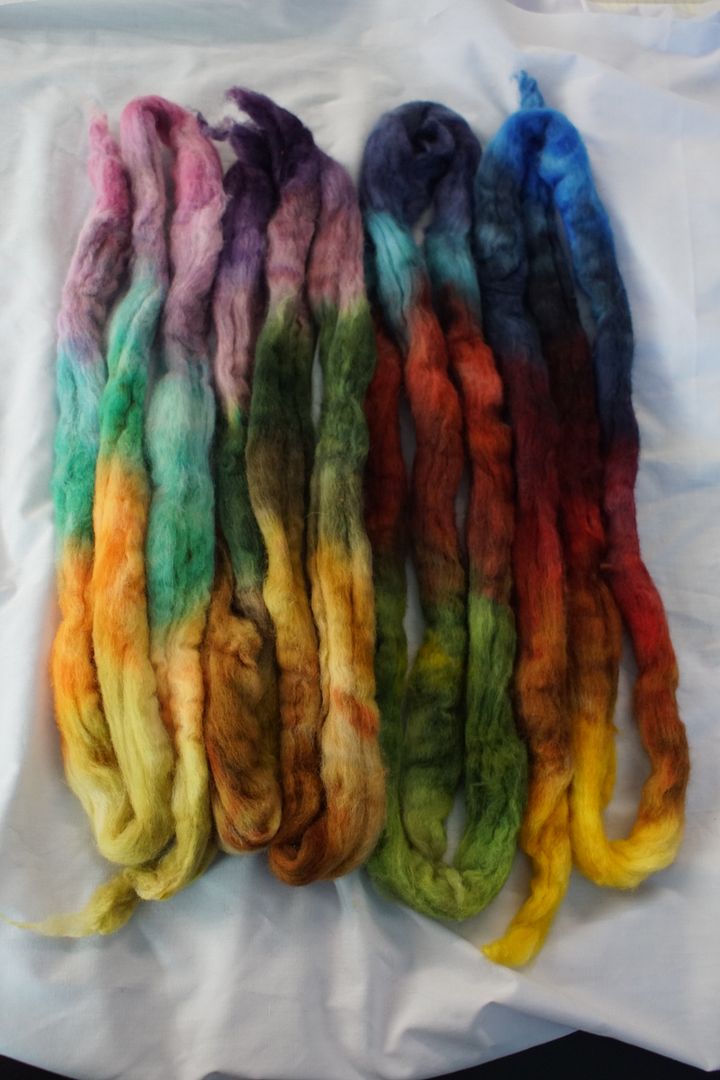
It is very satisfying to me that the triads, when combed together, made the muddiest samples. With a few exceptions, most of the complements and split complements were still dominated by one hue or another. But few of them truly made mud. I wanted to know how to make a few different colours of mud, and now I do.
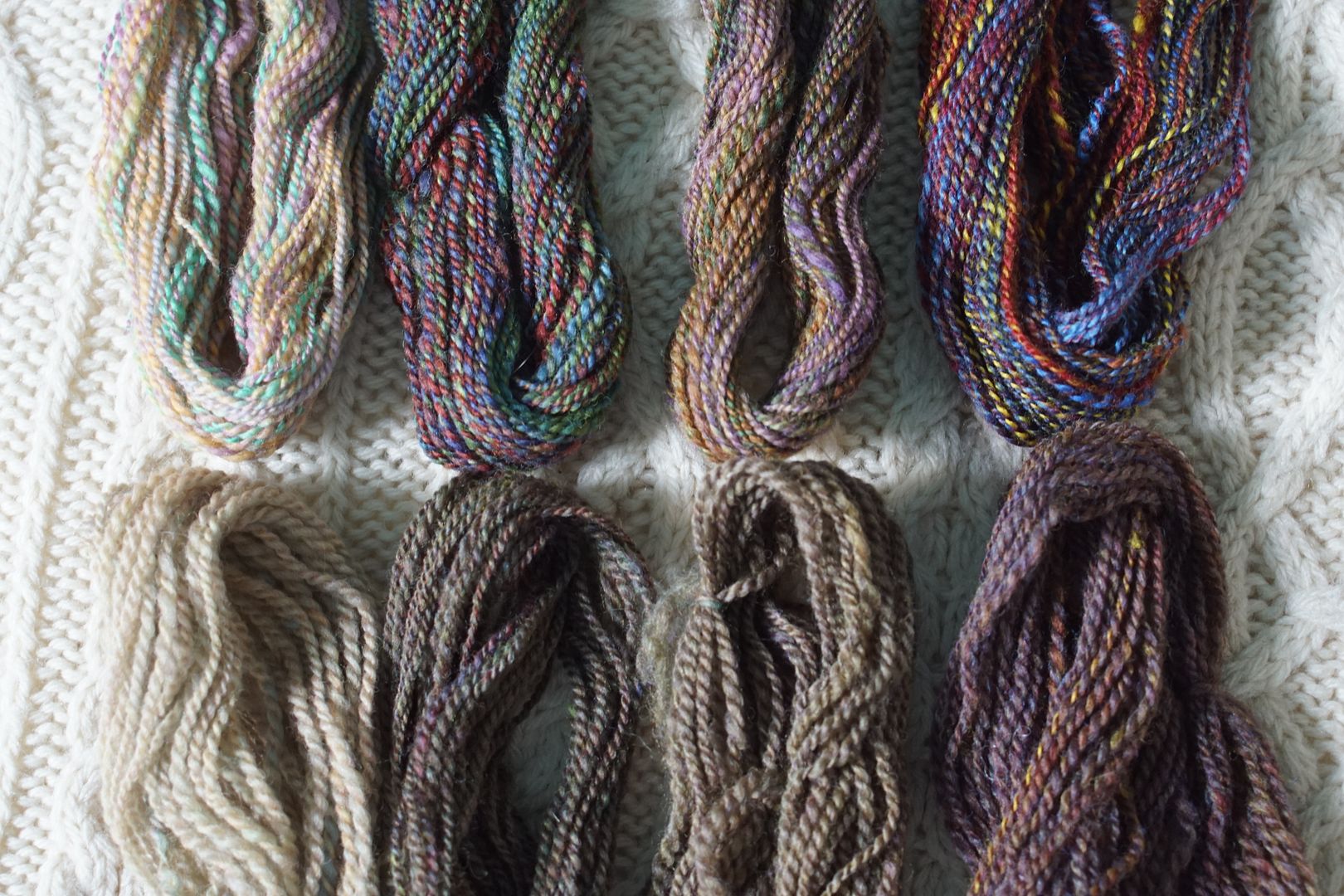
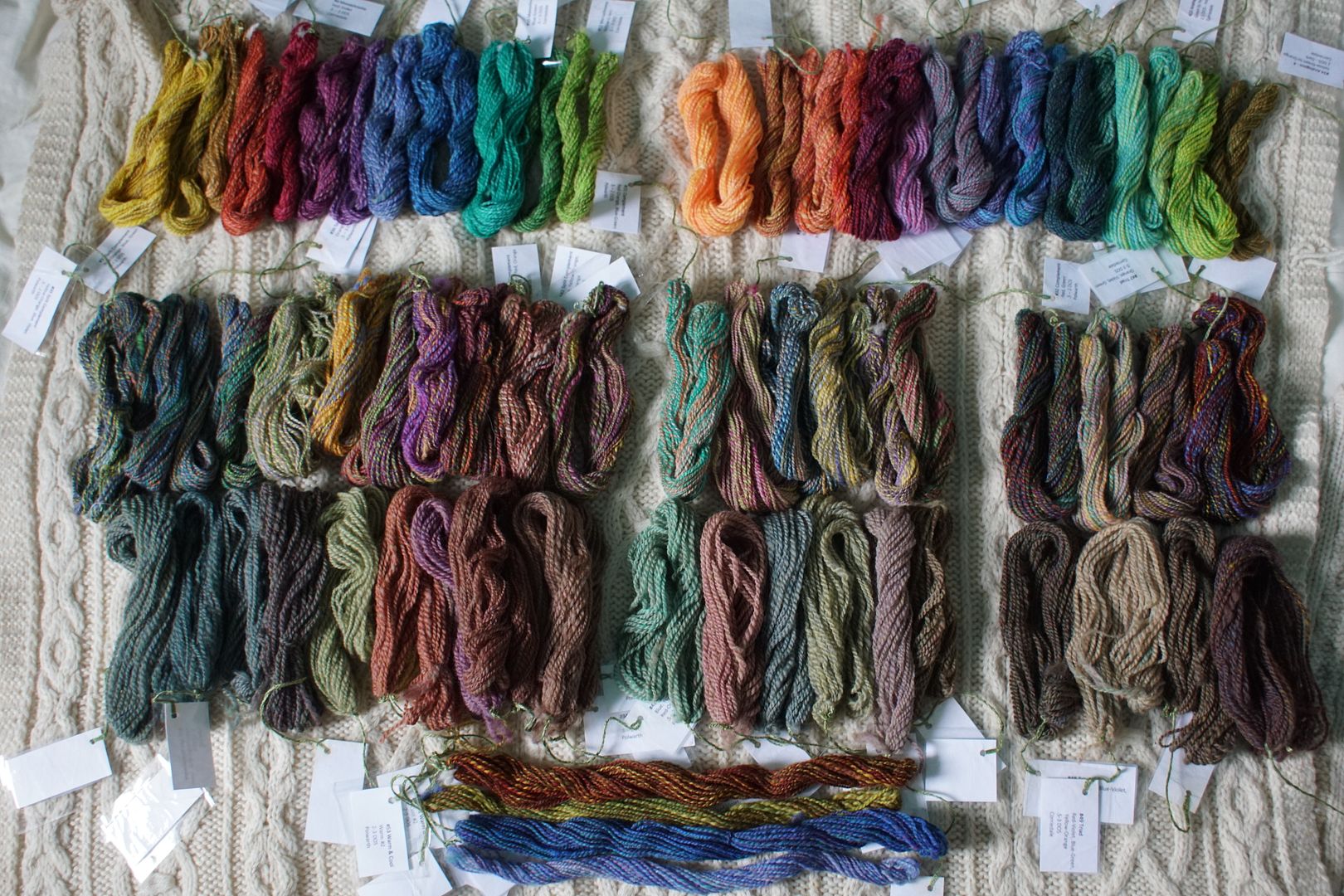
This brings the review of my dye experiments to a close. It was a risk to dye this much without spinning some samples. But the dyeing process takes up a lot of space, and it was bringing me lots of joy in the coldest parts of January and February, so I stuck with it. Spinning the samples brought me even more joy in February and March, and I’ve learned so much already.
Now, the next part of the adventure awaits. The whole point of dyeing all of these experiments was so I can experiment with combo drafting. I love combo-drafted yarns made by putting different colourways into the same singles, but they feel like such a crap shoot. My hope is to spin a wide variety from these wildly varying colourways, so I can learn something of how these very complex colourways work. Onward and spinward!
 Osborn Fiber Studio
These dye school posts have been so fascinating – thank you for sharing!
LikeLike
Thank you for reading! I’m glad they’ve been interesting 🙂
LikeLike
Notify me of new posts please
LikeLike